Algonquin Park
"I have heard wolves howl across a lake at midnight, and I have not been the same since."
Ontario's original wilderness — a canoe-tripping expanse of lake and boreal forest that taught a generation of painters what Canada actually looks like.
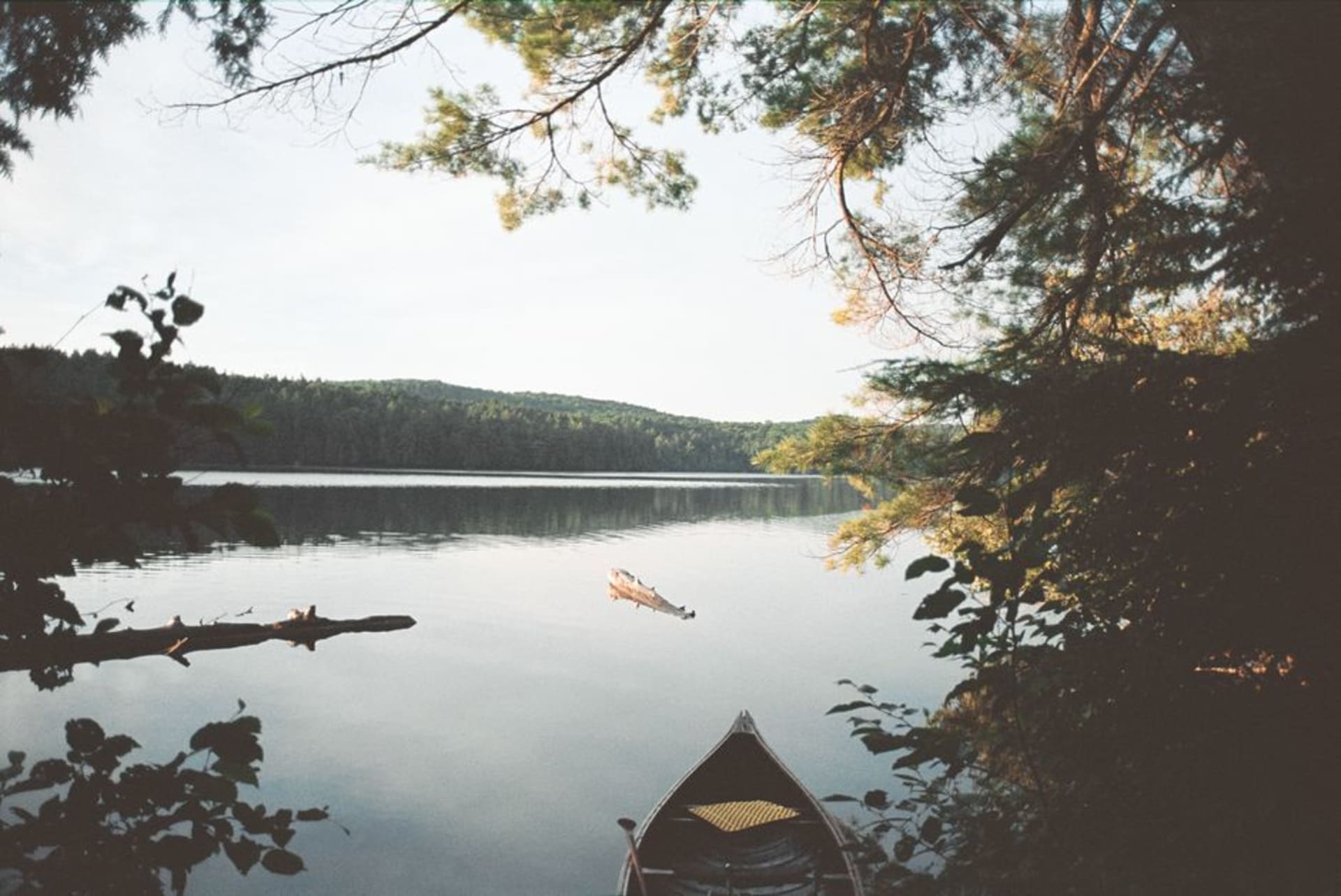
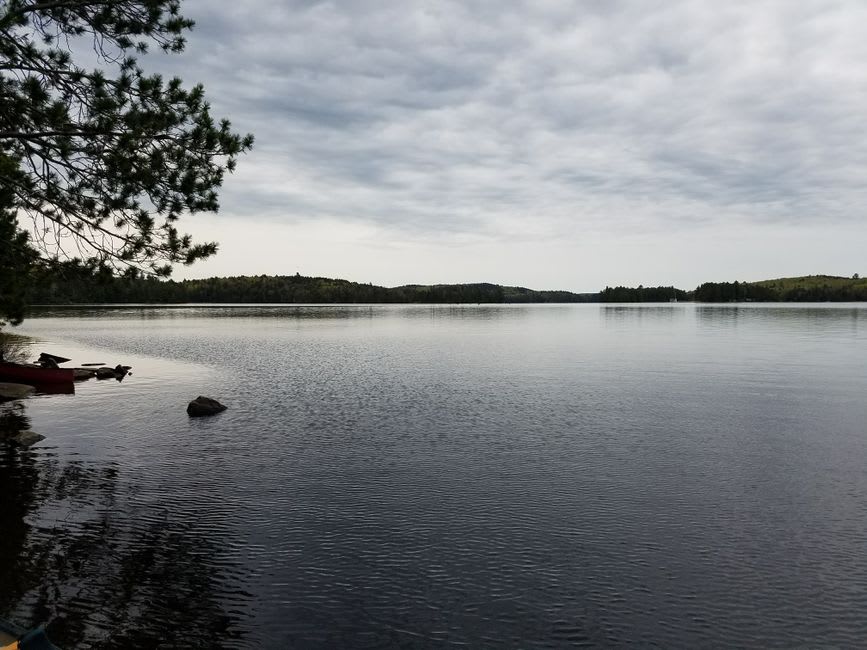
We put the canoe in at Canoe Lake just after sunrise, the water so still it looked solid, mist still lifting off the surface in slow ribbons. Algonquin Park is enormous — nearly 7,700 square kilometres of lakes, rivers, and hard maple and hemlock forest, a three-hour drive north of Toronto that deposits you somewhere that feels, within minutes, entirely outside of Ontario’s usual scale. There are no towns inside the park boundary, no cell signal past the first few kilometres of interior trail, just a network of nearly two thousand lakes linked by portage paths that canoeists have been tracing since long before it was a park at all.
The paddling itself has a rhythm that gets into your shoulders and stays there — forty minutes of lake, a five-hundred-metre portage carrying the canoe overhead through black flies and pine needles, then another lake, quieter than the last. By the second day my hands had the particular ache of a person doing actual physical work for the first time in months, and I found I didn’t mind it at all.
Where the Group of Seven Learned to See
Tom Thomson painted here obsessively in the 1910s, and died on Canoe Lake under circumstances still debated by local historians — a drowning that some insist wasn’t quite accidental. His work, and that of the Group of Seven who followed him, essentially invented the visual language Canadians use to describe their own wilderness: jagged pines against granite, water the colour of tarnished silver, a bleakness that reads as beauty rather than emptiness. Standing on the same shoreline he painted, the resemblance is uncanny — not because the landscape has been preserved like a museum piece, but because he simply painted what was actually there.
Moose and Wolves
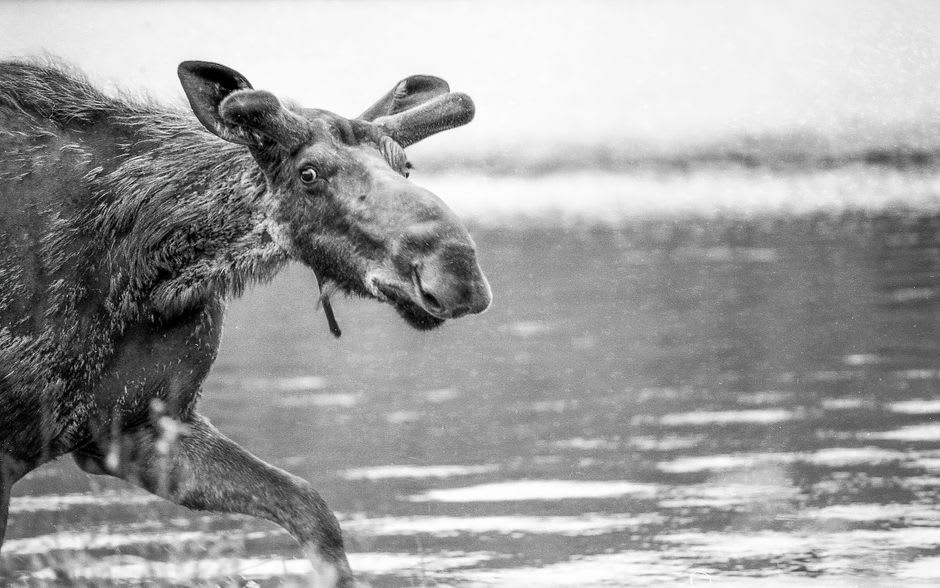
Algonquin has one of the healthiest moose populations in eastern Canada, and the highway corridor through the park’s south end is basically a moose-viewing gallery at dawn and dusk — I saw four in two days, including a cow and calf wading through a roadside bog, utterly unbothered by the line of cars that had stopped to gawk. But the experience that actually got under my skin was the park’s public wolf howls, held some August evenings, when a naturalist leads a convoy of cars to a likely spot and everyone howls in unison, waiting. The first time a wild wolf pack answered back across the dark, a ragged chorus rolling off the water, the entire crowd went silent in a way I’ve rarely seen tourists manage.
When to go: Late May through September for canoe tripping, with the public wolf howls typically running in August; late September into early October for the fall colour, when the maple ridges above the lakes go the full spectrum of red to gold.