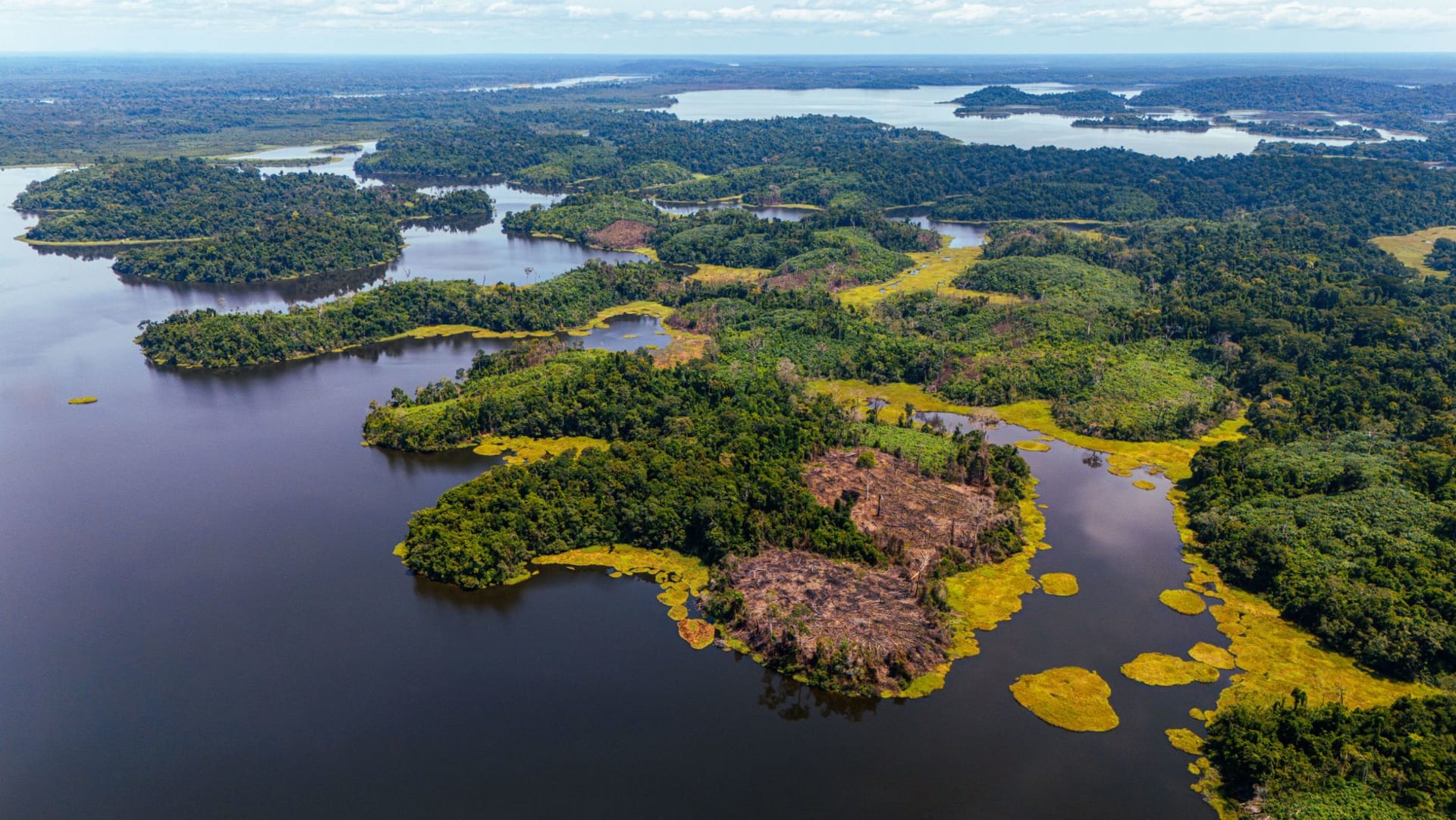
Lobéké National Park
"The forest at Lobéké has no interest in making you comfortable. That is precisely what it offers."
Getting to Lobéké is itself an argument. From Yaoundé it is five hundred kilometers to Yokadouma, the last town of any size, and from Yokadouma another two hours on a forest track that the rainy season renders genuinely impassable. I made the journey in February in the back of a pickup carrying medical supplies and sacks of rice, sitting on a wheel arch and watching the road dwindle from tarmac to gravel to red earth to something more like intention than infrastructure. When the pickup stopped at a camp near the park entrance and the driver turned to tell me we had arrived, the silence that followed was so complete that the absence of engine noise sounded almost as loud.

Lobéké is part of the Sangha Trinational UNESCO site, shared between Cameroon, the Central African Republic, and the Republic of Congo, and the 217,000 hectares on the Cameroonian side contain the kind of primary rainforest that makes all other forests seem like drafts. The trees are enormous — ceiba and moabi with buttress roots the size of walls, their canopy closing overhead at thirty, forty, fifty meters — and the understorey is dim and intricate, a system of ferns, fallen trunks, and fungi so complex it takes weeks to begin reading. The bais are the park’s great spectacle: natural forest clearings and mineral licks where the animals gather, some of them every single day, drawn by minerals in the soil. I waited at a platform above one bai for three hours on my first morning and watched a succession of forest buffalo, sitatunga, red river hogs, and finally, in the late morning when the light shifted through the canopy, a group of eight forest elephants — smaller than their savanna relatives, more rounded, moving with a different kind of silence.
The Baka community that lives on the park’s periphery has been present in this forest for thousands of years, and spending even a short time with Baka guides changes the experience fundamentally. The man who walked with me — Jean-Pierre, who had learned French at a mission school but whose primary language was Baka — identified plants, mushrooms, and sounds that I would have passed without registering. He showed me the honey tree without disturbing the bees, pointed out gorilla knuckle prints in a soft section of path, made the distinction between two bird calls that sounded identical to me but indicated, apparently, entirely different things about what lay ahead on the trail. His knowledge of the forest was not supplementary to the experience; it was the experience.

Western lowland gorilla sightings require habituation treks and are not guaranteed — the gorilla families in Lobéké are only partially habituated and encounters depend on fresh tracking. I spent two mornings following gorilla sign without a visual and a third morning watching, from a distance of perhaps forty meters, a silverback sitting in a gap in the canopy doing what appeared to be absolutely nothing with the focused authority of an entity that has arranged things so that nothing is ever required of it. This was one of the better things I have seen.
When to go: December through February is the driest and most accessible window. The road from Yokadouma to the park becomes very difficult between June and October. The bais are active year-round, but dry-season visits concentrate wildlife more reliably. Book guides and accommodation through the Campo Ma’an or WWF office in Yokadouma well in advance — capacity at the forest camps is genuinely limited.