
Korup National Park
"The guide said this forest is older than the ice ages. Standing under those trees, I had no trouble believing him."
You enter Korup by walking across a suspension bridge over the Mana River, and the bridge is the first honest negotiation the forest asks of you. It is long, narrow, made of planks and cable, and it sways with every step in a way that my body interpreted as a problem to be solved quickly. Lia walked it like she was strolling to a bakery. On the far side the rainforest closed over us immediately, and the temperature dropped, and the light went green, and the sound changed into that layered insect-and-bird drone that I have come to associate with the genuinely old forests of the world. Korup is one of those — botanists believe it is among the oldest rainforests in Africa, a refuge that survived the dry periods of the ice ages while forests elsewhere collapsed, which is why the species count here is so absurd.
A forest counted in thousands
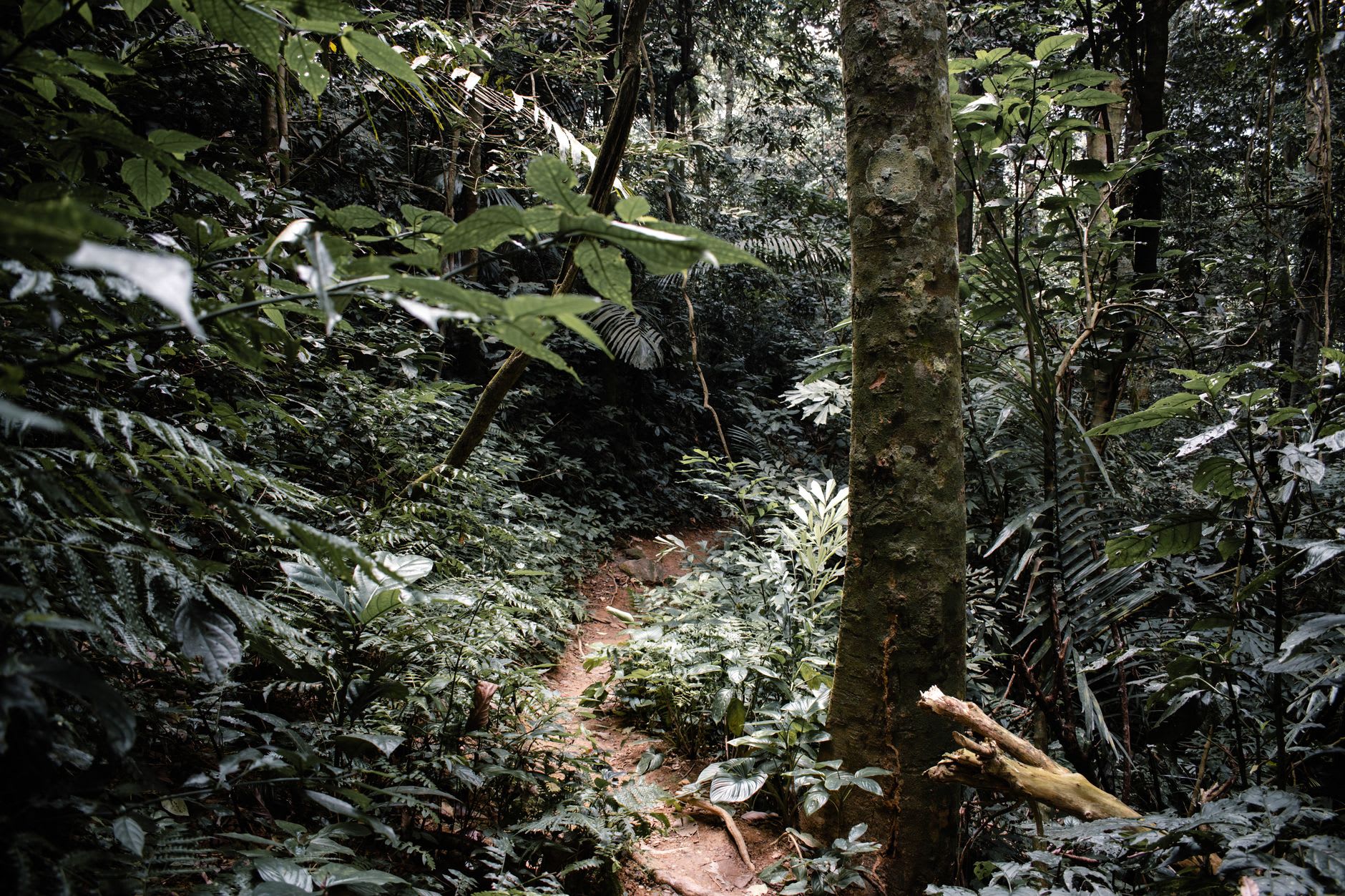
The numbers around Korup are the kind that stop sounding real. Something like four hundred tree species, over four hundred bird species, primates I had only ever seen in documentaries — drills, the rare Preuss’s red colobus, chimpanzees somewhere deep in the interior where we were never going to reach on a short trip. What you actually see, walking, is mostly the forest itself: the enormous buttressed trunks flaring out at the base like the feet of something prehistoric, the lianas thick as my arm, the fungi in colors that seemed designed to be noticed. Our guide, a man from the village of Mundemba who had grown up at the edge of all this, kept stopping to point at things I would have walked straight past — a column of driver ants reorganizing the forest floor, a tree whose bark the local communities use for fishing poison, a frog the exact color of a dead leaf.

We stayed a night at a basic camp inside the park, and that night taught me more about the place than the daytime walking had. The dark in there is total, the kind of dark that has weight, and the soundscape becomes overwhelming — frogs, insects, things crashing through branches, the occasional call I could not begin to identify and decided I would be happier not knowing. I lay in the tent listening and feeling very small and very far from Mexico, which is, I think, exactly the feeling I keep going to places like this to find.
Going in honestly
Korup is not a casual stop. It is in the far southwest near the Nigerian border, the trails are genuinely muddy and demanding, and the wildlife is shy in the way that animals in real, hunted-pressured forest always are — you work for every sighting and most of the magic is in the forest itself rather than a tidy parade of animals. But that is the point. This is one of the last great lowland rainforests left standing in West Africa, and walking into it on foot, with a local guide who reads it like a language, is among the more humbling things I have done.
When to go: The drier months from November through February are the only sensible time. Even then Korup is wet — it is one of the rainiest places in Africa — but the trails are at least passable and river crossings are safer. From June through September the rains are relentless and much of the park becomes effectively closed. Arrange guides and the camp through the park office in Mundemba before you go, and accept that you will be muddy, damp, and entirely glad you came.