Foumban
"The palace in Foumban made me realize that 'traditional' is the wrong word — this is contemporary power in historical architecture."
I came to Foumban expecting a museum piece and found something considerably more alive. The Bamoun kingdom has existed in the western highlands for nearly six hundred years, and the sultan’s palace that anchors the center of the city — a structure of painted terracotta walls, carved wooden gates, and tiered towers that seems to reference Islamic architecture from the north while remaining entirely itself — is not a heritage site. It is an active seat of political and spiritual authority, and on the morning I arrived, there were petitioners waiting in the courtyard in a way that made clear the palace’s administrative functions have not been suspended by the tourist gaze.

The palace museum inside holds one of the most remarkable collections of royal objects I have encountered outside the major African capitals. There are Bamoun bronzes cast with a technical sophistication that genuinely surprised me — equestrian figures, ceremonial pipes, thrones with armrests carved into human forms — alongside royal robes of Venetian glass beadwork in patterns so complex they look like pixel art. The Bamoun people developed their own writing system in the late nineteenth century, under Sultan Njoya, who also produced an illustrated history and a medical compendium; samples of the Shu Mom script are displayed alongside Arabic manuscripts from the period when the Bamoun court converted to Islam, and the coexistence of these textual systems in a single glass case made me stand there longer than I expected.
Outside the palace, the artisan quarter spreads across several streets of workshops where the craft traditions — bronze casting, embroidery, leatherwork, woodcarving — are practiced by families who have been doing this for generations. I watched a young man casting a small bronze figure using a lost-wax method that has not changed substantially since the sixteenth century, and the object that emerged from the mold — rough-edged, requiring filing and polishing — was immediately recognizable as belonging to the same formal language as the royal pieces in the museum. The market around the palace sells Bamoun work alongside mass-produced imitations, and it takes some discernment to find the pieces actually made in the quarter rather than imported from the Douala wholesale market.

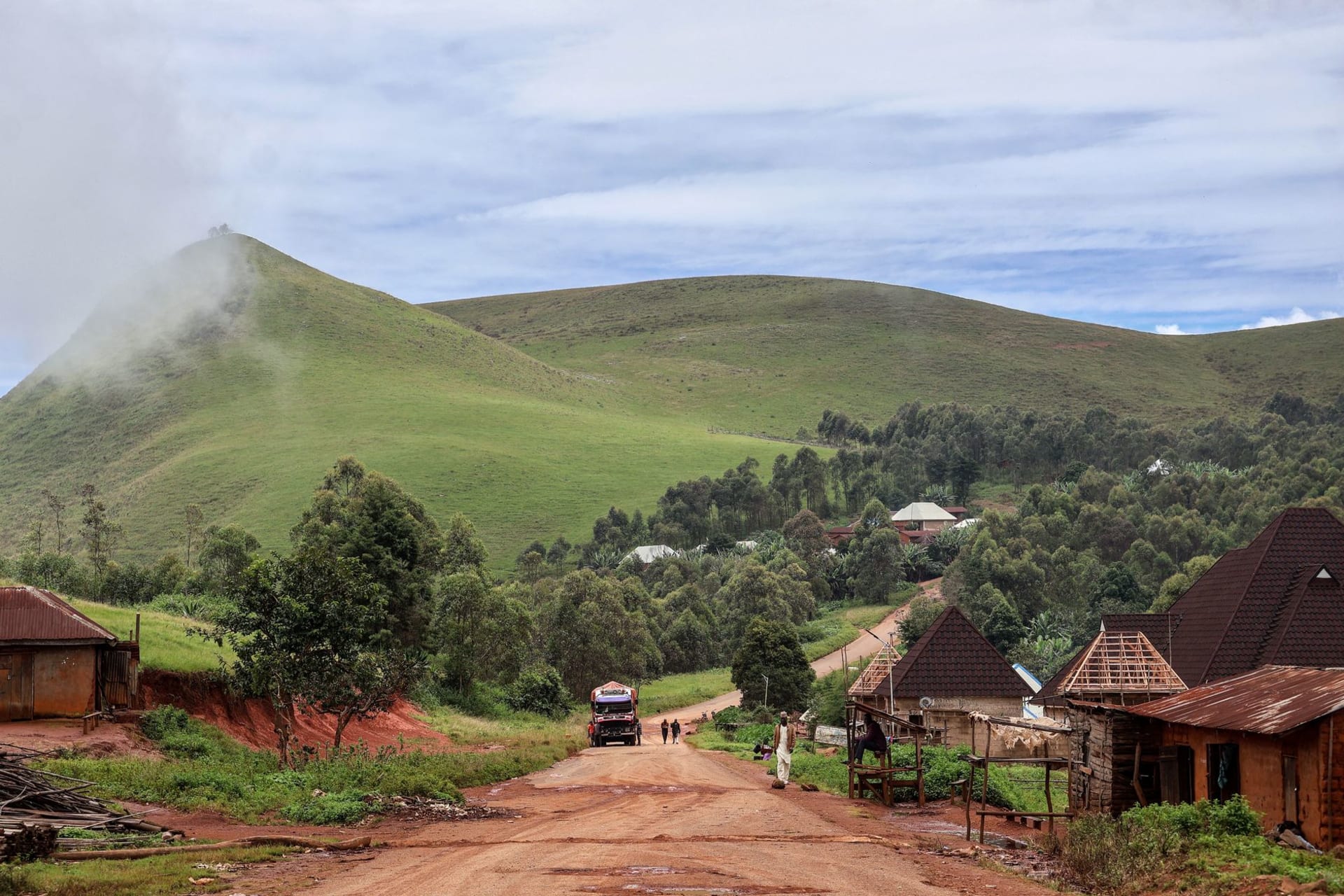
The city’s position on the edge of the highlands means that the landscape surrounding it adds to the sense of historical depth — the hills are terraced and farmed in a way that looks ancient, and the road into town from Bafoussam passes through a countryside that feels improbably green and densely inhabited. I ate at a small restaurant near the market that served mbongo tchobi — a black-sauced dish made from a charred spice that gives it a smoky, slightly bitter depth — with goat, and I ordered it twice in two days, which is my usual form of endorsement.
When to go: Foumban is accessible year-round, but the highland dry season from November through February makes road travel easier and the town more comfortable for walking. The Grand Marché is liveliest on Fridays when traders come from surrounding villages. Avoid the heaviest rains of July and August if you plan to travel by road from Bafoussam, as the route can become unreliable.