
Napa Valley
"I remember standing between two rows of cabernet vines at golden hour, thinking this is the most photographed dirt in America and still meaning it."
California's flagship wine region of terraced vineyards and century-old wineries, where every turn off Highway 29 smells like crushed grapes in September.

I’ll admit I went to Napa expecting it to feel like a theme park version of wine country, all gift shops and Instagram backdrops. It’s not that — or not only that. Lia and I drove up from San Francisco on a Tuesday morning in October, and by the time we hit the Oakville Grade the fog had burned off and the valley floor was doing that thing where the light goes almost amber. Highway 29 runs the length of it, but the real Napa, the one that actually feels like somewhere, is on the Silverado Trail, one ridge over, where the tasting rooms are smaller and the tour buses don’t bother going.
We picked a family-run place outside Rutherford mostly because the woman pouring flights remembered our names from a five-minute phone call the day before. That’s the thing nobody tells you about Napa: half of it is still a place where the person who grows the grapes is the one telling you about the vintage, dirt under her nails, half-joking about the drought years. The other half is the glossy stuff — the $150 tasting menus paired to six wines, the Michelin-starred rooms where you eat a single scallop under a heat lamp shaped like a chandelier. I liked the first half more, but I won’t pretend the second half wasn’t good.

What surprised me most was how small the valley actually is — you can drive from Napa town to Calistoga in under forty-five minutes, yet there are over four hundred wineries packed into that stretch, some of them dating back to the 1880s, stone buildings that survived Prohibition by making sacramental wine. We stopped at one of those old stone wineries, its walls a foot and a half thick, cool as a cave inside even in the afternoon heat, and I kept thinking about how much history is just sitting there behind a tasting counter, unremarked upon.
By the third winery we’d learned to pace ourselves — split a flight, eat actual food, drink water like it’s a competitive sport. Lia found a bottle of an old-vine zinfandel we still talk about, and we bought two, which felt reckless and completely worth it. We ended the day at Calistoga, soaking in a mud bath fed by the same volcanic ash that makes the soil here so good for grapes in the first place, which felt like the valley closing a loop on itself.

If you only have one day, don’t try to do five wineries. Do two, maybe three, and actually talk to the people pouring. That conversation is worth more than the wine.
When to go: Late September through October for harvest, when the vines turn gold and crush is in full swing; spring (April-May) is quieter and greener, with none of the summer crowds or prices.
Keep exploring
More from California
 california
Ojai
A small valley town an hour from Los Angeles that has quietly become one of the most thoughtfully alive places in Southern California.
Explore california
Palm Springs
A midcentury-modern desert resort town long favored by Hollywood's golden-age stars, all flat rooflines, pastel stucco, and swimming pools ringed by mountains.
Explore california
Redwood National Park
An old-growth coastal forest holding some of the tallest living trees on Earth, where fog drifts between trunks wide enough to drive a car through.
Explore california
San Diego
California's southernmost city, where Mexico is twenty minutes away and the tacos are better than anywhere in the state except on the other side of the border.
Explore california
San Francisco
A city that trades on fog and hills and a peculiar emotional intensity that no other American city has ever managed to replicate.
Explore california
Santa Barbara
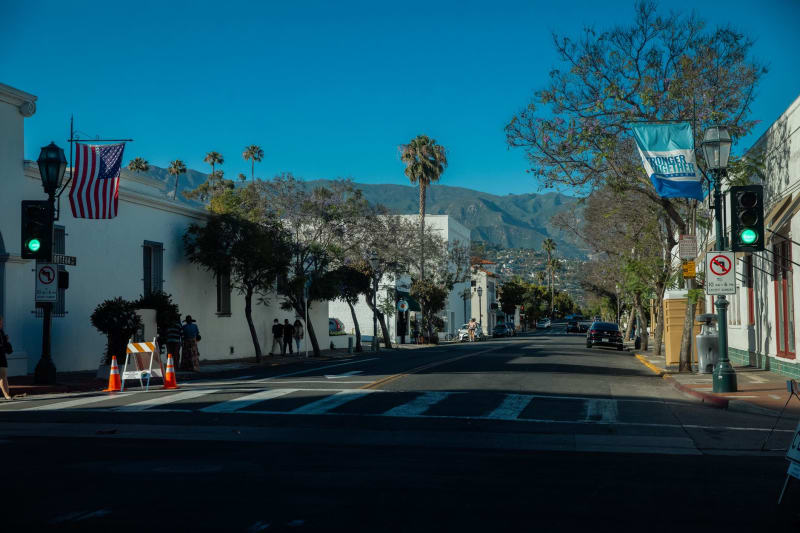
A Spanish-colonial coastal city known as the 'American Riviera,' its red-tile roofs and palm-lined boulevards backed by the Santa Ynez mountains.
Explore