Source du Nil
"A trickle of water in a highland meadow, and somehow everything downstream — Alexandria, the delta, three thousand years of civilization — started here."
The obsession with finding the source of the Nile is one of the stranger chapters in European exploration history — decades of expeditions, feuds between Burton and Speke, deaths and fevers and elaborate theories, all in pursuit of a river’s beginning. The Nile, it turns out, doesn’t have a single beginning. It has a watershed. But if you trace the Kagera River — the main tributary feeding Lake Victoria, which feeds the White Nile — back through Rwanda and into Burundi, you eventually reach the highlands south of Gitega, where in 1937 a German explorer named Burkhart Waldecker claimed to have found the Nile’s most distant source: a spring near the village of Rutovu in Burundi’s Bururi province.
I made the trip from Gitega on a shared taxi that dropped me at a junction and left me to walk the last two kilometers along a track between green hills so layered with banana trees and cassava that the sky was visible only in strips above. The monument — a pyramid about three meters high, marked with the inscription “Source du Nil” — sits in a small clearing beside a carefully maintained garden and a thin trickle of water that emerges from beneath the structure and begins moving slowly downhill. The caretaker, a man named Alexis who had the particular patience of someone who has explained this many times to people who arrive expecting something more dramatic, walked me around and pointed to the spring and the small channel and explained that this water would eventually reach the Mediterranean.

The intellectual pleasure of standing there is considerable. Whether or not the Waldecker claim is the “true” source — it has been disputed and counter-claimed and re-measured, and the answer depends on how you define “source” — the underlying fact is real: this water does flow, through channels and rivers across Rwanda and Uganda, into Lake Victoria, through the White Nile, through Khartoum where the Blue Nile joins it, through Sudan and Egypt and the Nile delta, into the Mediterranean Sea. The chain is unbroken. You’re looking at the very beginning of a 6,650-kilometer river. That the beginning is a trickle you could step across in one stride is either disappointing or, if you let it, rather magnificent.
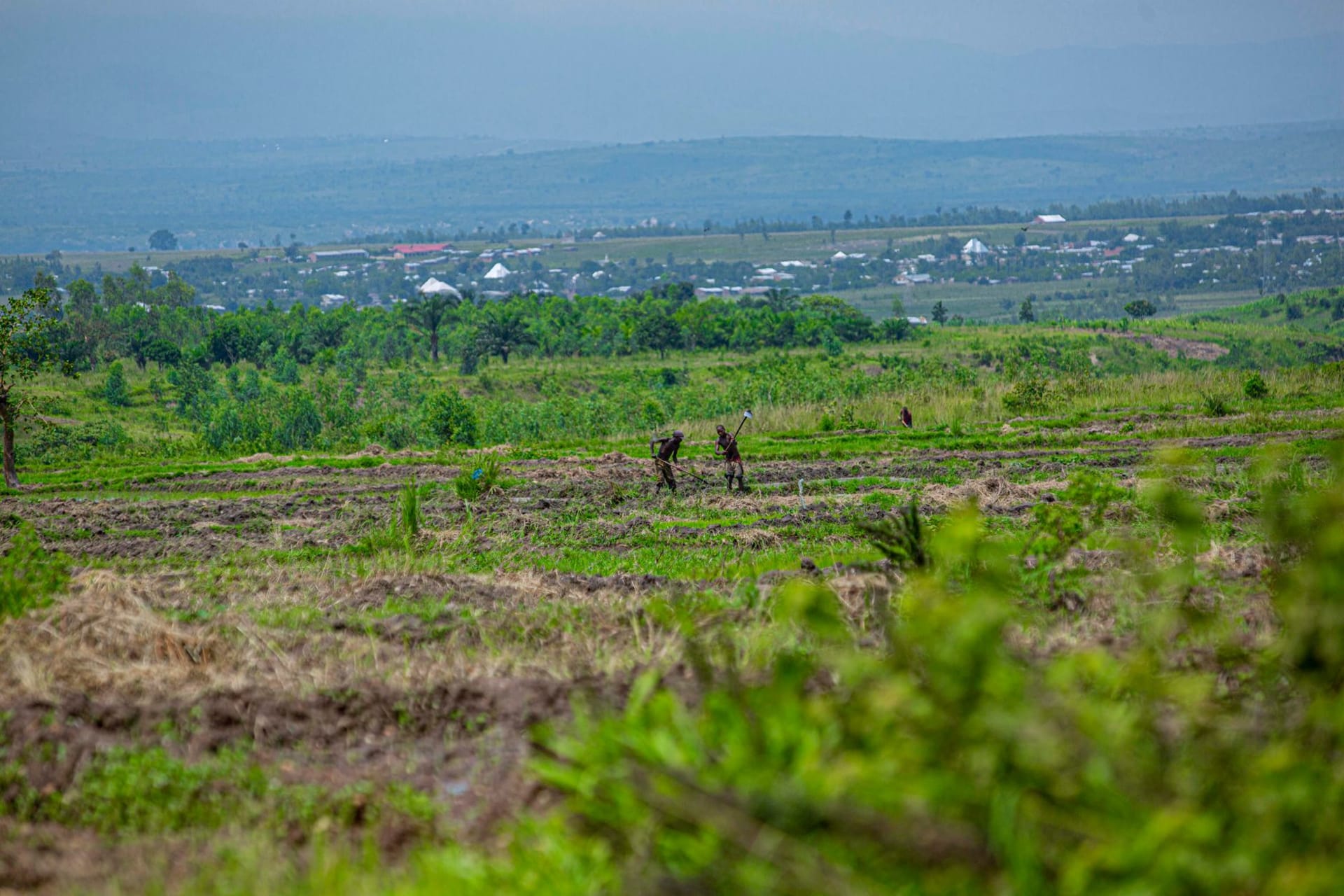
The landscape around Rutovu is beautiful in the unglamorous way that Burundi’s central highlands often are — not dramatic escarpments or volcanic cones but a continuous rolling green that goes on in all directions, a density of cultivation and banana groves and red dirt paths, broken by small streams that all, in their way, eventually reach the sea. I walked back to the main road slowly, stopping to talk to a woman washing cassava leaves in one of the streams that fed the channel. She knew about the monument. Everyone around here knew. Whether they thought of it as significant or simply as a concrete pyramid that Europeans had put in their neighborhood was not entirely clear.

I sat beside the spring for perhaps half an hour before walking back. There was no other visitor. Alexis had gone to his garden. The water moved on its own with the indifference of water, neither particularly aware of its distinction nor particularly bothered by my contemplation of it. That seemed correct.
When to go: The site is accessible year-round, but the June to August dry season makes the tracks manageable without a 4x4. From Gitega, the journey by shared taxi to the Rutovu junction takes around two hours; from there it is a short walk or motorbike taxi ride to the monument. The site has a nominal entrance fee. Combine with a visit to Gitega’s National Museum for a full day.