
Nyanza-Lac
"At five in the morning the lake belongs entirely to the fishermen, and standing there watching them go, I felt like I'd been let in on something."
I arrived in Nyanza-Lac on a bus that stopped at intervals so unpredictable they seemed improvisational — a fruit stand, a woman with a sack of charcoal who needed to get somewhere three kilometers up the road, a schoolboy who ran from a compound to flag us down. The town emerged gradually from the southern road: concrete buildings becoming more frequent, the smell of the lake arriving before the lake itself was visible, and then the road bending left and there it was — Tanganyika, enormous and tranquil, its southern end spreading toward Tanzania and Zambia in a haze that made the far shore entirely theoretical.
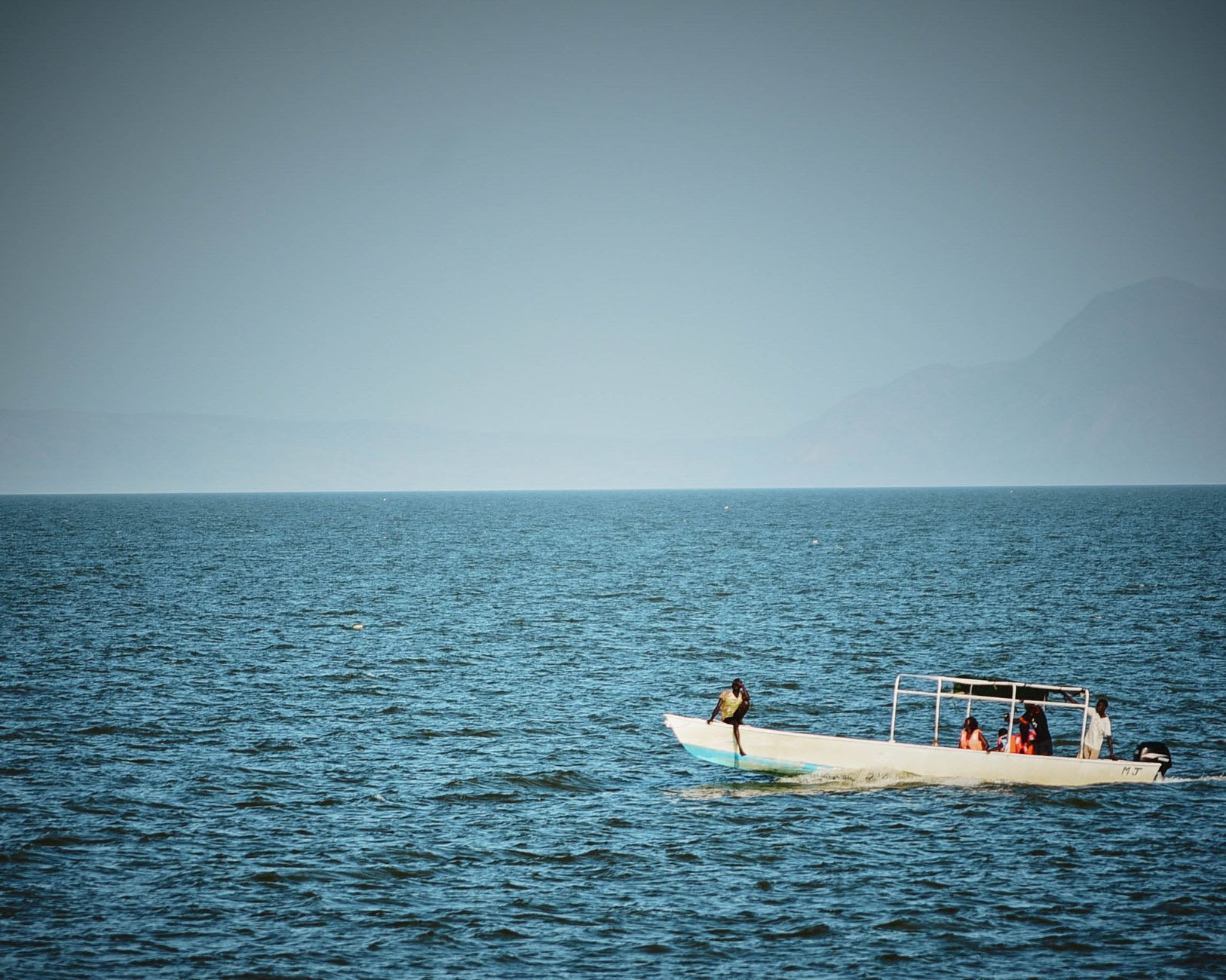
Nyanza-Lac is a small town, and most people who pass through are making for somewhere else — the Tanzanian border at Kagunga, or the Bururi highlands above. But I stayed three days, and the rhythm of the place became clear quickly. The mornings belong to the fishermen. Before five AM, if you walk down to the lakeshore, you find the pirogues launching into the dark water — low wooden boats, some with outboard motors and most without, heading out with lanterns mounted on poles to attract the ndagala, the tiny silver fish that come to the light in the small hours. The men who do this have done it their whole lives and their fathers before them, and the motion of pushing off from the shore and the setting of the lantern pole is practiced to absolute economy of movement.

By mid-morning the catch is in and the selling begins at an informal fish market that operates on the beach — women arriving with bowls balanced on their heads, bargaining in Kirundi that moves at a clipped, efficient pace. The smell of fresh fish and lake water is clean in the morning before the heat builds. I bought fried ndagala from a woman who cooked them in a pan of oil over a wood fire and served them in a cone of newspaper with salt that had clumped in the humidity. I ate standing up watching a pelican fish from a sandbar twenty meters out with an air of absolute professional focus.
The lake itself is the thing you keep returning to. Tanganyika’s southern basin is calmer than its northern reaches — the winds that whip up significant chop around Bujumbura tend to weaken by the time they reach here — and on certain mornings the water surface is so flat and so reflective that you can see the Congo hills in it, inverted, like a second world below the one you’re standing in. I swam twice, once at dawn and once in the late afternoon when the light had gone gold and the water was exactly the temperature of blood. No one else was swimming. The fishermen were repairing nets in the shade. A few children watched from a respectful distance, and after a while one came in after me.
There are no tourist facilities in Nyanza-Lac beyond a couple of basic guesthouses and local restaurants that serve grilled fish, rice, and whatever the market had that morning. This is a feature rather than a limitation — you eat what exists, you sleep where rooms are available, and you move at the pace the town sets.
When to go: The dry season (June to August) brings the clearest mornings and the flattest water — ideal for swimming and for watching the fishing operations. December to January also works well. The fish market is most active in the early morning every day regardless of season. The road from Bururi south to Nyanza-Lac is paved but deteriorates in heavy rains.