Kibira National Park
"The forest closes over the path behind you and the city stops existing."
I came to Kibira from Kayanza, the nearest highland town, in a 4x4 that took on two park rangers at a barrier of stripped bamboo poles and corrugated iron. The road into the forest was red mud even in what passed for the dry season, and the vehicle slid sideways on a curve about twenty minutes in, all four wheels briefly finding their own direction. The rangers didn’t look alarmed. One of them made a small sound like a teacher whose student has done something predictable. We got through.
What hit me when I stepped out was not the visual scale of the forest — though Kibira covers nearly 400 square kilometers of Burundi’s Albertine Rift ridgeline, and the canopy pressed down close and enormous — it was the sound signature. The forest was loud in a way I hadn’t expected. Not threatening, but dense with noise: insects in frequencies I couldn’t name, the distant percussive call of something large moving through undergrowth, bird calls that arrived from three directions simultaneously. Underneath all of it, almost as the substrate for the other sounds, was a continuous low-grade roar that turned out to be wind moving through the canopy high above. It took me several minutes to separate the layers.
Chimpanzees are the reason most people come to Kibira, and the park holds one of East Africa’s significant wild chimp populations. I heard them before I saw them — a long, rising, ecstatic hooting that the younger ranger translated for me without looking up from the trail: “They found fruit.” We found them twenty minutes later in a stand of fig trees, eight or nine individuals moving with a fluid efficiency that made watching feel like eavesdropping. One young male paused on a branch about six meters up, looked directly at me with an expression I can only describe as assessment, and then went back to stripping the tree with his hands. Whatever his conclusion was, he kept it to himself.
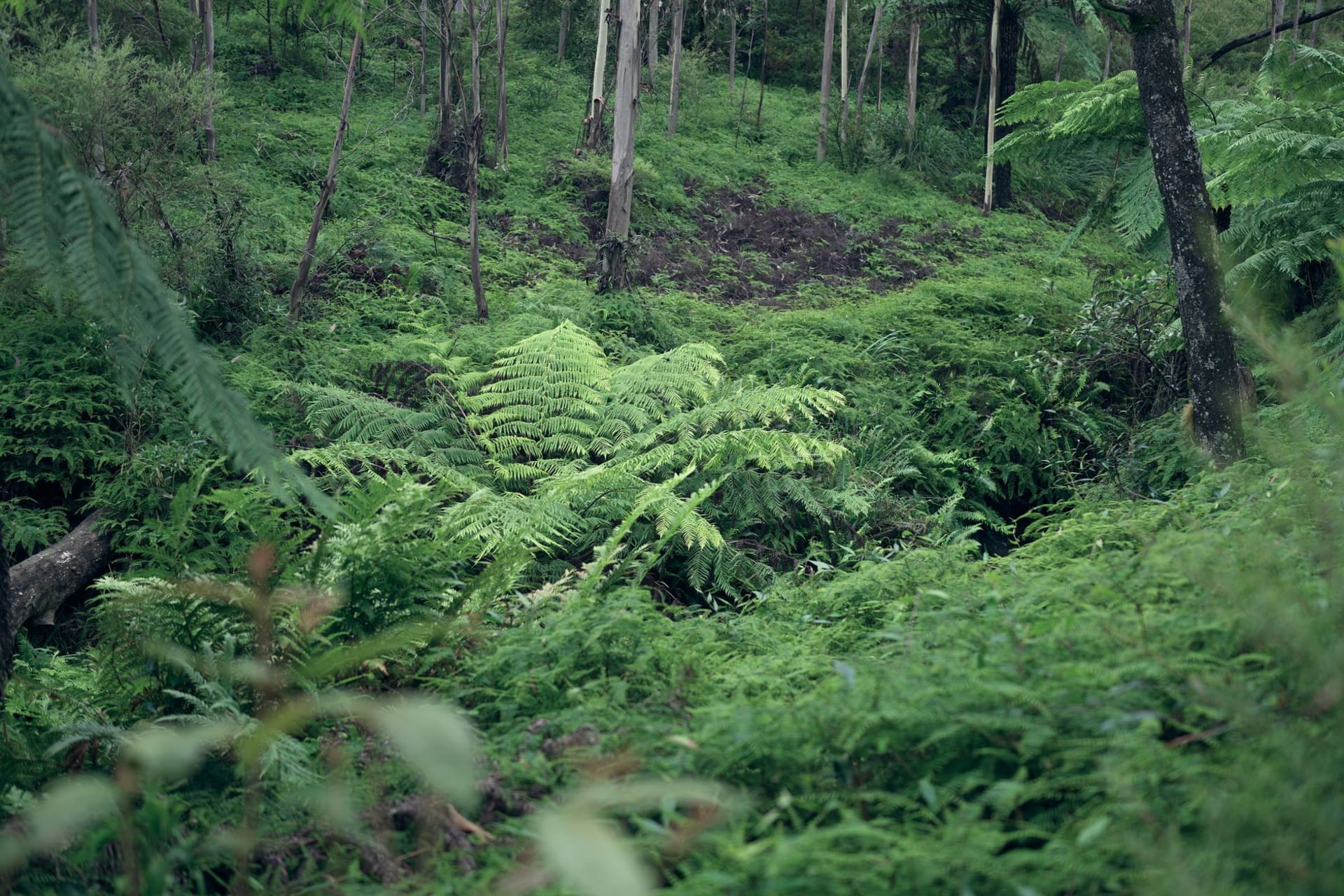
The botanical richness was something I wasn’t prepared for. Kibira’s altitude — ranging from about 1,600 to 2,660 meters — creates a layered habitat where cloud forest grades into bamboo zones, and the undergrowth holds species I couldn’t identify: ferns with fronds the size of small kayak paddles, mosses in colors I didn’t have words for, orchids growing from the forks of ancient hagenia trees whose bark was thick and silver and deeply furrowed. The rangers knew the trees individually, the way farmers know their fields. One of them stopped me at a tree wider than my arm span and said something in Kirundi that the other translated as “this one was here before anyone’s grandfather.”
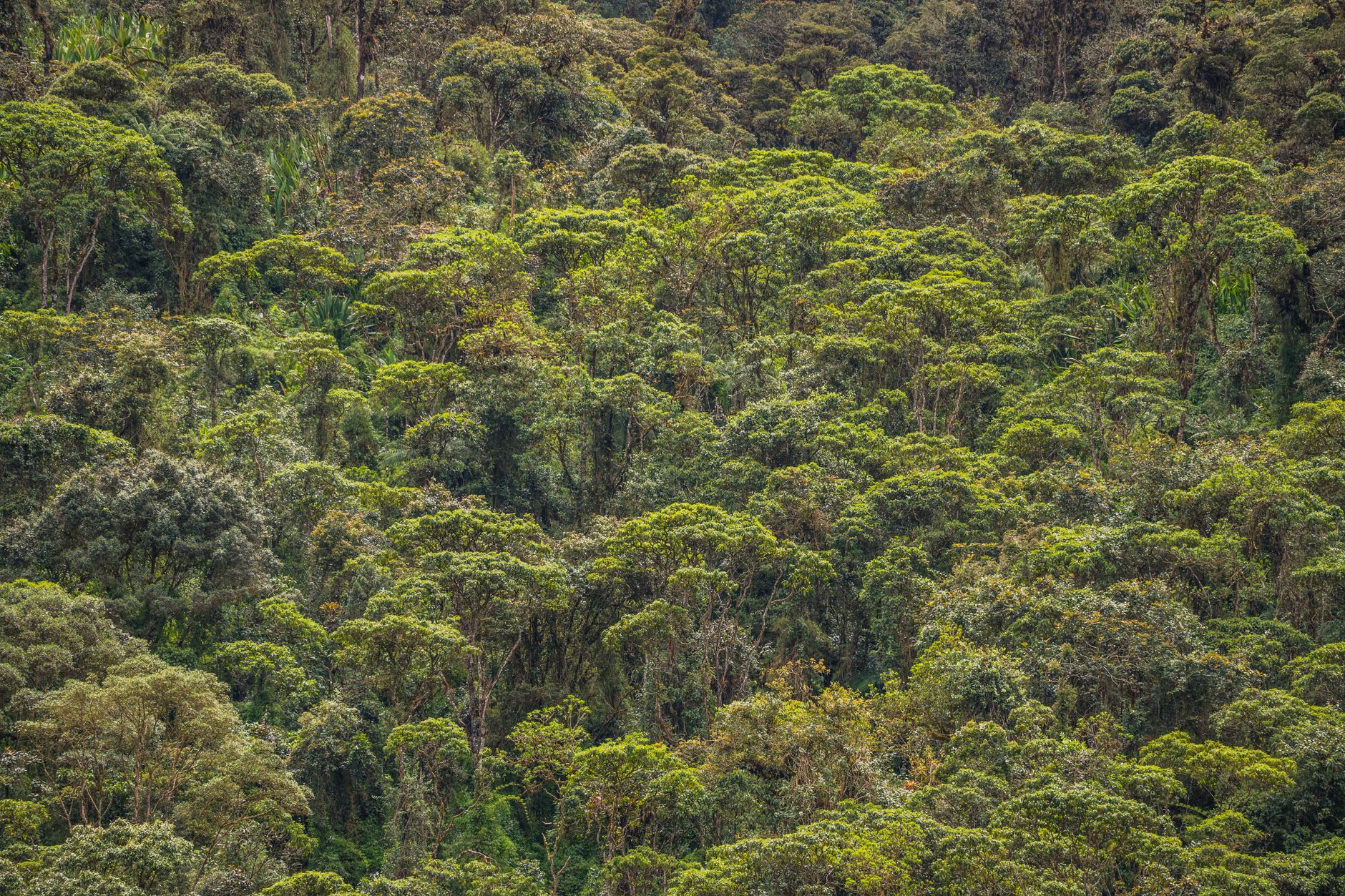
Coming out of the forest in the late afternoon, back into the thinning light and the red-mud road and the distant sound of a motorbike on the highway far below, I had the specific disorientation of returning from somewhere very far away to somewhere very near — the way forests do that, compress your sense of distance traveled. The journey back to Kayanza took forty minutes. The forest stayed in my peripheral vision the whole way, dark and absolute against the highland sky.
When to go: Kibira is accessible year-round but the dry seasons (June to August, December to January) make the roads and trails significantly more manageable. The chimps are present year-round; tracking success varies but June through August, when fruiting trees are active, tends to give better encounters. A registered guide and park permit are mandatory — arrange through the Office Burundais du Tourisme in Bujumbura or with the rangers at the Kayanza entrance.