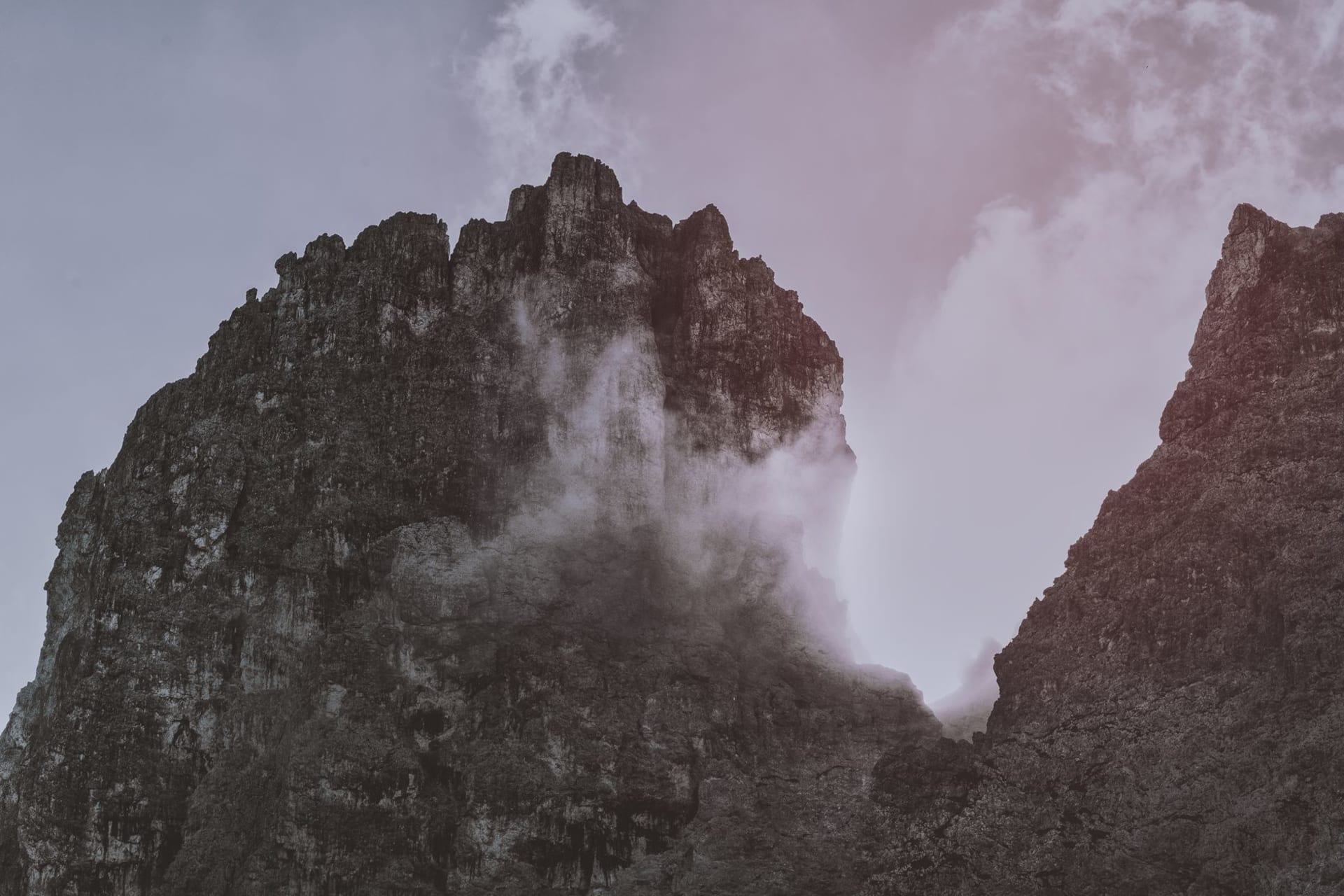
Sindou Peaks
"The peaks look like something dreamed up by someone who had read too much science fiction and not enough geology."
Nothing prepares you for the Sindou Peaks from the road. You are driving west from Banfora through low savanna — thornscrub and laterite and the occasional baobab standing alone like a large person waiting for a bus — and then the road drops slightly and you see them: a forest of red stone columns rising from the valley floor, some thin as chimneys, some broad and layered like stacked geological arguments, all of them assembled by millions of years of erosion into shapes that suggest intention without actually having any. I stopped the vehicle and sat on the hood for ten minutes just trying to decide if what I was seeing was real.
The Pics de Sindou are the result of differential erosion in a layer of Precambrian sandstone — the softer rock wears away, the harder veins remain, and over time what’s left is this gallery of pinnacles and fins and balanced formations that seem to defy what gravity typically permits. Walking among them is an experience of constant disorientation: you turn a corner and the scale shifts, a gap opens into a chamber where the walls press close and the sky above narrows to a thin blue strip, then opens again into a vista of the full valley below.

The village of Lorho sits at the base of the peaks and has a small campement where visitors can stay overnight. The campement is basic — mattresses on cots, a bucket shower, meals cooked on a wood fire — but it means you can watch the evening light work through the stone, which is the thing you really came for. As the sun drops toward the Comoé valley in late afternoon, the sandstone shifts through terracotta into something almost purple, the shadows thrown by the taller formations cutting the ground into geometric patterns that feel designed. I ate a plate of rice and black-eyed peas on the campement terrace as this was happening and felt, not for the first time in Burkina Faso, that I was being given something I hadn’t known to ask for.
The local Senoufo and Gouin communities consider certain formations sacred, and a guide from Lorho will point out the shrines — offerings of millet and cloth placed at the base of specific rocks, or tucked into natural niches in the stone — without much explanation, which is the right amount. Sacred geography doesn’t need narrating. You see it and you understand that this landscape has been inhabited and interpreted for a very long time, and that the geological and the spiritual have become so entangled here that separating them is not a useful project.
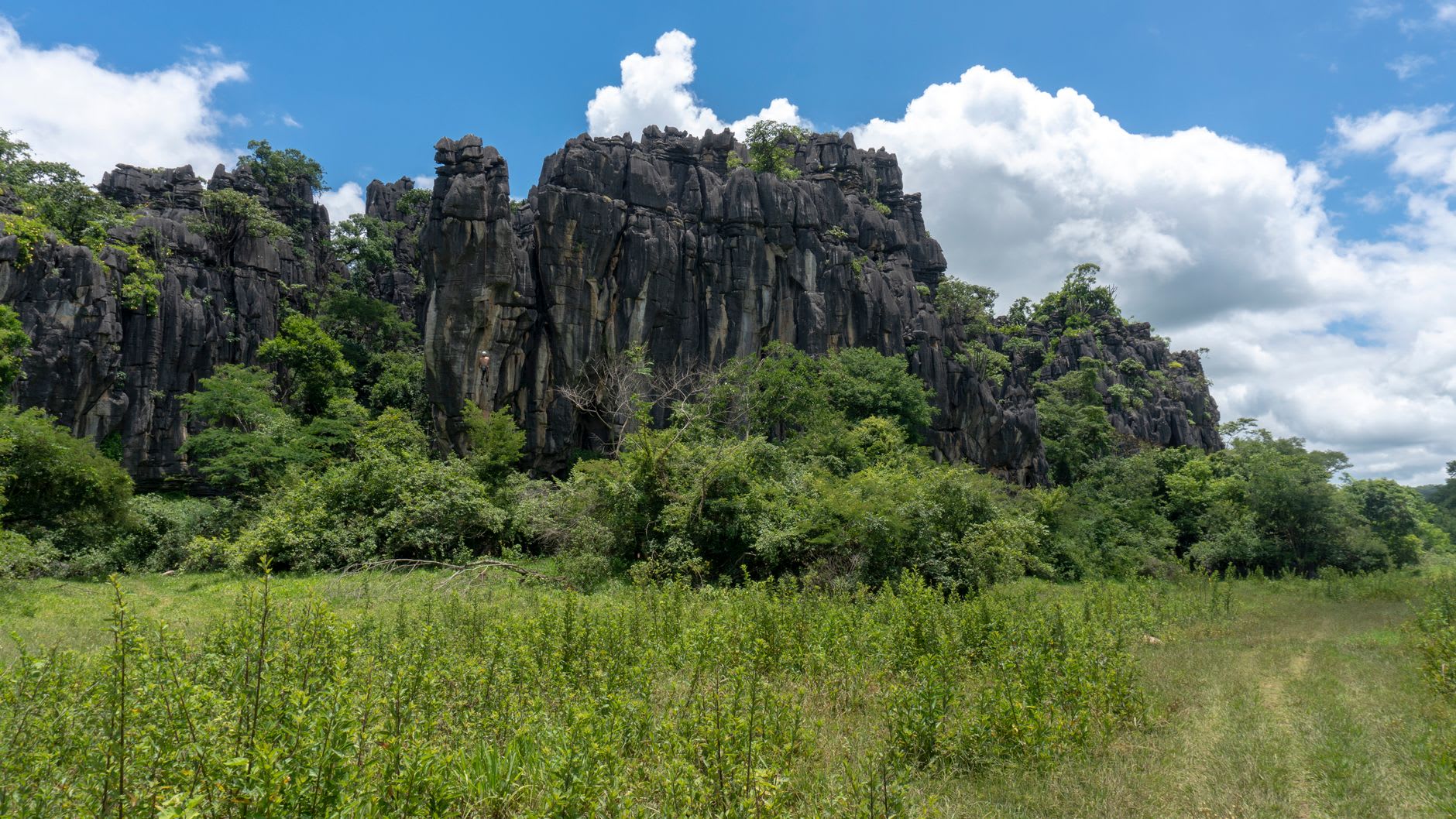
The dawn is worth the overnight stay. The peaks emerge from mist at first light as simple silhouettes, their scale simplified, their color not yet arrived. By seven in the morning the sun is clearing the eastern ridge and the stone turns gold before settling into its daytime red, and the birds — rollers, bee-eaters, hornbills working the fig trees — are audible before the heat sets in. At that hour, with the campement smoke rising and a cup of Nescafé in hand and the peaks doing what they do in new light, I understood why people come back here.
When to go: November through February is the dry-season window when paths are passable and temperatures manageable. Avoid the rainy months of June through September when paths become slippery and the valley clouds over; the landscape has a different beauty then but access is harder.