Africa
Burkina Faso
"The place that reminded me I was a traveler, not a tourist."
I landed in Ouagadougou — the Burkinabè call it simply Ouaga — in the dry season, when the harmattan coats everything in a fine layer of Saharan dust and the sky turns the color of old parchment by late afternoon. The airport is small, the visa process unhurried, and outside the terminal there are no touts screaming hotel names, no taxi drivers grabbing your bag. A man named Adama offered me a reasonable fare, asked where I was from, and spent the forty-minute drive to the city center explaining, unprompted, the difference between the Mossi and the Bobo ethnic traditions of weaving. I hadn’t said a word about textiles. He just assumed I’d want to know. He was right.
Ouaga confounds the West African city expectations built from Lagos or Abidjan. It is calmer, dustier, more spacious. The roundabouts are enormous and the motos — thousands of them, weaving in practiced formation — are the real transit system. In the quartier of Zogona, the maquis restaurants serve tô, a stiff millet paste eaten with a peanut-and-leaf sauce called ragout, and you eat it with your right hand at a plastic table while a French-language soap opera plays on a wall-mounted television no one is watching. In the market of Rood Woko, phone chargers and dried fish and hand-dyed bogolan cloth share the same narrow corridor. The scale is manageable, the prices are honest, and the sellers do not follow you when you decline.
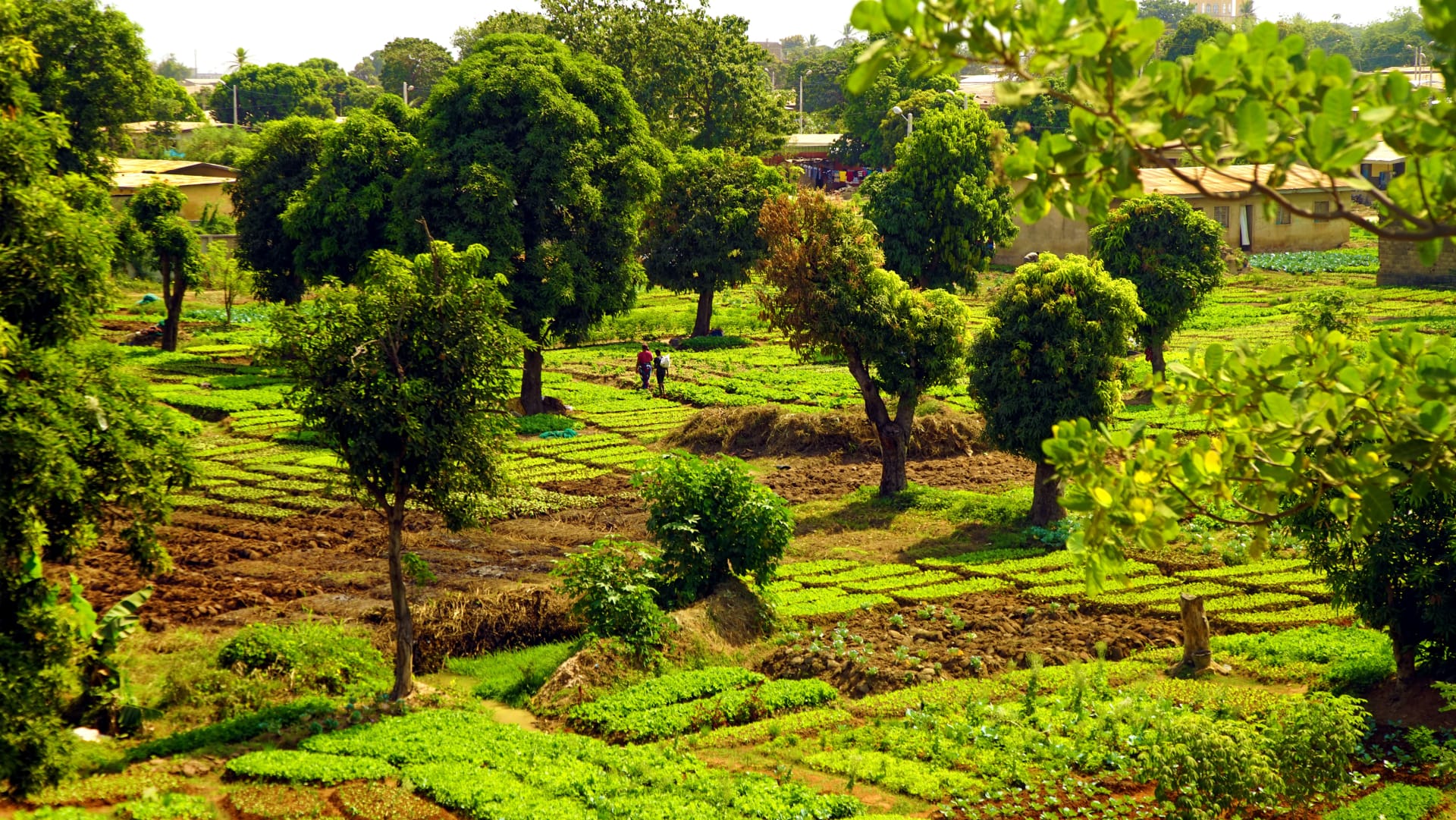
Outside Ouaga, the country opens into a flat landscape of kapok trees and termite mounds and laterite roads that turn the underside of your vehicle the color of brick. The town of Bobo-Dioulasso in the west is arguably more charming — slower, greener, with a Grande Mosquée built in the Sudano-Sahelian style, its wooden spires jutting from pale mud walls like the masts of a half-buried ship. The Cascades de Karfiguéla, twenty kilometers north, drop into cold pools where local families picnic on weekends. I swam there on a Tuesday and had the water entirely to myself.
When to go: November through February is the sweet spot — the harmattan has died down by December and temperatures are bearable, hovering around 30°C rather than the 40°C+ of March and April. The SIAO international craft fair in Ouaga runs every two years in October-November and is worth building a trip around if the timing works.
What most guides get wrong: Most coverage of Burkina Faso, when it exists at all, fixates on instability and discourages travel entirely. The security situation in the Sahel border regions deserves real attention and you should check current advisories before going. But Ouaga, Bobo-Dioulasso, and the southwest corridor are a different reality — one of the most welcoming urban cultures I have encountered in West Africa, with a creative scene (in music, film, and craft) that punches far above the country’s economic weight. FESPACO, the Pan-African film festival held here every two years, draws filmmakers from across the continent for a reason. Burkina Faso is not a country to avoid. It is a country to understand before you go.