
Ouagadougou
"I came for a stopover and stayed a week. Ouaga has a way of doing that."
I landed in Ouagadougou in the dry season, in that particular late-afternoon hour when the harmattan filters the light into something amber and soft and slightly unreal. The airport is small enough that you can see the tarmac through the window before the door opens, and the air that hits you is hot and dry and carries the faint char of grilled meat from somewhere beyond the perimeter fence. A man named Adama was waiting with a cardboard sign bearing my name, and by the time we reached the first roundabout — enormous, full of motos threading between vehicles with a precision that suggested a shared choreography nobody had taught them — he had already explained the difference between Mossi and Bobo weaving traditions without me having asked. I hadn’t said a word about textiles. He just assumed I’d want to know. He was right.
Ouaga confounds the expectations built from other West African capitals. It is calmer than Lagos, dustier than Dakar, more spacious than Lomé. The city spreads low and wide across the plateau, interrupted by enormous roundabouts and the flat-roofed geometry of concrete buildings the color of old bone. The motos — tens of thousands of them, mostly small Chinese-made models — are the real pulse of the place. Watching them negotiate an intersection at rush hour is hypnotic: no horns, no shouting, just a dense river of metal and bodies braiding itself through whatever gap presents itself.
In the quartier of Zogona, I found a maquis — one of the open-sided restaurants that do most of the serious eating in this city — and ate tô for the first time. It is a stiff millet paste, gray-beige and dense, eaten by pinching off a piece and dragging it through a sauce of ground peanuts and sorrel leaves called ragout. You eat with your right hand at a plastic table while a French-language soap opera plays on a wall-mounted television that nobody is watching. The woman who runs the maquis brought the food without ceremony, checked that I was eating it correctly, and then ignored me with a completeness that felt like respect. There was no tourist menu. There was no menu at all. This was what was being eaten today, and I was eating it.
At the Rood Woko market in the city center, the stalls press together so tightly that shade becomes its own currency. Phone chargers and dried fish and lengths of hand-dyed bogolan cloth — the mud-printed fabric whose geometric patterns have carried Malian and Burkinabè meaning for centuries — share the same narrow corridor. The sellers do not follow you when you decline. In many markets across West Africa, the pursuit after a declined purchase is relentless and exhausting. Here, a shake of the head is accepted, the eye contact is dropped, and the world moves on.
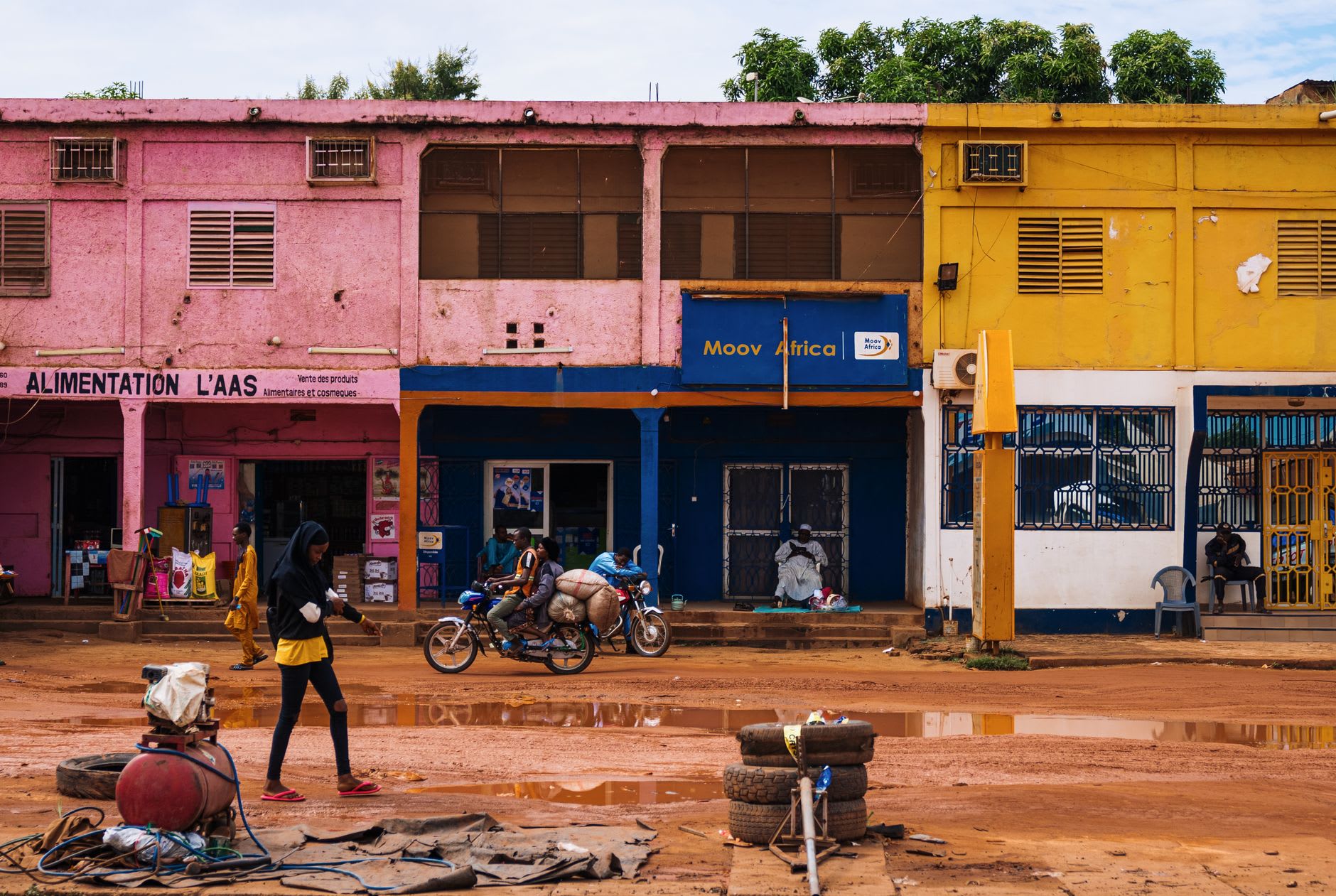
The city’s creative life surprised me most. FESPACO — the Pan-African Film and Television Festival of Ouagadougou — runs here every two years and draws filmmakers from across the continent, lending the city a cinephile undertow that you feel even when the festival isn’t running. In the evenings, live music spills from bars in the Koulouba district: kora, balafon, sometimes a reggae band covering Burkinabè originals in a way that sounds nothing like the original and exactly like what the song wanted to become. The hospitality operates at a frequency I hadn’t encountered since rural Morocco, but louder and warmer and without any of the commercial undertow. People want to talk. They want to know where you’re from and what you think and whether France is really as cold as they say. The art of conversation here is practiced like a contact sport, and by the third day I had started to find my footing in it.
When to go: November through February is the sweet spot — harmattan season ends by December and temperatures hover around 30°C rather than the punishing 40°C+ of March and April. If FESPACO is running (even-numbered years, late February), build your entire trip around it.