Gevrey-Chambertin
"Nine grand cru vineyards in one commune. The villagers walk past them every day without looking up, which I find almost moving."
The road into Gevrey-Chambertin is narrow and unremarkable and leads through vines that are, depending on the parcel, among the most valuable agricultural land on earth. This is the northern end of the Côte de Nuits, and the limestone and clay here produces a version of pinot noir that has made grown men weep and driven collectors to absurdity. I drove it slowly, which annoyed the locals behind me. I stopped to look. I got back in. I stopped again.
The village itself is small — maybe three thousand people — and has the slightly self-possessed quality of a place that knows it sits atop something extraordinary without needing to perform excitement about it. The château in the centre of the village, built in the tenth century and owned for centuries by the abbots of Cluny, is compact and dark and accessible, though what you are really here for are the domaines scattered along the streets. Most of the celebrated producers — Rossignol-Trapet, Denis Mortet, Harmand-Geoffroy — have their winemaking operations integrated into the village fabric: a gate in a stone wall, a discreet sign, a bell you ring and then wait. You are entering someone’s working farm when you taste here, not a shop.

I arranged a tasting at a small domaine through a contact — I will not name them because I don’t want to make their life difficult — and the vigneron, a woman in her forties who had taken over from her father a decade earlier, poured six wines in a room that smelled of barrel oak and cool stone. She talked about the Chambertin parcel — Napoleon’s favorite, famously, though she mentioned this only to immediately say Napoleon knew little about wine — in terms of the specific clay composition, the way the slope channels cold air at night, the decisions about when to harvest. She was precise and dry-humored and clearly did not think she was doing anything remarkable. This is the wine equivalent of watching a great craftsperson work: the more deeply they know their subject, the less drama surrounds it.
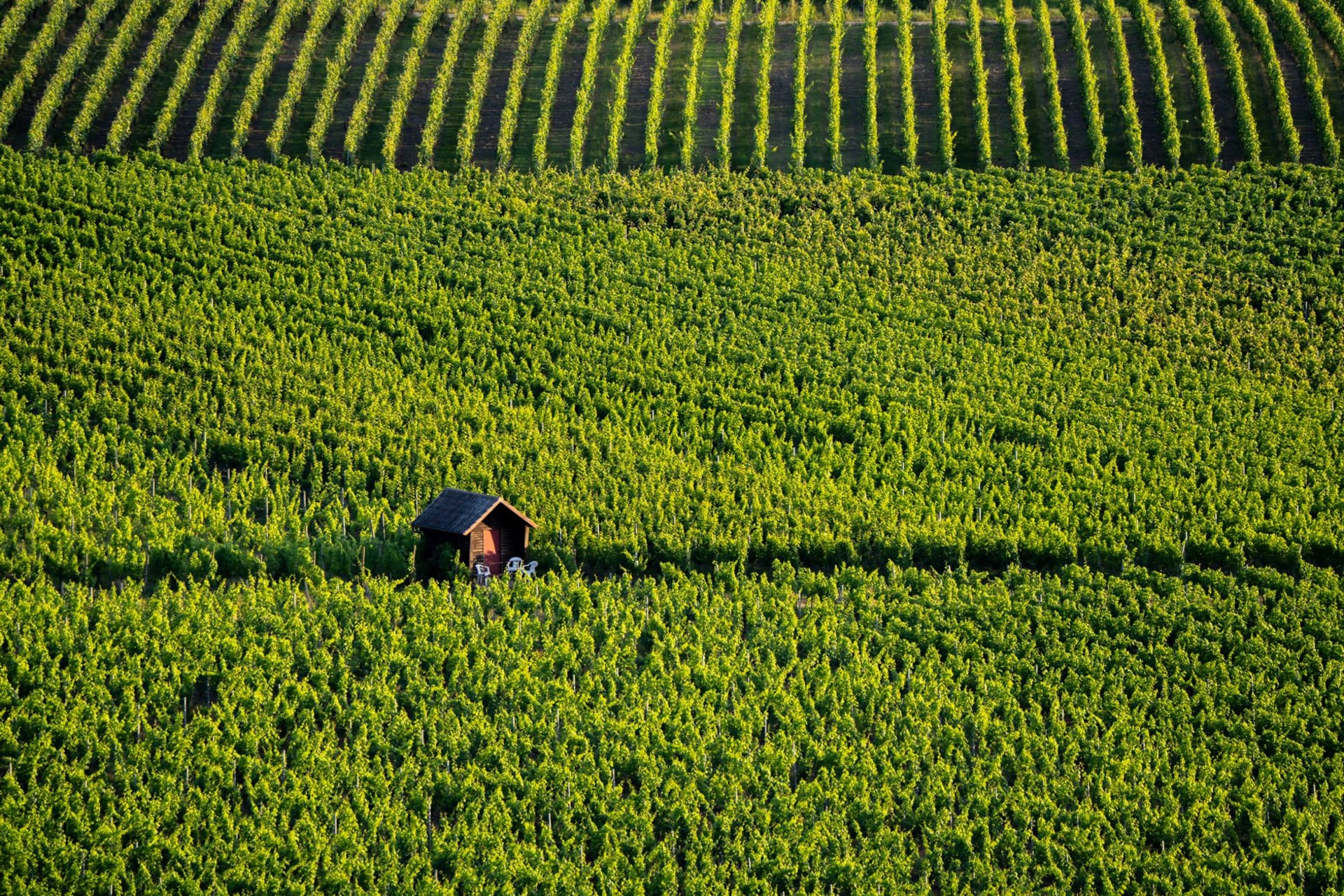
The nine grand cru vineyards lie just upslope from the village — Chambertin, Chambertin Clos de Bèze, Latricières-Chambertin, Mazis-Chambertin, Charmes-Chambertin, and four more. You can walk among them. I did, on a late-September afternoon when the vines were going red at the edges and the pickers had already been through one section. The harvested rows have a gutted quality — the leaves still vivid but the fruit gone. I stood at the boundary between Chambertin and the AC Bourgogne vineyards just below. On one side, bottles costing hundreds of euros; on the other, bottles costing twelve. The soil looked identical to me, which is the point, and also the mystery.

Gevrey-Chambertin is not a village that eats well, by which I mean there are few restaurants and the ones that exist serve food that is correct but not the reason you are here. The reason you are here is the liquid. The village épicerie sells bread and local cheese and a small selection of bottles at domaine prices. This is the correct lunch setup.
When to go: The vendange — harvest — falls in mid to late September, varying by year. This is the electric moment: picking crews in the vines before dawn, tractors loaded with wooden crates, the air smelling of crushed grape skin. May is also excellent, when the vines are in early leaf and the crowds are minimal.