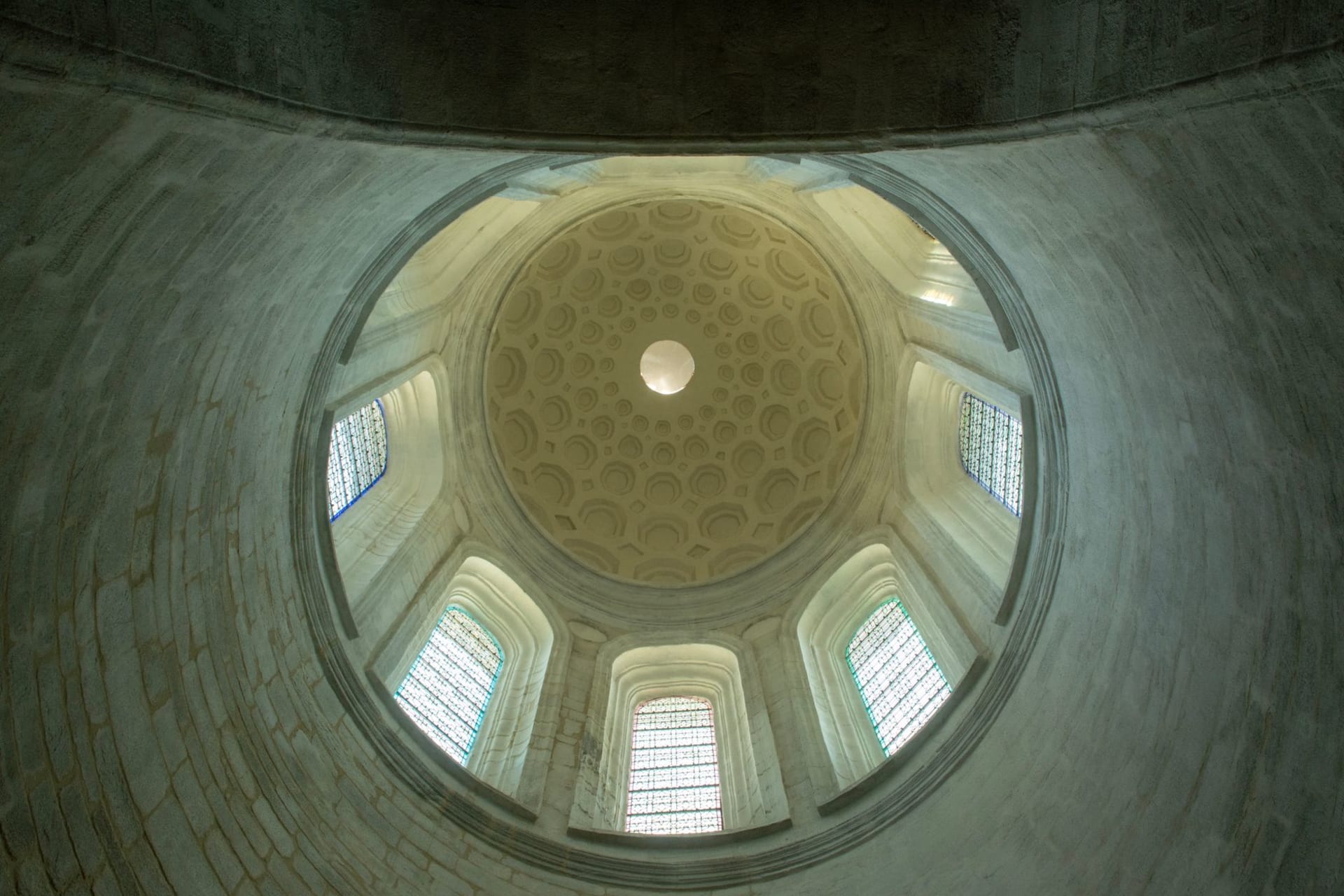
Fontenay Abbey
"I have visited cathedrals that tried to overwhelm me. Fontenay does the opposite, and it is the one I keep thinking about."
After a few days in Burgundy of rich food and richer churches, Fontenay arrives like a cold glass of water. The abbey sits at the bottom of a narrow wooded valley near Montbard, well off the wine route, and you reach it down a small road through forest that opens suddenly onto a clearing of pale stone buildings and clipped lawns. Lia and I had spent the morning in the gilded excess of a Burgundian basilica, and the contrast could not have been sharper: Fontenay is the oldest Cistercian monastery still standing in Europe, founded in 1118 by Bernard of Clairvaux, and the entire point of the Cistercians was to have nothing, build plainly, and let God do the decorating.
Beauty by subtraction
The church, consecrated in 1147, is the purest expression of this I have ever stood inside. There is no stained glass, no gilding, no painted saints — only honey-colored stone, perfect Romanesque proportion, and light. The Cistercians banned towers, sculpture, and color as distractions, and what is left when you strip all that away turns out to be overwhelming in a completely different register: a long barrel-vaulted nave so calm and so exactly proportioned that lowering your voice happens without any decision on your part. We stood at the back for a long time and neither of us said anything, which felt like the correct response and also, I suspect, exactly the one the builders intended.
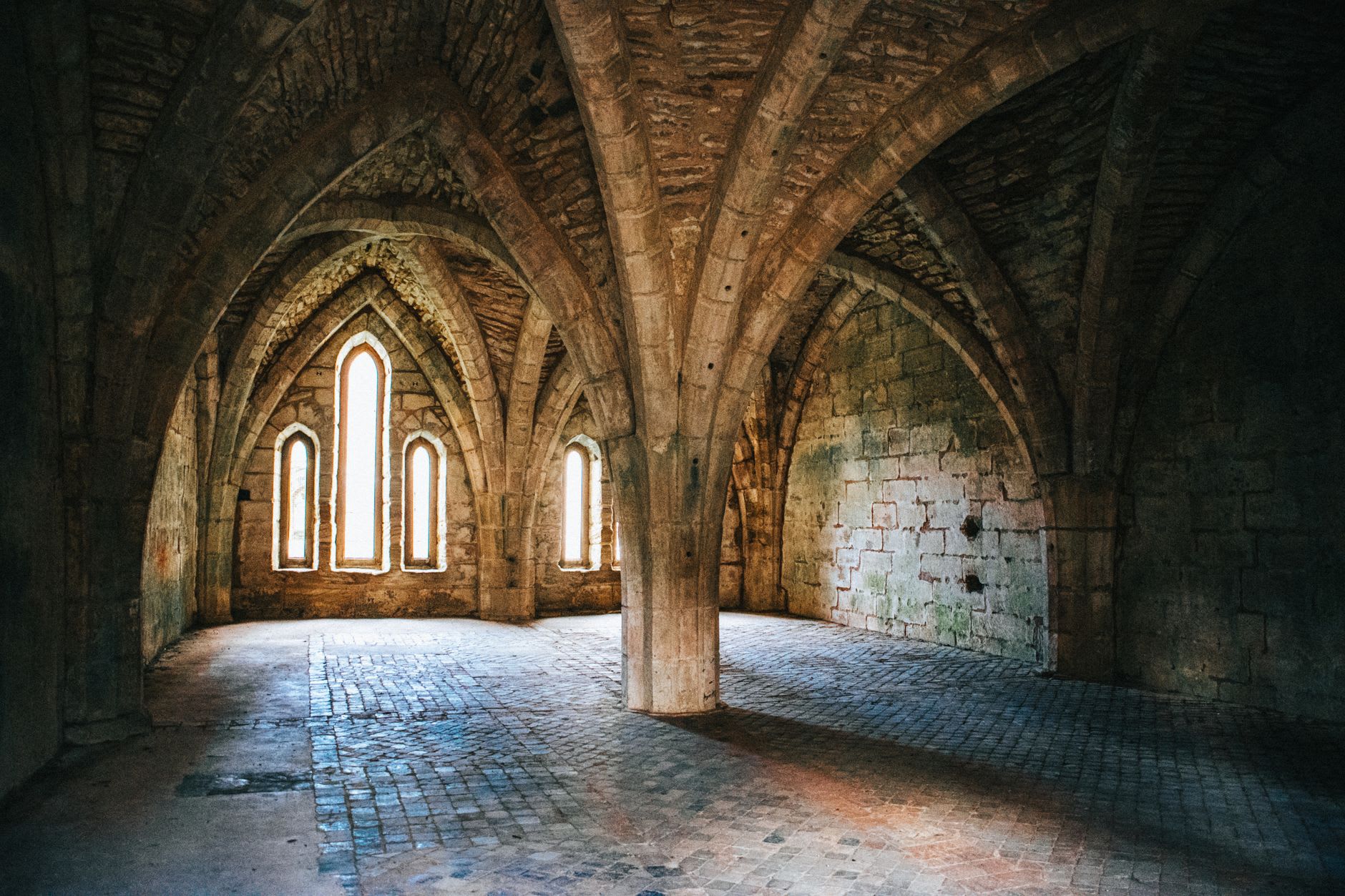
Off the church runs the cloister, four covered walks of paired columns around a square of grass, and this is the heart of the place. The light moves around it through the day, the stone holds the cool, and you can sit on the low wall and watch a thousand-year-old idea about how to live just sitting there being persuasive. The monks’ dormitory above, a vast room under a magnificent oak roof, slept the whole community on the bare floor. The Cistercians did not believe in comfort, and I will confess that an hour in their abbey made my own attachment to it feel slightly embarrassing.
The monks who forged iron
What surprised me most was the forge. The Cistercians were not merely contemplatives; they were formidable engineers and businessmen, and Fontenay’s forge — a long stone hall beside a diverted stream — is one of the oldest metalworking factories in Europe. The monks dammed the brook and used a water wheel to drive a hammer, smelting iron from local ore on an industrial scale eight hundred years before the word industrial existed. Standing in that hall, looking at the channel that powered it, I had to revise my picture of medieval monks as men purely of prayer. These were people who prayed seven times a day and also ran a profitable ironworks, and saw no contradiction.
We walked the gardens afterward, which are formal and lovely and were the only thing not built by the monks — the abbey passed into private hands after the Revolution, was nearly turned into a paper mill, and was rescued and restored over generations by the family that owns it still. We bought cider from the shop and drank it on a bench by the stream that once turned the forge hammer, and the whole valley was silent except for water. It is, I think, the most quietly persuasive place I saw in Burgundy, and the only one that made me want to own less.
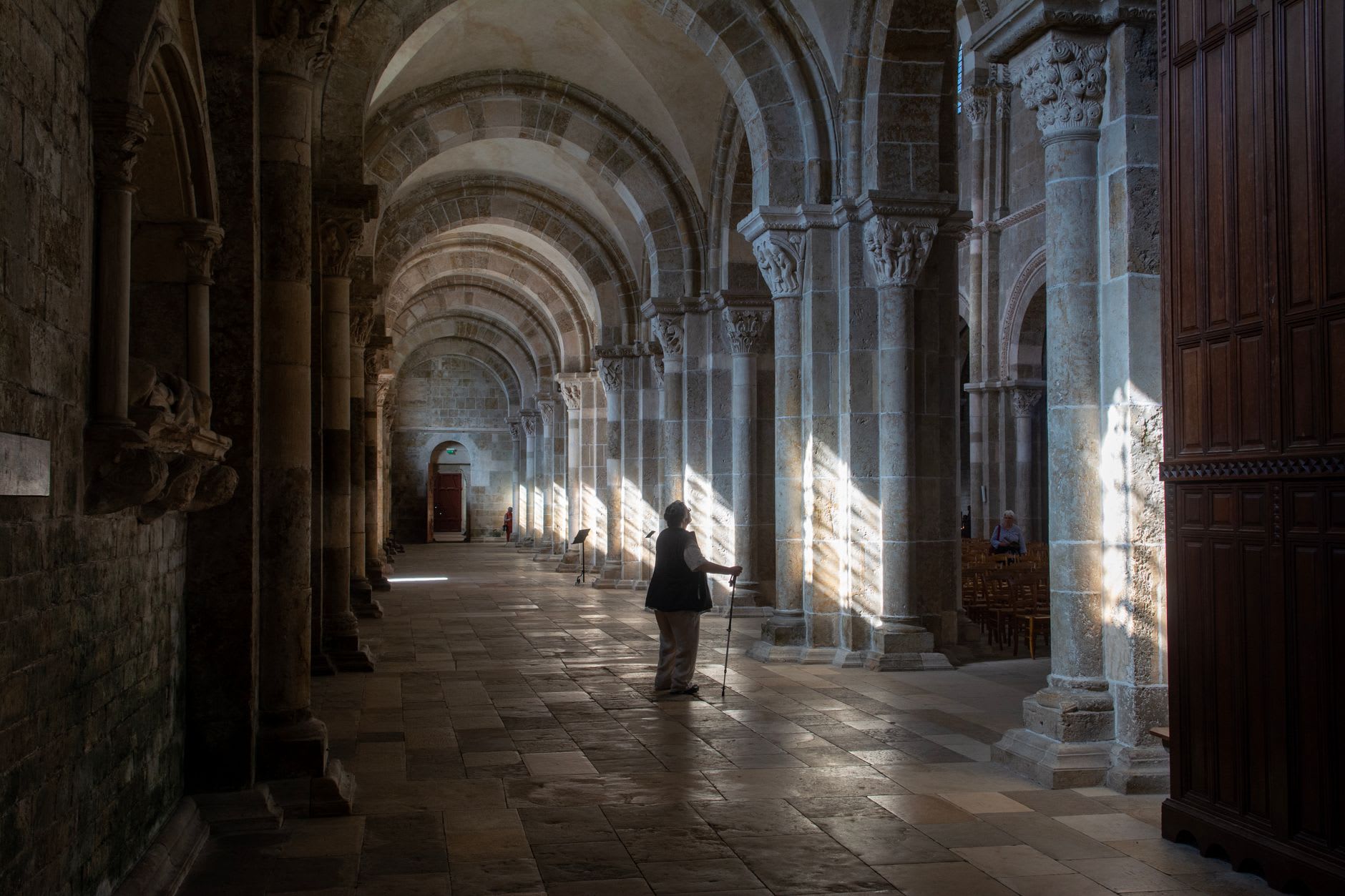
When to go: Spring and early autumn, when the gardens are at their best and the valley is green but not yet baking. Arrive at opening to have the church and cloister to yourself for the first half-hour — the silence is the main attraction, and it does not survive a coach party.