Dijon
"Every city has a smell. Dijon's is warm mustard seed and cold stone, and it is stranger and better than it sounds."
The smell hits you first in the covered market — Les Halles de Dijon, designed by Gustave Eiffel before he got famous for a tower in Paris. The mustard stalls are impossible to ignore. Not the polite little jars on supermarket shelves but enormous ceramic crocks from which vendors ladle samples onto little wooden spoons thrust in your direction with cheerful insistence. The Dijon mustard I ate here bore the same relationship to the jarred kind that a ripe market tomato bears to a January supermarket one — same idea, different creature. I bought three jars. I should have bought six.
Dijon earned its status as a regional capital honestly. This was the seat of the Valois Dukes of Burgundy in the fourteenth and fifteenth centuries — a period when the Duchy of Burgundy was one of the wealthiest and most powerful political entities in Europe, briefly controlling territory that stretched from what is now Belgium to the Jura mountains. The Palais des Ducs at the centre of the old town is the physical residue of that improbable dominance. The façade facing the Place de la Libération is formal and grand, but the interior — now the Musée des Beaux-Arts — holds the painted tombs of Philip the Bold and John the Fearless, two of the great Valois dukes, carved from black Dinant marble and white Flemish alabaster. The detail of the mourners — forty weeping figures each subtly different — stopped me in the gallery for longer than I expected.

The street pattern of the old town is medieval and entirely walkable. Dijon has more hôtels particuliers — the grand private mansions of the bourgeoisie — than almost anywhere in France outside of Paris, and many have been preserved with their original carved stone facades, interior courtyards, and wooden staircases. There is a tourist trail called the Owl’s Trail — marked by small bronze owls embedded in the pavement — that leads you past most of the significant buildings. I followed it only partially, which is the correct approach; the best parts of Dijon are the streets you wander into by accident looking for a café.
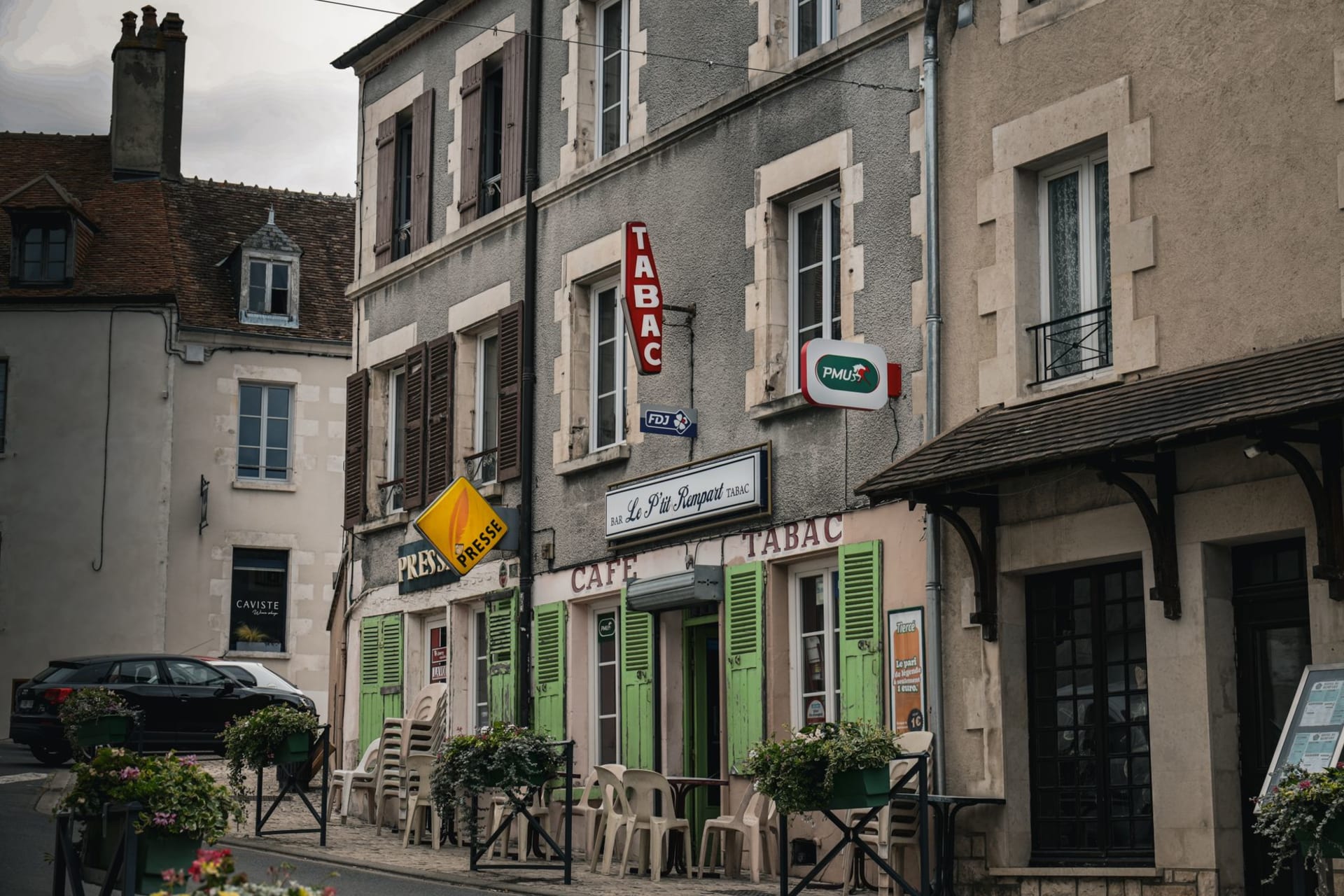
The Place François-Rude, in the middle of the pedestrian zone, has outdoor café tables that are occupied from roughly ten in the morning until the last drinker leaves at midnight. I sat there one evening with a glass of Bourgogne aligoté — the white grape variety that gets less attention than Chardonnay but is the base for a proper Kir — and watched the square go through its evening rhythms: students, couples, an old man reading a newspaper with absolute concentration, a child practicing on a bicycle in the gap between the café chairs. City life, lived at a tempo that felt generous.

The food scene in Dijon is the best in Burgundy’s urban centres. The market alone is worth a morning — the charcuterie here is exceptional, the jambon persillade made from great ham suspended in herb-flecked jelly. The restaurants around the Rue Monge and Rue Berbisey operate at serious levels without the theatre of gastronomy; these are places where people eat because the food is good and not because the restaurant has been written about.
When to go: Dijon works in all seasons — it is a proper city, not a seasonal destination. The Gastronomy Fair in early November is a genuine regional event. Summer brings outdoor concerts and the market is at its most abundant in July and August. Autumn, when the vineyard harvest is happening in the surrounding Côte d’Or, gives Dijon an extra charge of energy.