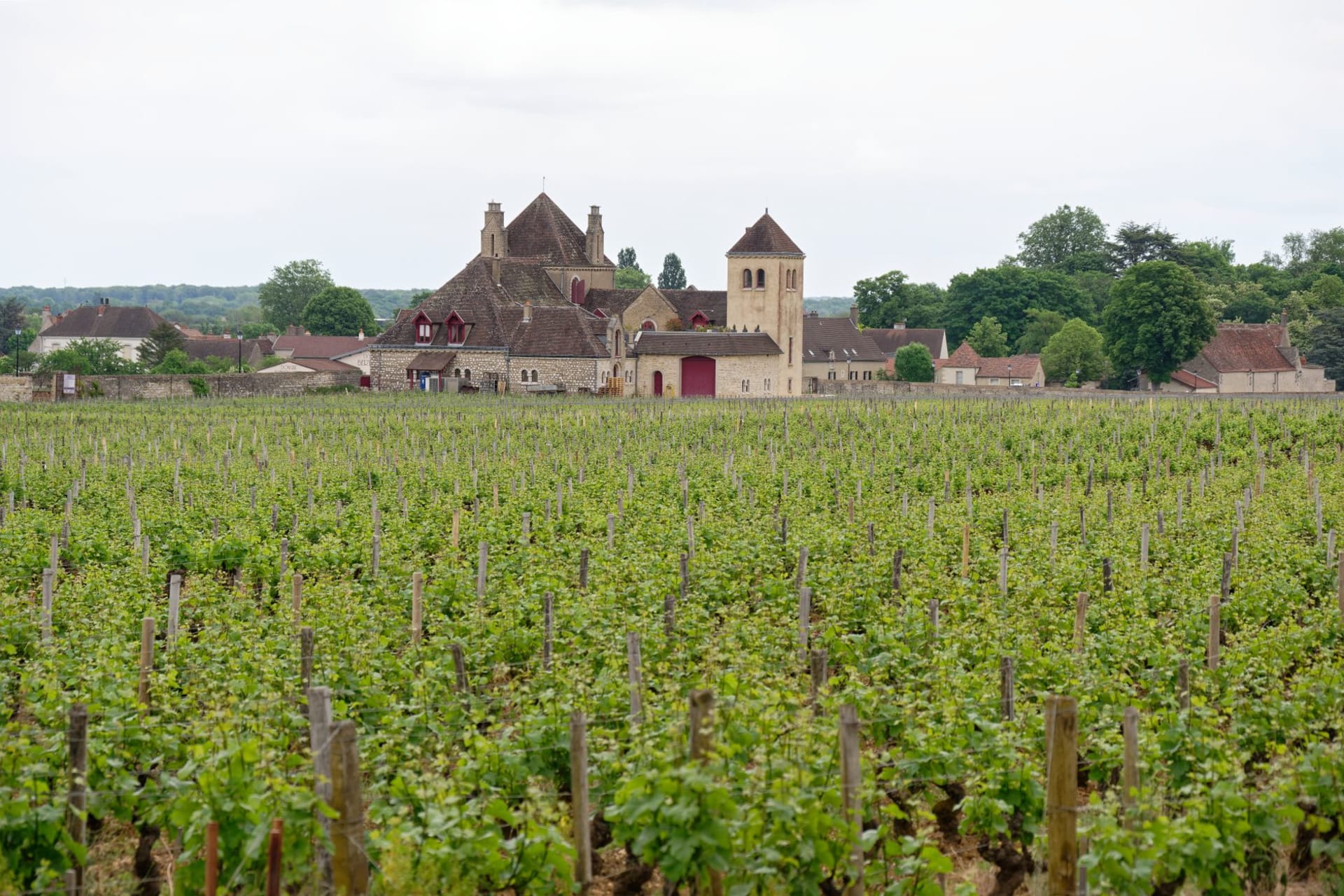
Chablis
"A good Chablis tastes like someone distilled the smell of a cold chalk cave into a glass. Nothing else tastes like that."
Chablis sits alone, geographically speaking. It is 135 kilometers north of Beaune, technically part of Burgundy but separated from the Côte d’Or by a long stretch of rolling agricultural land. Getting here involves driving through a countryside of sunflower fields and limestone plateaus that look nothing like the famous wine hillsides to the south. The town itself is small — maybe two and a half thousand people — strung along the Serein, a narrow river whose name means serene, which it is, grey-green and glassy in the morning.
I arrived in October when the harvest had just finished, and the co-operative in the town centre smelled powerfully of fermentation — that particular sharp, yeasty, almost animal smell of grape juice becoming wine. I stood on the bridge over the Serein and looked up at the premier cru slopes across the water. They are steep and south-facing, the vine rows angling up toward the plateau, and the soil has a distinctly pale quality — this is Kimmeridgian limestone, ancient seabed, full of the fossilized shells of tiny oysters that lived here 150 million years ago. Winemakers will tell you, seriously, that this is why Chablis pairs so well with oysters. I am not sure I believe the mechanism, but the pairing is undeniably correct.

The wines of Chablis are the most austere expression of Chardonnay I know. Where Meursault is round and honeyed and the Puligny-Montrachets are complex and weighty, Chablis is lean and mineral and cold, as if the grape has absorbed the temperature of the limestone it grows in. The best ones — the grands crus, of which there are seven, all visible on a hillside on the north bank of the Serein — have an intensity that unfolds slowly, a chalky backbone that carries them for decades. A Raveneau Chablis Premier Cru from a good year is, for my palate, as profound as anything made in the more celebrated Côte de Beaune.
I tasted at three domaines over two days. The cellars here tend toward stainless steel rather than oak barrels — Chablis producers are serious about not obscuring that mineral character with wood flavors, though there is an ongoing philosophical divide in the region between those who use some oak and those who don’t. The conversations that happen around this question — heated, detailed, conducted in rapid French — are the sort of argument that only makes sense when you care deeply about something very specific. I find them wonderful.

The town of Chablis has a handful of restaurants, a good cheese shop, and the kind of quietness that belongs to places that produce something exceptional and don’t particularly need you to know about it. The tourism here is purposeful — people come specifically for the wine — which means the local economy doesn’t depend on performing hospitality. The tastings are serious and the producers talk to you as an equal if you approach them with curiosity and not the consumer’s entitlement of someone who has come to sample and possibly not buy.
When to go: Harvest in Chablis runs a few weeks earlier than the Côte d’Or, typically mid-September. The combination of the spectacle of the vendange and the crisp autumn light on the premier cru slopes makes late September the best time. June is excellent too — the vineyards vivid green against the pale limestone, the river high and clear.