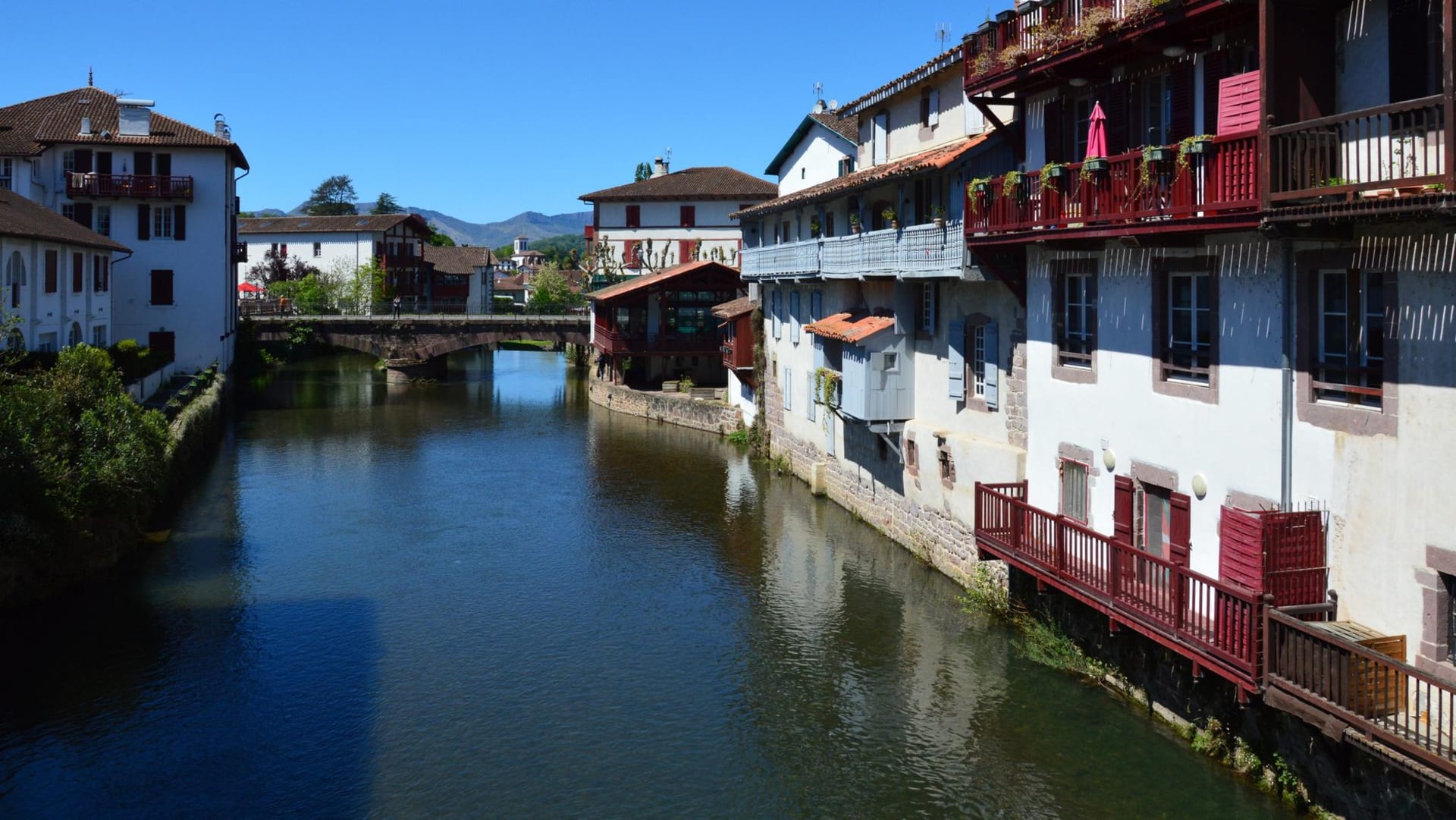
Canal de Bourgogne
"The canal teaches you that four kilometers an hour is, in fact, a perfectly reasonable speed for moving through the world."
I rented a vélo at Tonnerre and followed the towpath south. The canal de Bourgogne is one of the great French waterways, completed in 1832 to link the Seine basin to the Saône, crossing the limestone plateau of Burgundy through 189 locks. The locks are its character: every three or four kilometers, a stone lock chamber with wooden gates, a lock-keeper’s cottage with geraniums in the window, a hand-cranked mechanism that has been doing the same job since the nineteenth century. I had the path mostly to myself that morning, which is the other thing about the canal — it has been largely bypassed by modernity, and the freight barges that once defined it have mostly gone. What remains is a long corridor of plane trees, still water, and a quality of light that bounces off the canal surface and hits the underside of the tree branches in a way I spent half the morning trying to describe and eventually gave up.
The canal passes through the small town of Montbard, where Georges-Louis Leclerc de Buffon — the eighteenth-century naturalist who spent forty-four years writing a forty-four-volume natural history of the world — had his estate. The Parc Buffon is there, a formal garden on a hillside above the canal, with the iron forge where Buffon tested his theories about the age of the earth. He heated iron spheres and measured their cooling times to calculate that the earth was at least seventy-five thousand years old. The church was not pleased. The park is quiet and oddly moving — a great mind working at enormous scale in a garden above a canal in provincial Burgundy.
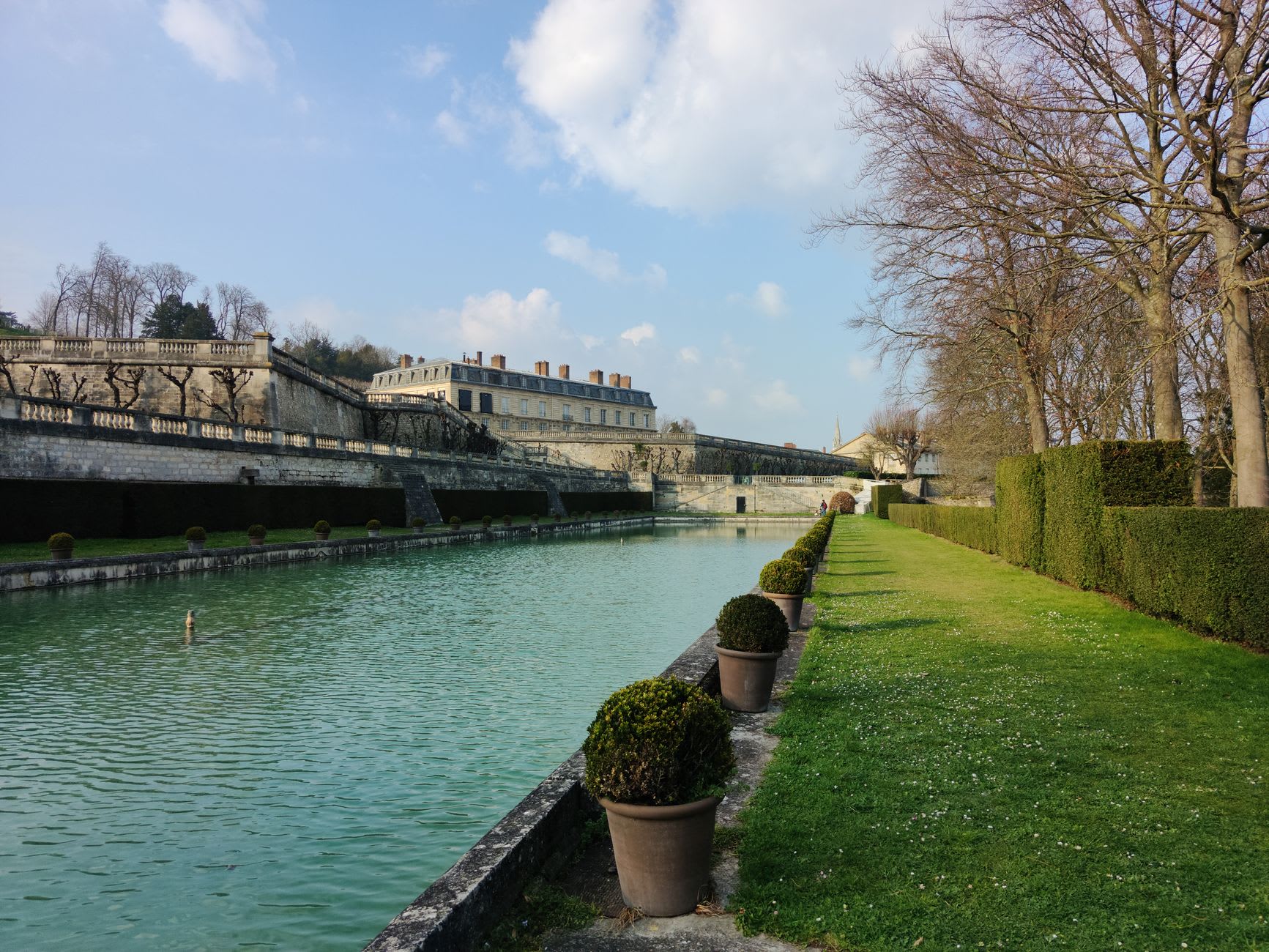
Further south, the canal passes through the forested section of the Auxois — a landscape of oak and hornbeam and pale stone, the water dark green under the tree cover. Châteauneuf-en-Auxois sits on a hilltop above this section, its fourteenth-century castle visible from the towpath for several kilometers. I locked my bike and walked up. The village is one of the Plus Beaux Villages de France and takes that designation seriously — everything is well-maintained, the stone golden, the flowers impeccable. The castle itself is a proper medieval fortress, not a château, and the interior has been preserved in a way that suggests actual use rather than decoration.
What the canal teaches, if you spend enough days on it, is a recalibration of pace. Narrowboats travel at six kilometers per hour, which is the maximum permitted speed — fast enough to make progress, slow enough that you can read the names of the lock-keepers’ cottages and wave at the people fishing from the bank. On a bicycle you are faster, but the rhythm of the locks — stop, wait, pump, proceed — imposes its own tempo. I spent four days on the towpath and found at the end that I had no strong desire to return to the speed of roads.

The villages along the canal are fed by it in spirit and increasingly by tourism — canal boats are popular with Dutch and British visitors who rent pénichettes for a week and manage to cover a very short distance while eating and drinking extremely well. The restaurants and épiceries that survive along the towpath understand exactly what their customers want: bread, cheese, local wine, a place to tie up the boat.
When to go: May through September is the boating and cycling season, and the trees are at their most generous. October brings the plane-tree leaves down onto the water in great rafts of gold. Avoid July and August if you want the towpath to yourself; June and September offer the balance of weather and relative solitude. Boats can be hired by the week from multiple points along the canal.