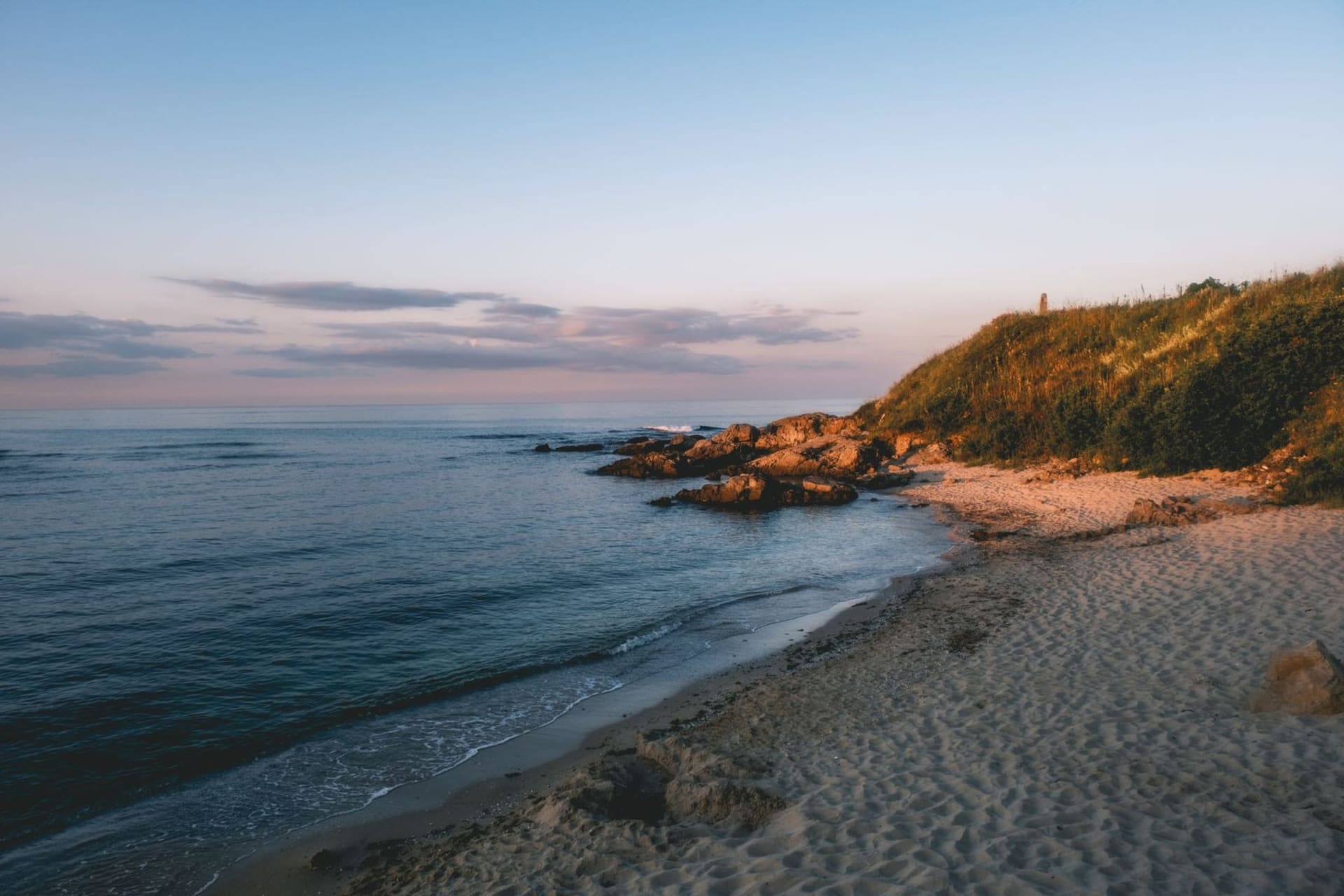
An ancient Thracian fishing town on the Black Sea, where cobblestone lanes wind between wooden houses and the sea glows amber at dusk.
There is a particular kind of place that asks nothing of you except that you slow down. Sozopol is one of those places. I arrived on the peninsula in the thin light of early September, when the summer crowds had thinned enough that the old town breathed again, and I understood within an hour that I would not want to leave quickly.
The Old Town and Its Lanes
The ancient part of Sozopol sits on a narrow rocky peninsula jutting into the Black Sea, and the houses lean toward each other overhead as if sharing secrets. Along Ulitsa Morski Skali — the street that runs closest to the eastern shore — the wooden facades are painted in faded ochres and blues, the second storeys cantilevering out over the lane in the old Thracian-Bulgarian manner. The stone underfoot is worn smooth by centuries. I kept stopping to press a hand against the walls: warm from the sun, rough with history.
The Church of Sveti Georgi anchors the northern end of the peninsula, and its courtyard is shaded by a pine old enough that its roots have split the paving. We sat there one afternoon, Lia sketching in her notebook while I ate a paper cone of roasted sunflower seeds from a woman selling them at the gate. The smell of pine resin and seawater is specific to this coast — heavier than the Mediterranean, greener somehow.
Eating by the Water
Sozopol’s fish is not a cliche. I ordered grilled tsatsa — tiny sprats, barely two fingers long — at a terrace restaurant on Republikanska Street, and they arrived whole, glistening, dusted with coarse salt. You eat them head to tail. They taste like the sea itself, concentrated. The shopska salad that came alongside, with its rough-cut tomatoes and crumbled sirene cheese, was cold enough to fog the plate in the evening warmth.
What surprised me was the rakia. I expected wine country — Bulgaria is wine country — but the local plum brandy arrived unsolicited with the bill, poured by the owner into small glasses that he set down without ceremony. It was the driest, most serious rakia I have tasted, and it tasted like a gift freely given.
The Light at the End of the Day
The unexpected discovery was the south beach at dusk. I had assumed the sea-facing terraces of the old town would be the place to watch the sun descend, but it is from the Harmani Beach to the south, looking back at the peninsula, that Sozopol reveals itself: the wooden houses stacked on rock, amber light turning the walls to copper, the Orthodox church bell tower silhouetted against a sky going rose and then violet. I stood there longer than I intended.
When to go: Late August through mid-September offers warm water, thinner crowds, and the long amber evenings that make the old town look like a painting. The Apollonia Arts Festival runs in early September and fills the amphitheatre on the water’s edge with theatre and music.