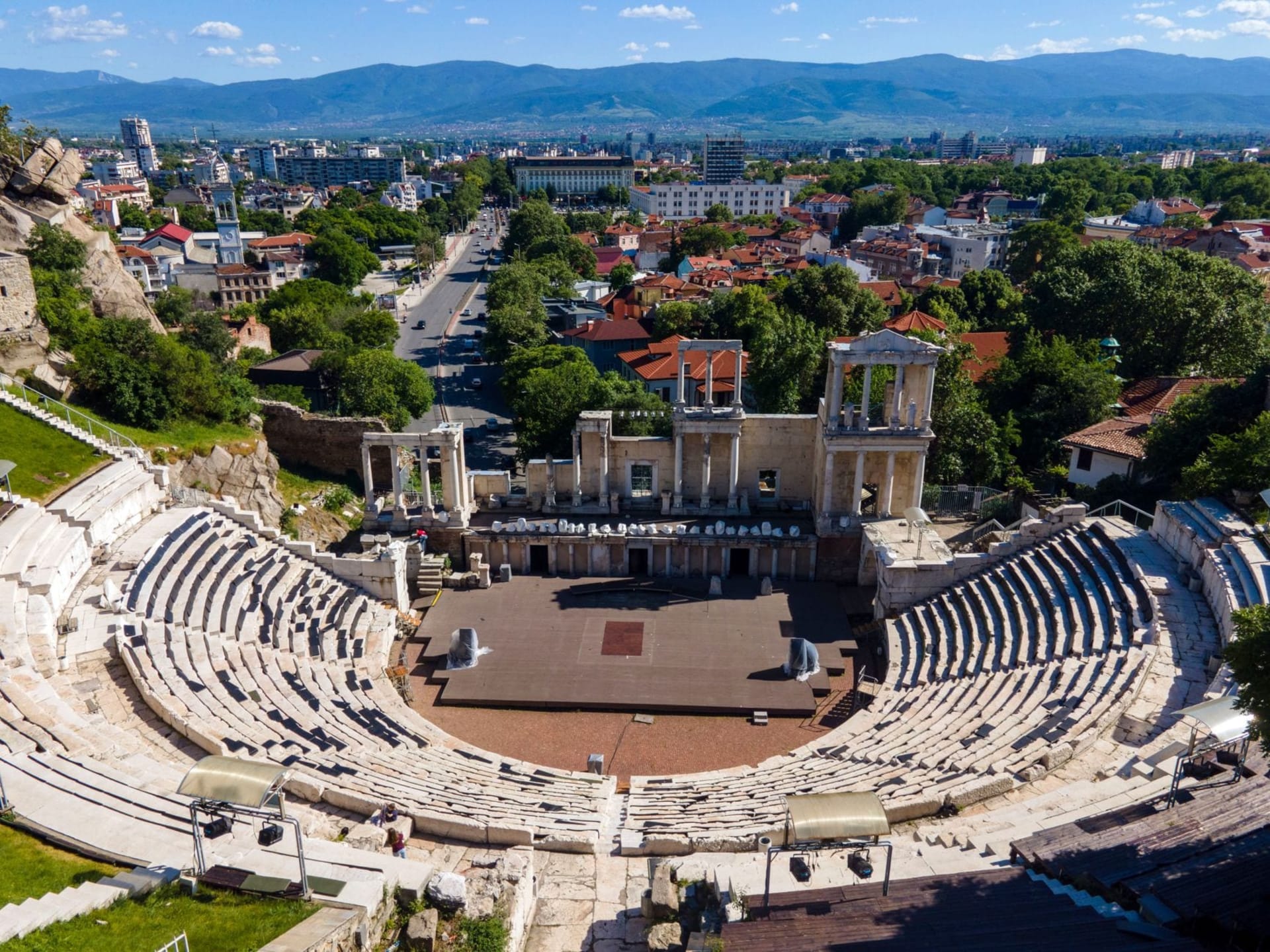
Built across seven hills and settled since the Neolithic era, Bulgaria's second city is a canvas of Roman theatres and colorful revival houses.
I had been warned that Sofia would be the Bulgaria I remembered and Plovdiv would be the one I kept returning to in my mind. That warning turned out to be correct, and entirely insufficient.
The Hills and What Lives on Them
Plovdiv is built across seven hills — though locals argue endlessly about which ones count — and the effect is that every walk becomes a kind of archaeology. The old town sits on Nebet Tepe and Dzhambaz Tepe, and climbing the cobblestone lanes of ulitsa Artin Gidikov toward the summit, I kept stopping not for the view but for the silence. The stones underfoot are worn smooth by two thousand years of feet. Roman, Byzantine, Ottoman, Bulgarian Revival — each civilization left something and stayed in the walls.
At the top, the remains of the Eumolpias fortress open suddenly onto a panorama of the Maritsa plain. I arrived just before sunset, the light going amber across the river, and for a full minute I forgot entirely what century I was in. Lia sat on the ancient stones and said nothing. Sometimes a place answers its own question.

The Roman Theatre and the Kapana District
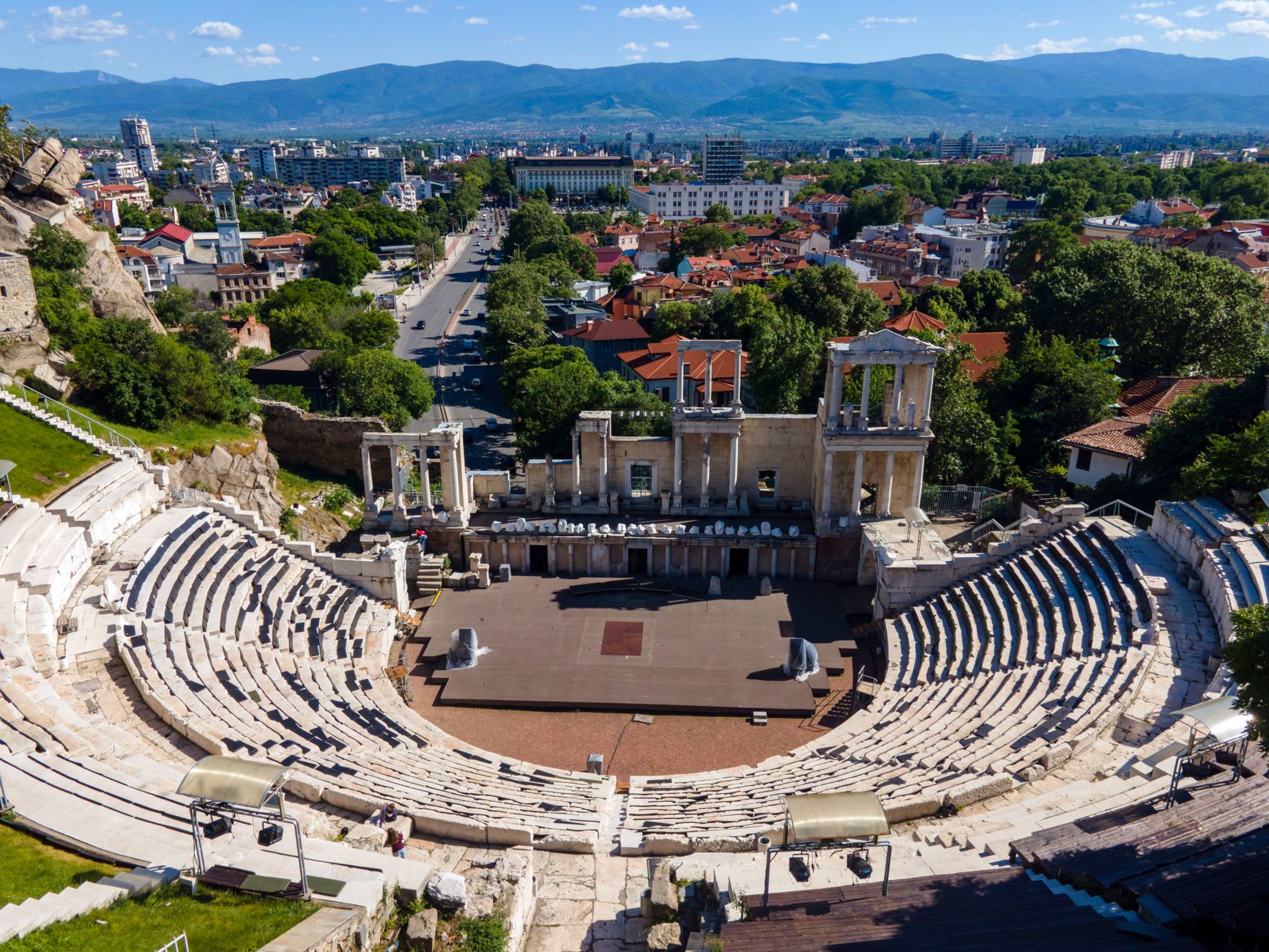
The ancient theatre of Philippopolis — Philip II of Macedon’s city, later renamed — is embedded in the hillside like a parenthesis. It still hosts concerts in summer, and stumbling upon a rehearsal one afternoon, the sound of a string quartet rising from marble tiers into the open Bulgarian sky, felt less like tourism and more like trespass on something living.
Below the old town, the Kapana quarter hums with an entirely different register. The name means “the trap” — narrow streets designed to disorient merchants, now lined with coffee roasters, ceramicists, and wine bars pouring Mavrud, the local grape that tastes faintly of dark plums and iron. I ate kavarma — slow-braised pork with peppers and onion, served in a clay pot — at a table on ulitsa Rayko Daskalov, the smell of woodsmoke and paprika drifting out from every doorway.
The Unexpected Discovery
What caught me off guard was the graffiti. Not the crude kind — the walls of Kapana are covered in commissioned murals of astonishing quality, large-scale works that wrap entire building facades. I turned a corner near the Dzhumaya Mosque and found a six-storey painting of a woman’s face rendered in photorealist detail, her eyes level with a fourteenth-century minaret. Nobody had told me about this. It felt like a secret the city had kept for itself.

When to go: Late April through June offers warm days, blooming roses in the surrounding valley, and the Plovdiv Opera’s outdoor season just beginning. September is equally good — the harvest light is extraordinary and the summer crowds have thinned considerably.