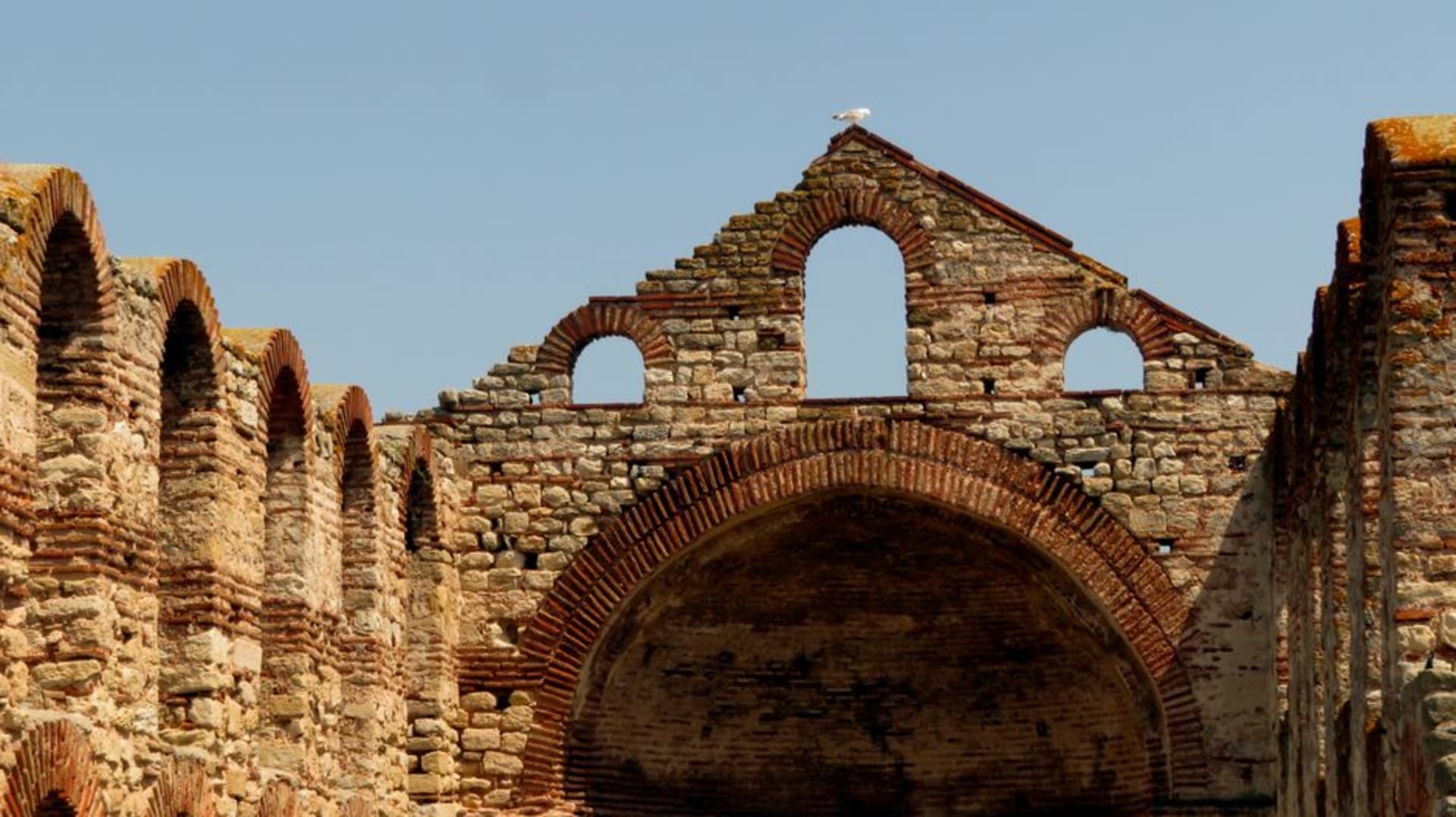
A UNESCO-listed peninsula town of Ottoman wooden houses and ruined Byzantine churches on Bulgaria's Black Sea coast.
Lia and I drove up from Sunny Beach on a whim, expecting maybe an hour of wandering before the resort crowds pulled us back to the pool. We didn’t leave until sunset. Nessebar sits on a rocky knuckle of land connected to the mainland by a narrow isthmus, and crossing it on foot felt like a genuine threshold — modern parking lots and ice-cream stands behind us, three thousand years of layered history ahead. I remember stopping right at the fortification remains near the entrance, half Roman, half Byzantine, and trying to explain to Lia that this had been a working Greek colony called Mesembria back around the 6th century BC, long before anyone spoke Bulgarian here. She just looked at the stones and said, “it doesn’t look three thousand years old, it looks like it’s still deciding what era it’s in.” That’s exactly it.
What got me most was the sheer density of churches — more than forty of them packed into a town you can walk across in twenty minutes. Most are ruins now, roofless, stripped down to red-brick skeletons with grass growing where the altar would have been, but that’s part of what makes them affecting. We found the Church of St. John Aliturgetos almost by accident, its 13th-century walls patterned in bands of brick and stone that Lia photographed from every possible angle.
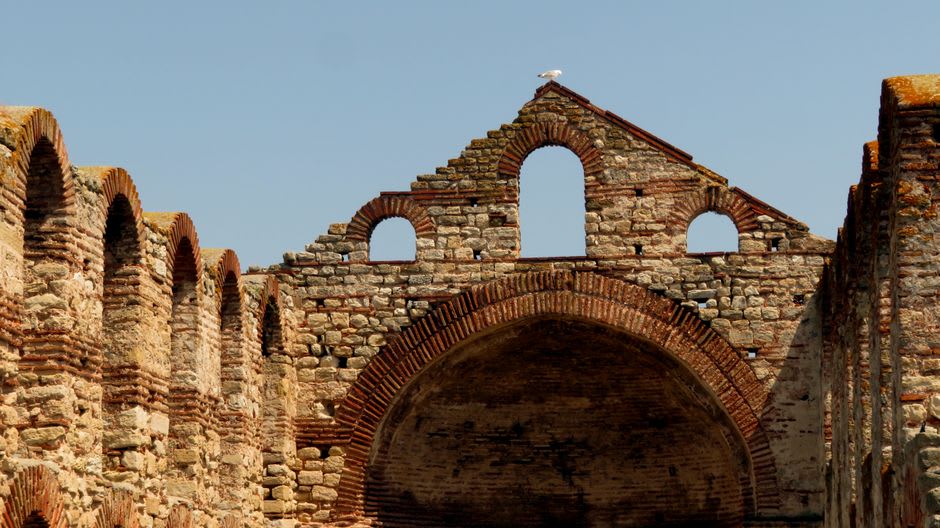
We ate that evening at a small terrace place overlooking the water, grilled Black Sea turbot and a bottle of local white wine that I’ve never been able to find since, while the light went orange over the fortification walls. Later we ducked into the Old Metropolitan Church, 5th century, its stone walls cool even in the July heat, and I found myself doing the math again — how many empires had passed through this exact doorway. Thracians, Greeks, Romans, Byzantines, then the Ottomans, whose wooden houses now lean companionably over the cobbled lanes just steps from the ruins.
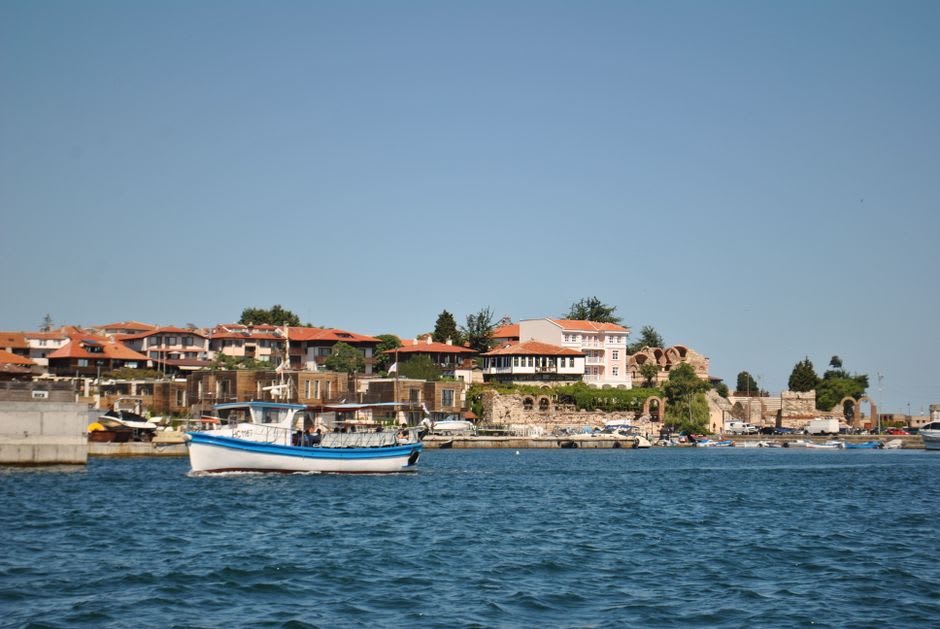
What struck me on the walk back to the car was how abruptly the town gives way to Sunny Beach — you can look back across the water and see the old peninsula, quiet and stone-colored, right next to the neon strip we’d come from. Two totally different Bulgarias, a ten-minute drive apart.
When to go: We got lucky with a late-June visit — warm enough to swim, but the lanes were still walkable without fighting crowds. If you can, aim for May-June or September; peak July-August apparently turns those cobblestones into a bottleneck.