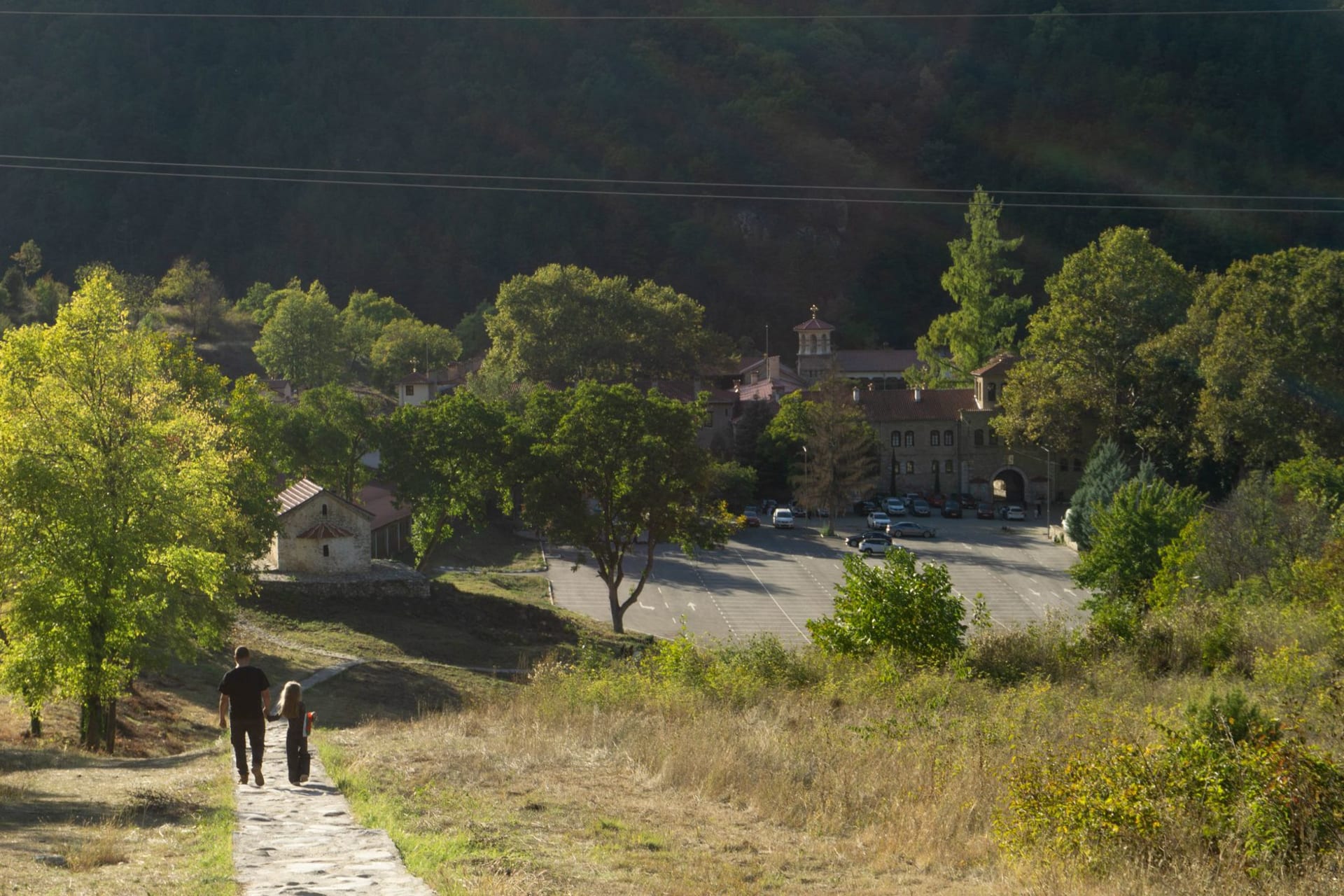
Koprivshtitsa
"The town looks like a paintbox spilled across a valley, and then you learn a revolution started on the little bridge by the river."
Koprivshtitsa is high and cold and astonishingly pretty, a town of painted wooden houses tucked into a fold of the Sredna Gora mountains a couple of hours east of Sofia. We came up on a slow road through pine forest and arrived to find the whole place looking freshly painted — ochre, blue, oxblood red, the carved eaves and oriel windows of the Bulgarian National Revival style preserved here more completely than almost anywhere else in the country. Lia, who has a weakness for a good front door, was gone within minutes, photographing knockers and gates while I worked out that the town is also, beneath the prettiness, one of the most loaded places in Bulgarian history.
The shot that started a revolution
On 20 April 1876, the first shot of the April Uprising against five centuries of Ottoman rule was fired here, off a small humpbacked stone bridge over the Topolnitsa river. The bridge is still there — they call it the Bridge of the First Shot now — and standing on it, an unremarkable little crossing over a clear mountain stream, it is hard to square the calm of the place with what it set off. The uprising was crushed within weeks and the reprisals were savage, but the international outrage they provoked helped, two years later, to bring about Bulgaria’s liberation. The town has the slightly solemn pride of a place that knows it mattered.
That history is told through a string of house-museums, the former homes of the merchants and revolutionaries who lived here when Koprivshtitsa was a wealthy wool-trading town. We bought the combined ticket and worked through several — the Oslekov House with its painted facade and rooms laid out in dark wood and bright textiles, the birthplaces of the revolutionaries Georgi Benkovski and Todor Kableshkov, the home of the poet Dimcho Debelyanov with its famous statue of his mother waiting at the gate. After three or four, the houses start to blur into a single impression of carpets, low divans, and the particular smell of old wood and beeswax, but that impression is itself the point: this was a confident, prosperous, literate town, and it had a great deal to lose.
Cobbles, cold air, and grilled meat
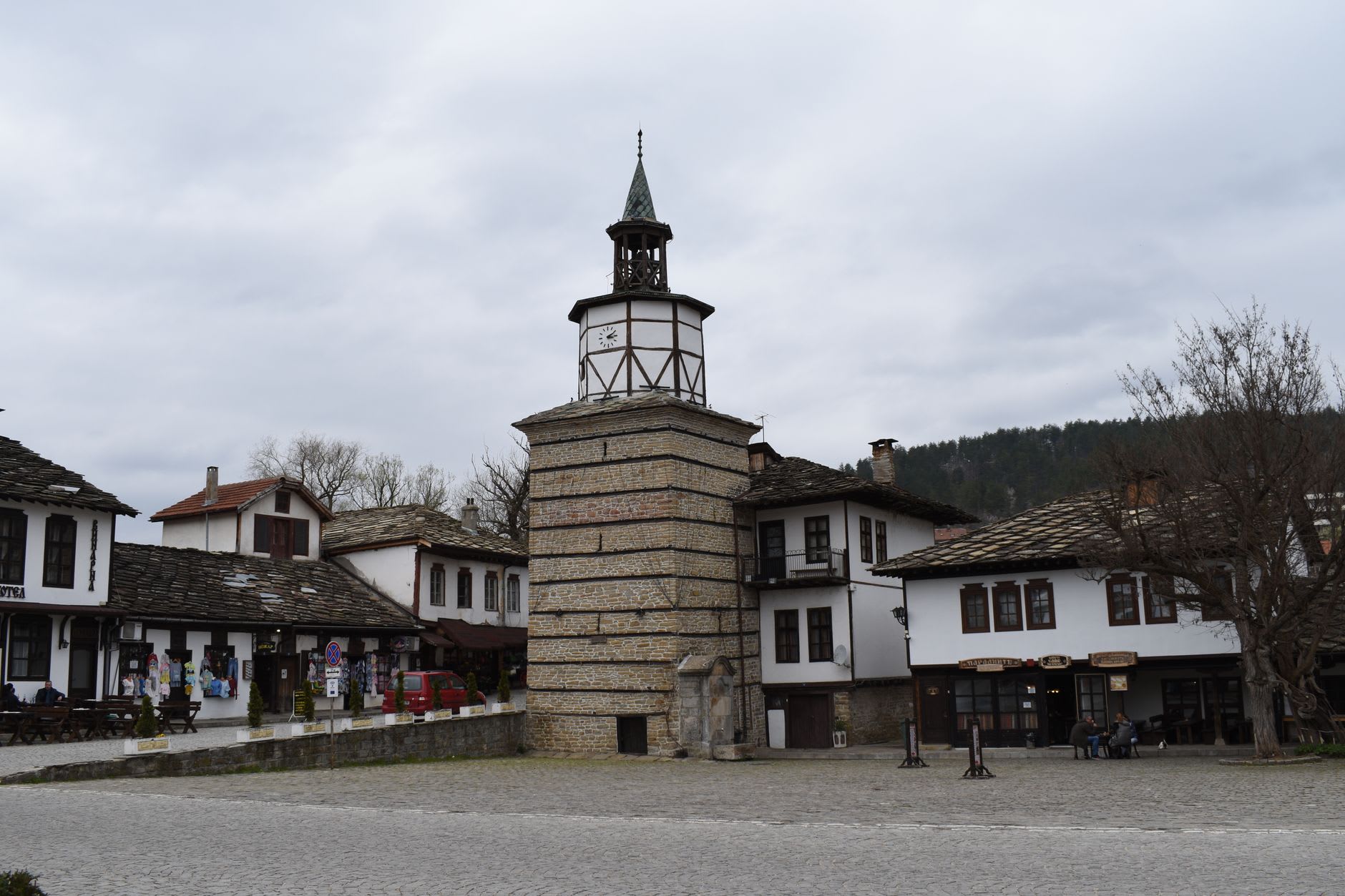
What I liked most, though, was just walking. Koprivshtitsa is small enough to learn in an afternoon, and its cobbled lanes wind up and down between the houses with no apparent logic, crossing and recrossing the little river on humpbacked bridges, so that you keep stumbling back onto streets you thought you had left. At over a thousand meters the air is thin and clean and noticeably colder than the plain below, and even in early summer the evening had a bite to it.
We ended the day in a mehana — a tavern — with a wood stove going, eating grilled meat and a salad of roasted peppers while the owner topped up our rakia without being asked, which in Bulgaria I have learned to accept as fate rather than fight. The town empties of its day-trippers by late afternoon, and after dark, with the cobbles wet from a brief mountain rain and the painted houses lit only here and there, Koprivshtitsa felt less like a museum and more like what it is: a real town, still inhabited, that happens to have decided long ago to keep itself exactly as it was.
When to go: Late spring through early autumn for walkable cobbles and open house-museums; bring a layer even in summer, because the altitude bites after dark. If your timing is very lucky, the great folklore festival held here every five years fills the meadows above town with thousands of musicians in traditional dress — worth rearranging a trip for.