Île de Bréhat
"Bréhat has no cars, no rush, and tides so dramatic they seem personal — like the sea is making a point."
The ferry from Pointe de l’Arcouest takes twelve minutes, which is just long enough to watch the mainland recede into something that already looks like it belongs to a different era. Île de Bréhat is two islands connected by a bridge the width of a farm track, and the first thing you notice stepping off the boat is the silence. Not the performed quiet of a wellness retreat, but the genuine absence of engines. No cars are permitted. A few tractors. Bicycles. The sound of the wind in the tamarisk trees that line the paths, and underneath that, always, the sea.

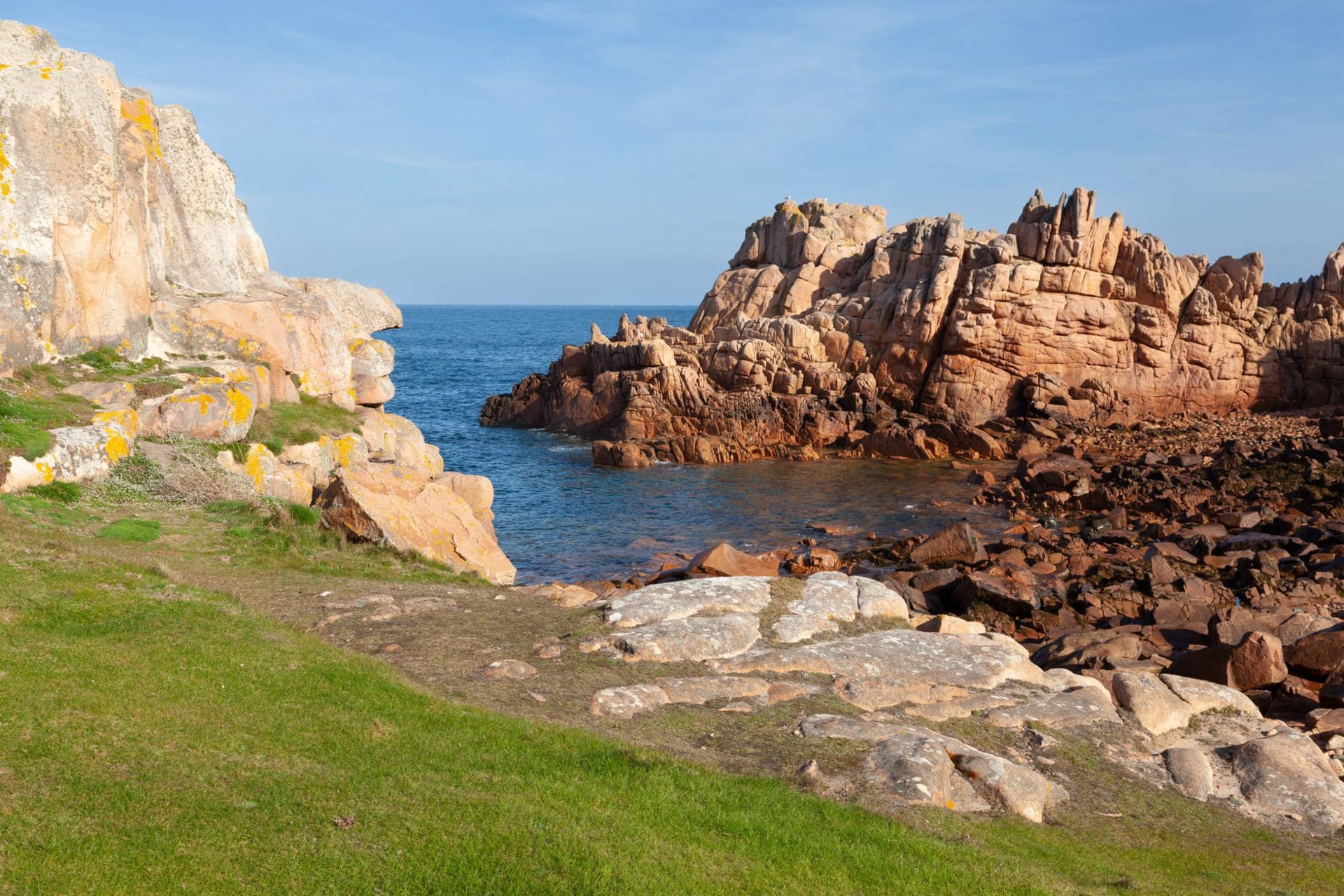
The island’s reputation is for mildness — the Gulf Stream pushes far enough north here that mimosa blooms in February, fig trees grow against garden walls, and the hedgerows have a slightly Mediterranean lushness that feels incongruous with the Atlantic granite. I walked the northern island in the afternoon, following the coastal path past the Phare du Paon — the lighthouse at the northern tip, orange and white, sitting on a pile of pink granite that the sea has been shaping for longer than there have been people to notice. The light up there is extraordinary. The whole island seems to float in a particular quality of Atlantic afternoon luminescence that I’ve never quite seen elsewhere.
The tides here are among the most dramatic in Europe — the sea retreats by as much as ten metres at coefficient tides, leaving a lunar landscape of rock pools, stranded boats, and exposed sandbars that connect the island to small offshore rocks. I sat at the edge of the Chapelle Saint-Michel on the southern island as the tide dropped and watched the water uncover a world that had been invisible an hour before. Children appeared from nowhere to investigate the rock pools. An old man in rubber boots walked purposefully out across the wet granite towards a small boat that had been afloat when I arrived.

The island has a population of around four hundred people year-round, and the commerce of the village is modest: a couple of crêperies, a bakery that sells out of everything by ten in the morning, a small supermarket that stocks the essentials. I ate dinner at a place that had four tables and a menu that didn’t change: fish soup, grilled sea bream from the day’s catch, a cheese plate, and tarte aux pommes. The wine was Muscadet and the bill was entirely reasonable. The woman running it apologised that she’d run out of the tarte. I said it didn’t matter. She brought me a piece anyway, from a second one she’d been keeping back.
When to go: April through June, before the summer crowds arrive, when the wildflowers are out and the island still belongs mostly to its residents. The island is small enough to walk entirely in a day, but rent a room and stay overnight — the light at dusk and dawn is why you came.