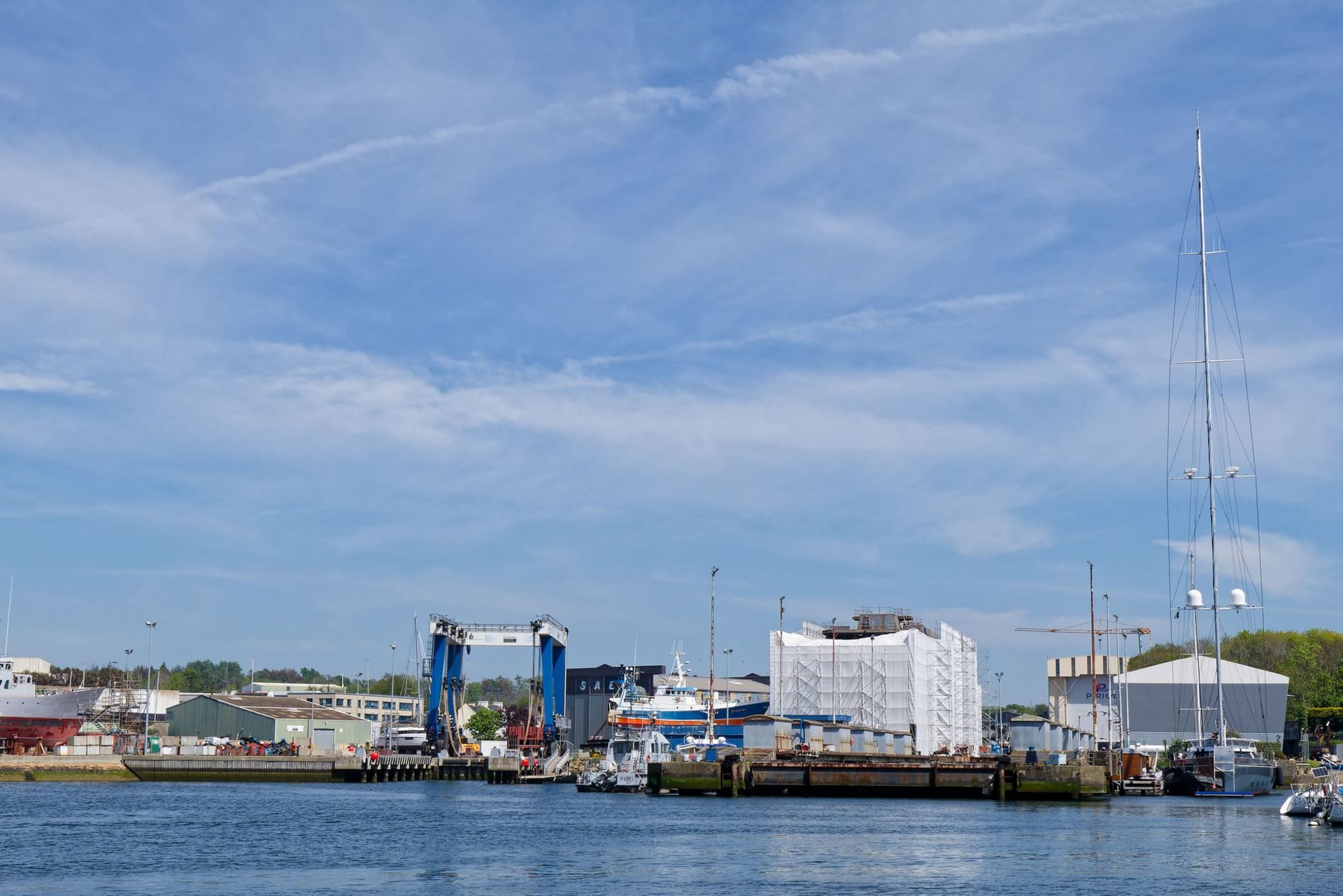
Concarneau
"The fish auction at Concarneau starts at six in the morning — attend it once and you'll never see a fish counter at a supermarket the same way again."
I woke at five-thirty to make the fish auction. The sky over the harbour was still dark, and the smell of diesel and brine that drifted through my open window had been mixing with whatever I’d eaten for dinner in a way that made getting up easier than it usually is. The Criée — the auction hall — sits at the edge of the port, and when I arrived the trawlers were already unloading: boxes of sea bass, monkfish, langoustines, cuttlefish, cod, sole, all stacked on pallets under the fluorescent lights while the buyers moved through them with clipboards, kneeling occasionally to peer at gills or press a thumb against a fish’s belly. The auctioneer worked at speed. Boxes disappeared before I could register the price.

The Ville Close — the old walled city on its granite island in the middle of the harbour — is Concarneau’s more photographed feature, a medieval fortification connected to the mainland by a drawbridge wide enough for two people walking side by side. In summer, the narrow streets inside the walls fill with tourists, and the shops sell Breton biscuits and marinière shirts and postcards of the lighthouse. I visited on a weekday in late September when the school groups had gone, and found it almost empty: a few restaurants setting up for lunch, a couple sitting outside a café, a woman sweeping her stoop with a broom that looked as old as the walls. The ramparts you can walk offer views across the harbour to the trawler fleet and, in the other direction, across open water to the Forêt de Fouesnant.
Concarneau is not a tourist town that happens to have a fishing industry — it is the reverse. The tuna fleet here was once the largest in France, and while the industry has contracted, the port still lands more than thirty thousand tonnes of fish a year. The smell is in the fabric of the place: slightly marine, slightly metallic, not unpleasant. You get used to it within an hour and then you stop noticing it, and then when you leave you notice its absence.

I ate thon à la plancha — fresh tuna, barely cooked through, with a smear of tapenade and a glass of Gros Plant — at a small restaurant a few streets back from the main harbour front. The owner had grown up in Concarneau and had the focused pride of someone who knows exactly what the ingredients are worth because he watched them come off the boat that morning. He suggested I skip the chocolate mousse and have the kouign-amann instead. He was correct.
When to go: The fish auction is worth arranging a visit around — check days and times with the tourist office, as access for visitors is limited. The Fête des Filets Bleus, a Breton music festival held in August, has run since 1905. Come in September or October for the food without the crowds.