Barkerville
"For about a decade this was the biggest city on the west coast north of San Francisco. Then it just stopped."
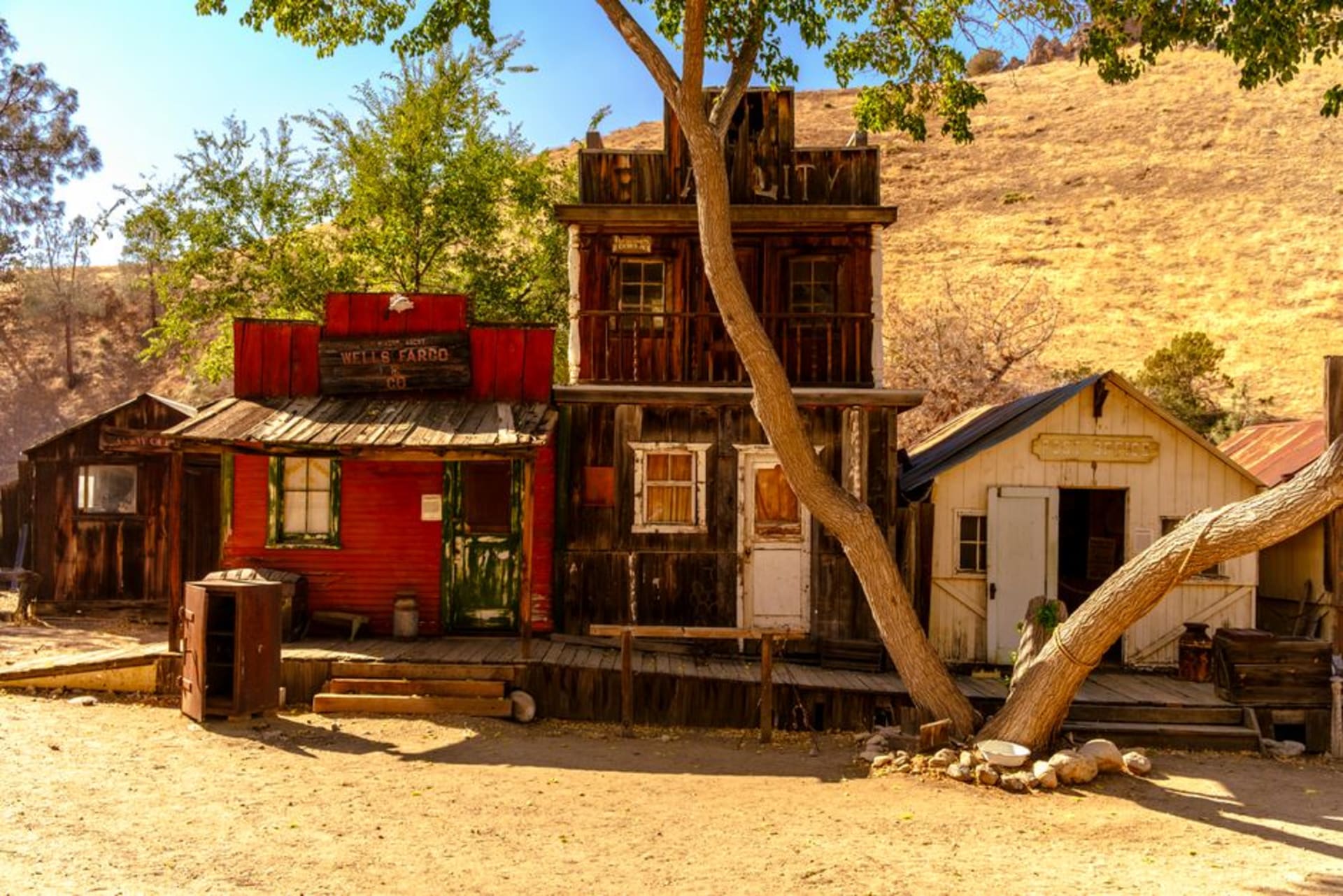
A meticulously preserved Cariboo gold rush boomtown, once the largest city west of Chicago and north of San Francisco, now frozen at its 1870s peak.

Barkerville is a long way from anywhere, and that’s rather the point. It’s eight hours northeast of Vancouver, past Williams Lake and Quesnel, in the Cariboo region that most visitors to BC never see because it isn’t on the coast and isn’t the Rockies — it’s the in-between country, rolling and dry and full of old logging roads. I drove up specifically because a friend in Nelson had described it as “Disneyland, except real,” which is a strange sentence that turned out to be accurate.
In 1862, Billy Barker struck gold on Williams Creek, and within a few years the resulting boomtown had a population estimated at ten thousand or more during peak season — larger, at the time, than any city on the west coast except San Francisco. It burned down in 1868 and was rebuilt within weeks, which tells you something about the money moving through the place. Then the gold thinned out, the town emptied over decades, and by the mid-twentieth century it was near-abandoned. The province stepped in and restored it building by building rather than reconstructing from scratch, which is the detail that makes it feel real rather than staged: this is the actual timber, the actual foundations, over a hundred preserved and restored structures.
What makes a visit work is the costumed interpreters, who are genuinely good — I watched a blacksmith demonstration that ran twenty minutes longer than scheduled because the interpreter kept fielding questions from a group of kids and answering every one in character, in period vocabulary, without breaking. There’s a working theatre putting on period vaudeville, a Chinatown section reflecting the significant Chinese mining community that lived here (BC’s gold rushes brought thousands of Chinese miners and merchants, and Barkerville’s Chinatown was one of the largest in Canada at the time), and a cemetery on the hill above town worth the short walk for the headstones alone.
I stayed at the campground rather than the in-town heritage hotel, and the two-night stop turned into three because the site is genuinely large — you need a full day just for the main street and museum, and another for the surrounding trails and the nearby ghost town of Stanley.
When to go: Late May through September, when the full interpretive program runs and all the buildings are open; outside that window much of the site closes for the harsh Cariboo winter. Weekdays are notably quieter than weekends in July and August.
Keep exploring
More from British Columbia
 british-columbia
 Bella Coola
A remote valley on BC's Central Coast reached by one legendarily steep gravel road, where grizzlies fish the river and the Nuxalk Nation's history runs deep.
Explore british-columbia
 Cathedral Grove
A roadside stand of eight-hundred-year-old Douglas firs on Vancouver Island, one of the last easily accessible fragments of BC's original coastal old growth.
Explore british-columbia
 Galiano Island
A slender, largely undeveloped Gulf Island of arbutus bluffs and Douglas fir forest, quieter and less discovered than its Gulf Island neighbours.
Explore british-columbia
 Golden
A Rocky Mountain trench town where the Columbia River, five national parks, and a gondola with a glass-floor skywalk all sit within an hour's reach.
Explore british-columbia
 Haida Gwaii
A remote archipelago off BC's north coast where Haida culture, ancient rainforest, and the open Pacific exist on their own terms.
Explore british-columbia
 Harrison Hot Springs
A lakeside village ninety minutes from Vancouver built around mineral hot springs, a vast glacial lake, and one very famous sand sculpture competition.
Explore