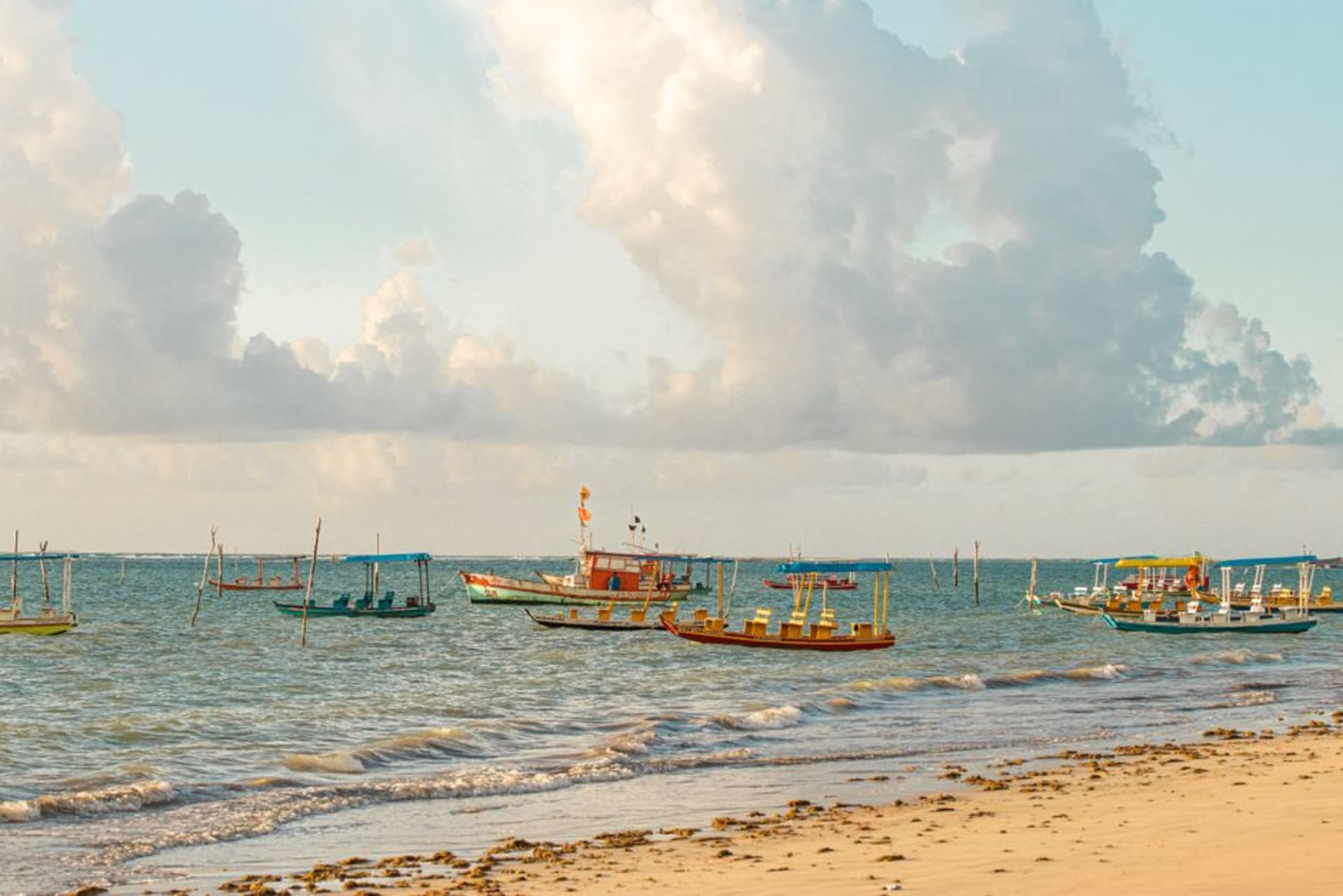
São Miguel do Gostoso
"Gostoso means 'delicious' in Portuguese, and for once a beach town's name isn't overselling it."
A former fishing village on Rio Grande do Norte's north coast where the trade winds have turned an entire town into a low-key kitesurfing capital.
São Miguel do Gostoso sits on the northern coast of Rio Grande do Norte, past Natal and past Genipabu, on a stretch where the coastline turns to face the wind head-on rather than run parallel to it — which is the entire reason this sleepy fishing village became, over the last two decades, one of Brazil’s serious kitesurfing destinations without ever quite losing the sleepy fishing village part. Sand streets, one-story houses, fishing boats pulled up on the beach at the end of the day: the infrastructure of kitesurf tourism has arrived, but it has arrived quietly.
The wind is the whole story here. From roughly August through January, the trade winds blow reliably and strong across a coastline of long, mostly empty beaches, and the water stays warm year-round, which is a combination serious kitesurfers travel a long way for. I am not one, but I spent a morning watching from the sand at Praia da Xepa while dozens of kites cut back and forth against the reddish dune cliffs behind the beach, and the whole scene had an unhurried, unpretentious energy that felt distinct from the resort towns further south.
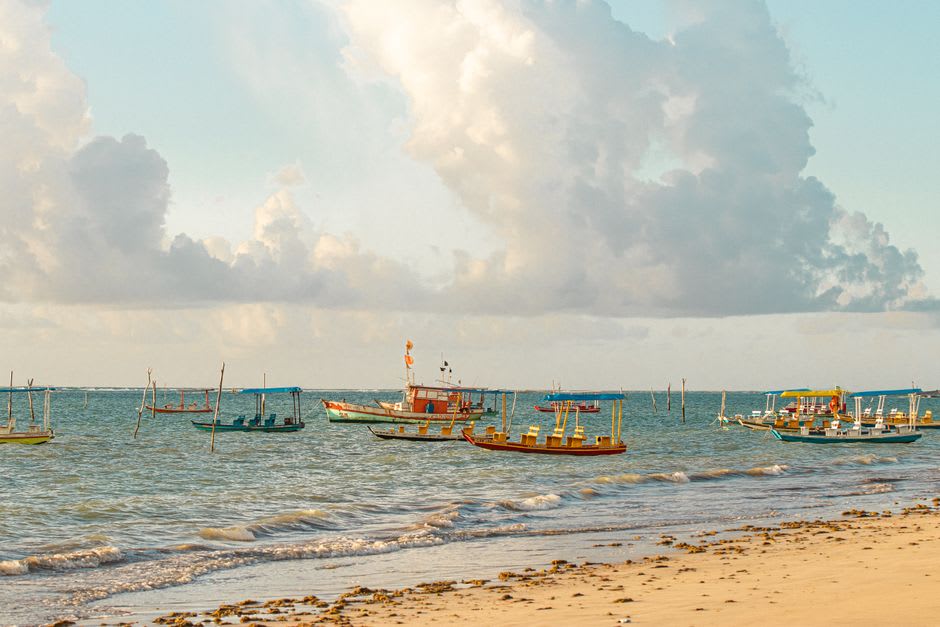
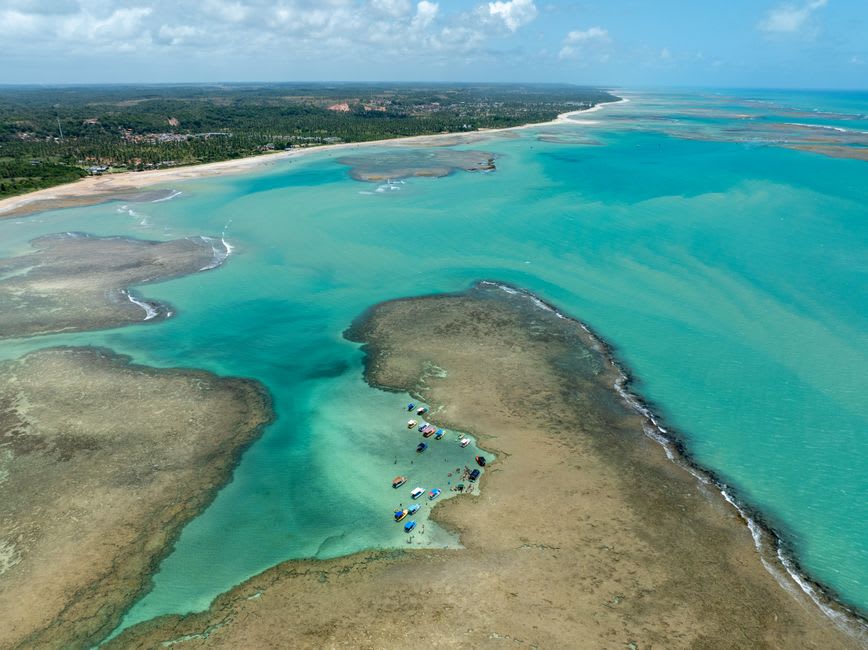
What made me actually love the place, though, was the coastline outside the wind season, or simply outside the main kite beaches. Drive or bike west along the coast road and you pass a string of nearly empty beaches — Tourinhos, Currais, Zumbi — backed by the same low red-clay dunes, with almost nobody on them outside of a few fishermen and the occasional other traveler doing exactly what I was doing, which was nothing in particular. The lighthouse at Touros, a short drive further, marks a stretch of coast that still feels genuinely remote for how easily it’s reached.
Lia and I rented bicycles from our pousada and spent an afternoon riding the packed sand at low tide between beaches, stopping at a barraca that turned out to be someone’s actual house with three plastic tables set up in the yard, where a woman grilled us fish she’d bought that morning from a boat we could see still unloading down the beach. It remains one of the best unplanned meals of that entire trip.
Nightlife exists but stays proportionate to the town’s size — a handful of bars along the main sand street fill up after sunset with a mix of instructors, kite tourists, and locals, and it winds down early enough that you’re not fighting a hangover for the following day’s wind.
When to go: August through January for the strongest, most consistent wind if kitesurfing is the goal. February through July is calmer and quieter, better for the empty-beach version of the trip, though a beginner-friendly breeze usually still shows up most afternoons. The coast road beaches are best explored at low tide.