Recife
"They call it the Venice of Brazil, but Recife has never needed the comparison to prove it's worth the trip."
Pernambuco's capital, laced with rivers and bridges, where forró spills out of bars and the old sugar-port streets still smell of the Atlantic.
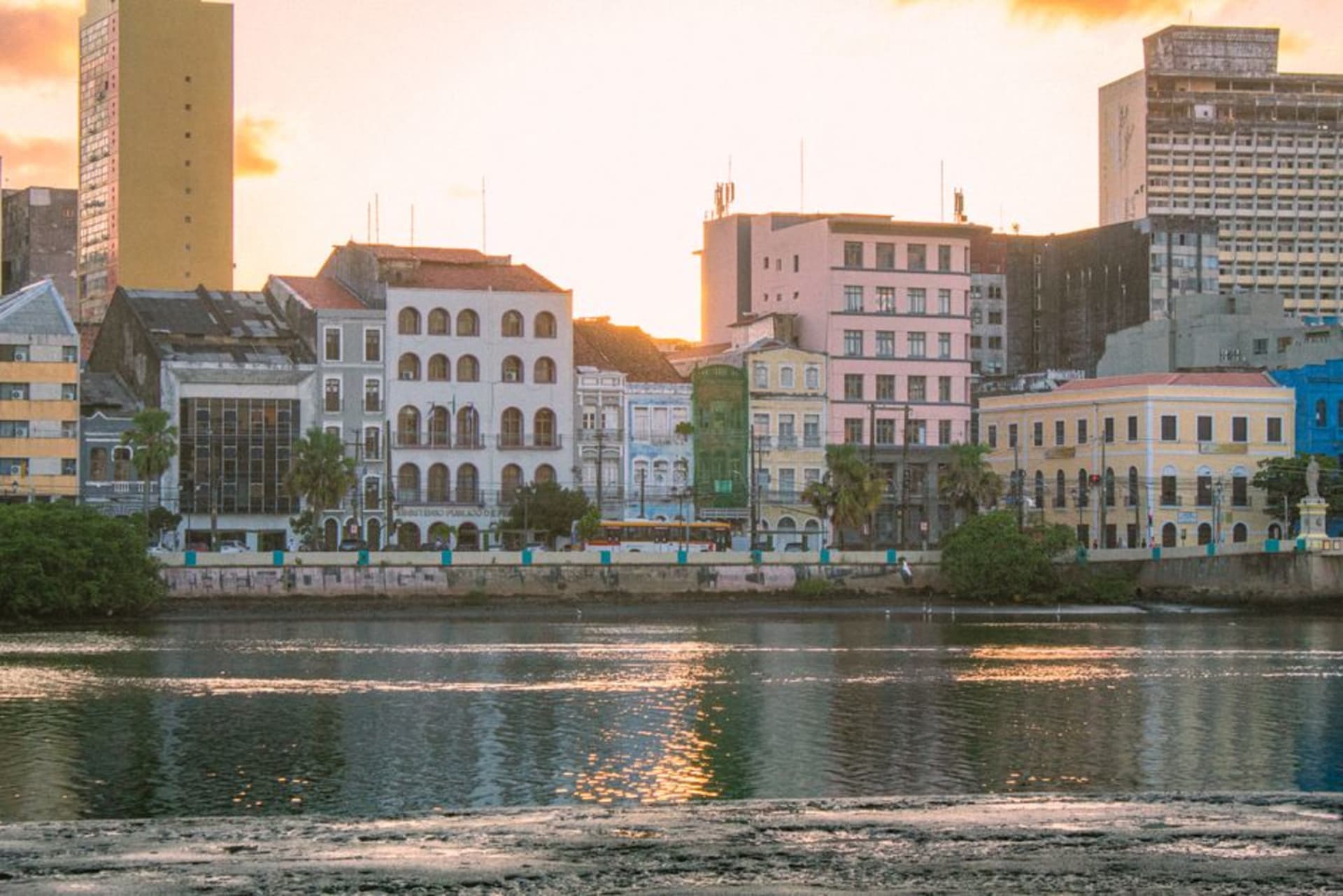
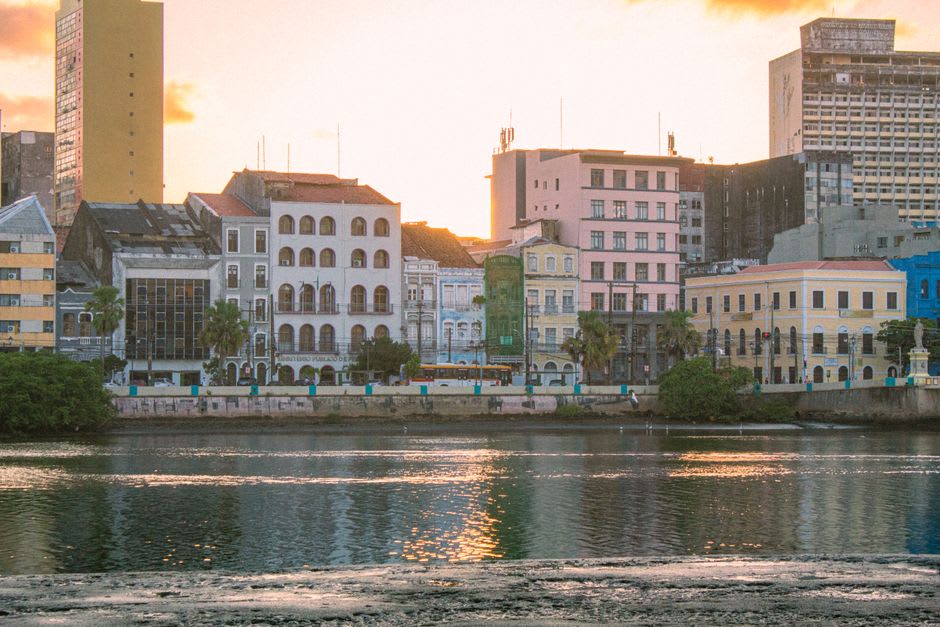
Recife sits where three rivers meet the Atlantic, and the city has organized its entire personality around that fact. Bridges — more than a dozen of them within a few kilometers of the historic center — stitch together islands and peninsulas that would otherwise be separate neighborhoods, and the result is a city that reveals itself in glimpses across water: a church tower framed by a bridge railing, fishing boats moored below an office tower, the Capibaribe River catching the afternoon light while buses idle on the embankment above. I landed expecting a stopover on the way to Porto de Galinhas and ended up staying four extra days.
The historic center, Recife Antigo, is the part that earns the Venice comparison, though the resemblance is more about mood than architecture. Narrow streets of colonial townhouses, some restored and painted in the ochre and blue typical of the Pernambuco coast, others still peeling in a way that felt more honest than the tourist board would probably like. Lia and I wandered it on a Sunday afternoon when the Rua do Bom Jesus — home to the oldest synagogue in the Americas, Kahal Zur Israel, a startling fact given how little of that history gets mentioned elsewhere on the coast — was nearly empty, and we had the sensation of walking through a stage set between performances.
The music is the reason to actually stay past a day trip. Recife and its twin city Olinda share a claim to being the spiritual home of frevo — the frantic, umbrella-waving carnival music and dance that moves faster than seems physically reasonable — and outside of carnival season the city still keeps a serious live scene. I ended up at a forró night in a bar in Boa Vista almost by accident, following a friend of a friend, and watched a room of people twenty years my senior out-dance everyone under thirty within the first ten minutes. Nobody was performing for an audience. It was just Tuesday.
Markets are where Recife’s density of history becomes tangible. The Mercado de São José, opened in 1875 under an iron-and-glass structure imported from France, sells everything from dried shrimp and carne de sol to hammocks and religious paraphernalia for Candomblé and Catholic saints side by side, an arrangement that tells you more about Pernambuco’s actual spiritual life than any guidebook paragraph could. I bought a hammock there that I still use, badly, on my own terrace.
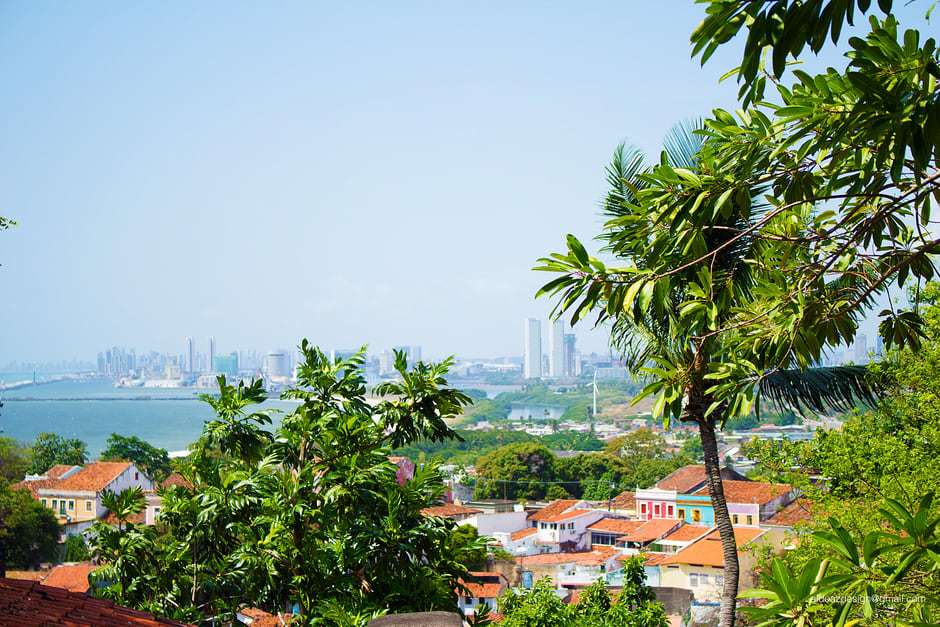
Recife also functions as the obvious base for the northeast coast — Olinda is twenty minutes away, Porto de Galinhas an hour south, and the airport puts you within striking distance of Fernando de Noronha if the budget stretches that far. But the city holds its own. The beach at Boa Viagem is wide and urban and unglamorous by Brazilian standards (shark warnings keep most swimmers close to shore), which somehow made it feel more like a real city beach than a resort one — office workers on lunch breaks, families with coolers, teenagers playing footvolley until dark.
When to go: July through January for the drier, sunnier stretch — carnival falls in February or March depending on the year and turns the whole city into a frevo street party worth planning around, though accommodation books out months ahead. April to June brings more rain but fewer crowds and lush green light over the rivers.