
Morro de São Paulo
"No cars, no pavement, no clock worth checking. Just numbered beaches getting quieter the further you walk."
A car-free island town on Tinharé where sand replaces streets, golf carts replace taxis, and five numbered beaches unfurl south from a 16th-century fort into ever quieter water.
There is a specific kind of relief that arrives when a boat engine cuts and you realize the only way forward is on foot, through sand, with your bag on your shoulder. That’s the arrival in Morro de São Paulo — a two-hour catamaran ride from Salvador across the Bay of All Saints ends at a small dock, and from there the entire island runs on legs, golf carts, and the occasional tractor hauling luggage up from the pier. Lia counted this as an immediate point in the island’s favor. I agreed before we’d even found our pousada.
Primeira, Segunda, Terceira
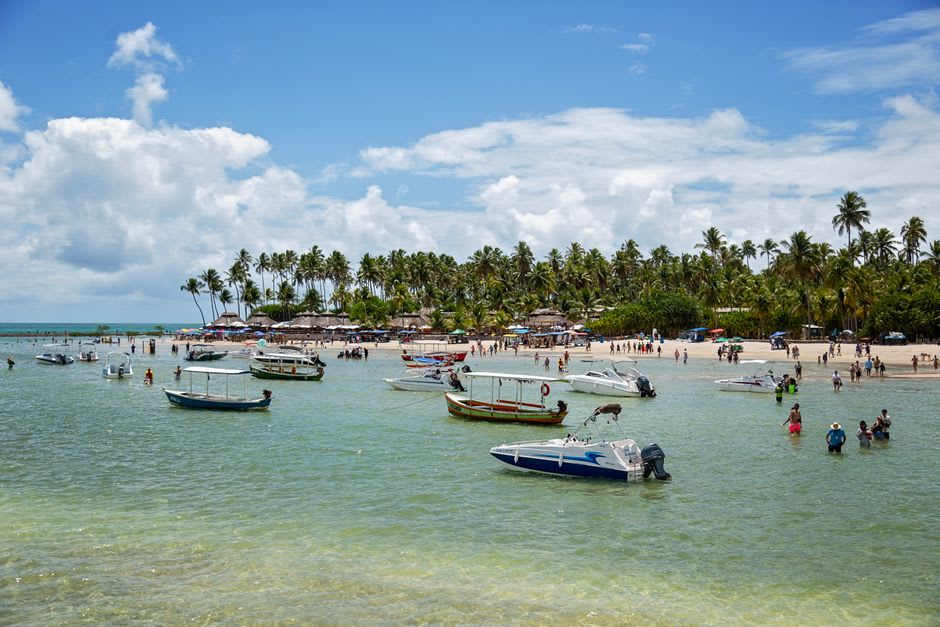
The island organizes itself by beach number, and the numbers function as a rough guide to the crowd you’ll find. Primeira Praia sits right below the old Portuguese fortress and draws the day-trippers and the beach bars blasting forró past noon. Segunda Praia is the social center — kiosks, caipirinhas, volleyball nets, a genuinely fun kind of chaos. By the time you reach Terceira and Quarta, the sand empties out, the water turns a more serious turquoise, and pousadas thin into just palms and tide pools. We walked the full stretch on our second afternoon and it felt like watching the island slowly exhale.
The Fort and the Lighthouse Path
Above Primeira Praia, the ruins of the 17th-century Fortaleza de Morro de São Paulo still hold their view over the channel, cannons pointed at a threat that stopped mattering centuries ago. A dirt path continues past it toward the lighthouse, cutting through scrubby Atlantic forest with sudden clearings that drop the whole bay into view — the mainland a green smudge on the horizon, other islands scattered closer in. We went at sunset, which meant sharing the path with exactly no one and a sky doing something unreasonable with orange and violet.
Slowing Down on Purpose
The absence of cars changes the pace of everything, including arguments and plans. You cannot rush anywhere on sand, so you stop trying. Dinner at a beachfront moqueca place turned into three hours because there was genuinely nowhere else more urgent to be, and the waiter, once he clocked we weren’t leaving soon, brought out a bottle of cachaça he said was “for guests who understand the island.” I have no idea if that line gets used nightly. It worked on us regardless.
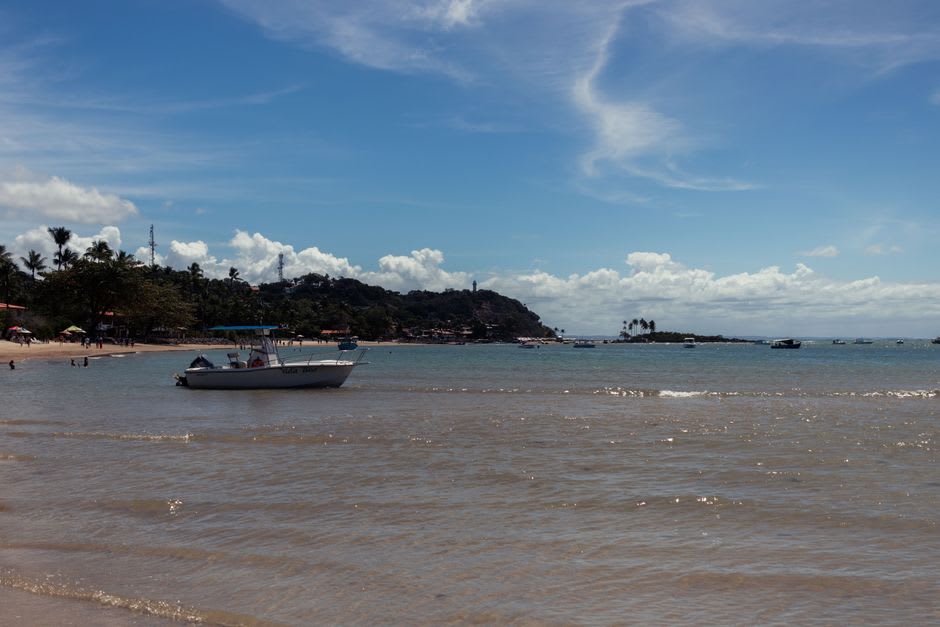
When to go: September through November offers the best balance — dry, warm, and well before the December–February crowds that can overwhelm the tiny footprint of the town.