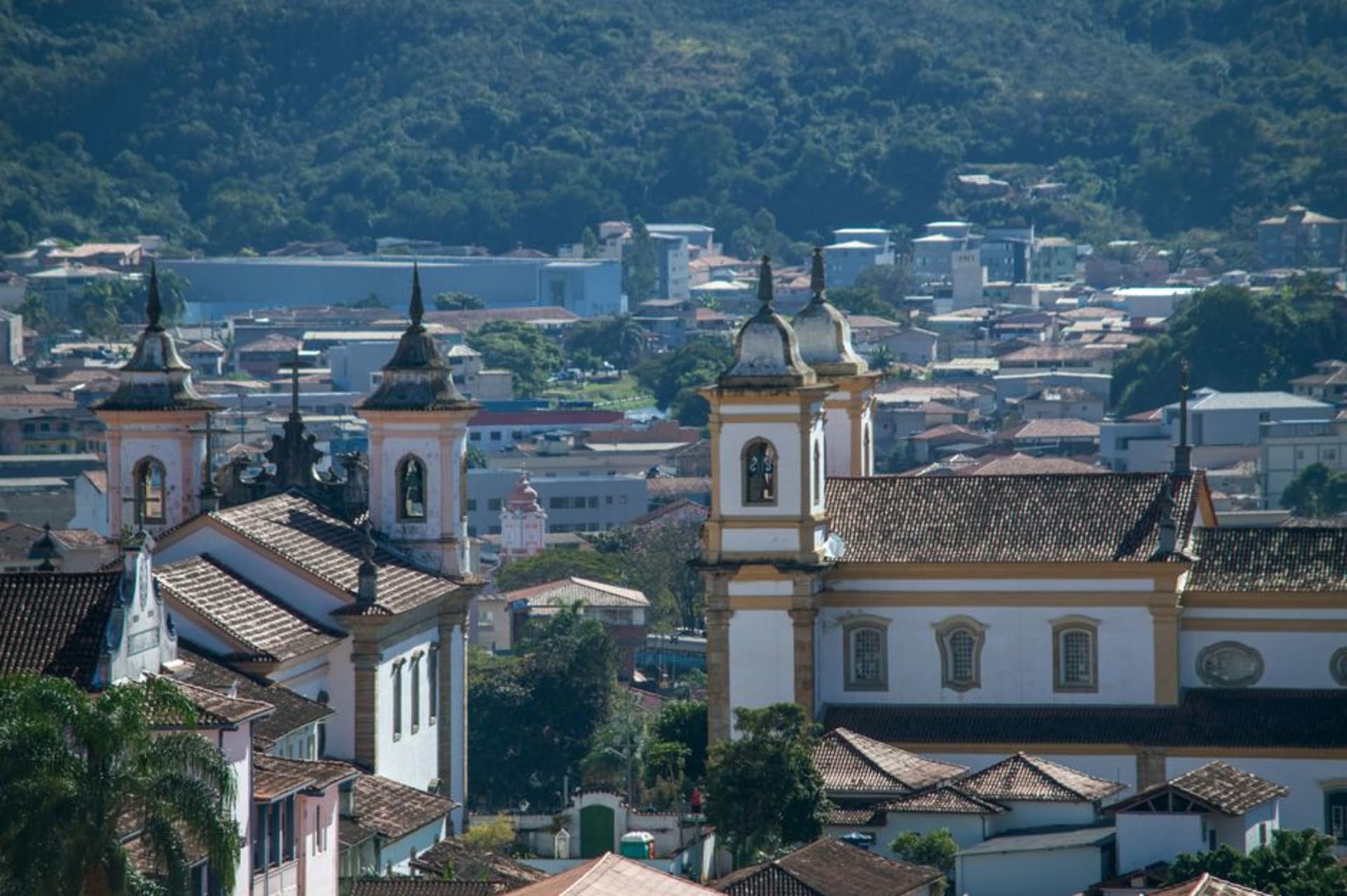
Mariana
"Mariana is what Ouro Preto would feel like if nobody had told anyone about it yet."
Minas Gerais's oldest colonial town, twenty minutes from Ouro Preto and considerably quieter, with the same gold-rush churches and a fraction of the crowds.
We drove over from Ouro Preto on a whim, expecting a minor detour to fill an afternoon, and ended up staying until the last golden light had gone from the church towers, arguing gently over whether Mariana might actually be the better town of the two. I don’t think we ever resolved it. I don’t think we needed to.
The Original Capital
Mariana was Minas Gerais’s first town, founded in 1696 and named the colonial capital before Ouro Preto — then called Vila Rica — eclipsed it in wealth and prominence. That history left Mariana with an equally serious collection of Baroque churches and colonial mansions, but without the tour-bus infrastructure that has grown up around its more famous neighbour. The Praça Minas Gerais, framed by the twin-towered Catedral Basílica da Sé and the old governor’s palace, has a stillness in the middle of a weekday afternoon that Ouro Preto’s equivalent squares have largely lost.

An Organ Older Than the Country
Inside the cathedral is a German-built organ from 1701, reportedly one of the oldest in the Americas still in playable condition, and on the second Friday of the month it is — a local told us, and we happened to be there on the right day — brought out for a public recital. We sat in a mostly empty pew as the sound filled the stone nave, a strange collision of European baroque music and Brazilian colonial architecture that seemed, in the moment, to explain something about how this whole region came to exist.
The Mine Beneath the Town
Just outside the centre, the Mina da Passagem offers a descent into a real, historic gold mine — a rail cart ride down into tunnels first worked in the 1700s, still occasionally yielding a trace of gold in the water that pools at the bottom. It is touristy in the most literal sense, but also genuinely disorienting: standing in a cool, dripping tunnel two hundred years old, thinking about the human cost of everything built above it.

Eating Well, Without the Crowd
Dinner was at a small family restaurant off the main square, comida mineira again — because in this part of Brazil you stop resisting it after the second day — feijão tropeiro, torresmo, a couve so finely shredded it dissolved on the tongue. The owner remembered us from lunch two days earlier, which tells you something about how few visitors actually make it to Mariana compared to Ouro Preto’s steady tour groups.
When to go: April to June and August to October for dry, comfortable weather. Combine it with Ouro Preto as a day trip or, better, give it its own night to see the town without the day-tripper traffic.