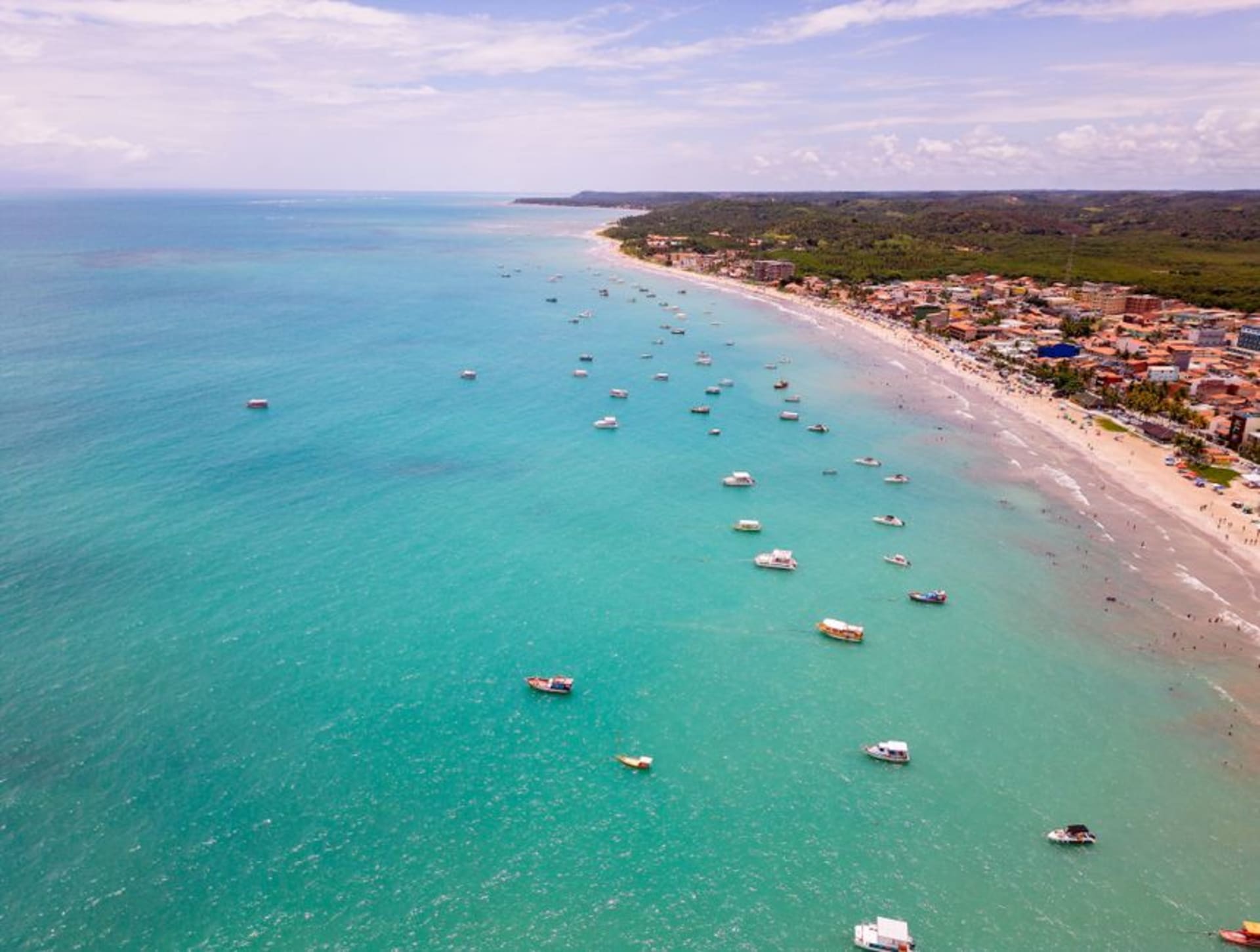
Maragogi
"Someone called it the Caribbean of Brazil and for once the nickname undersold the place."
Alagoas' 'Caribbean of Brazil', where a reef several kilometers offshore holds back the Atlantic to form pools so clear they seem lit from below.
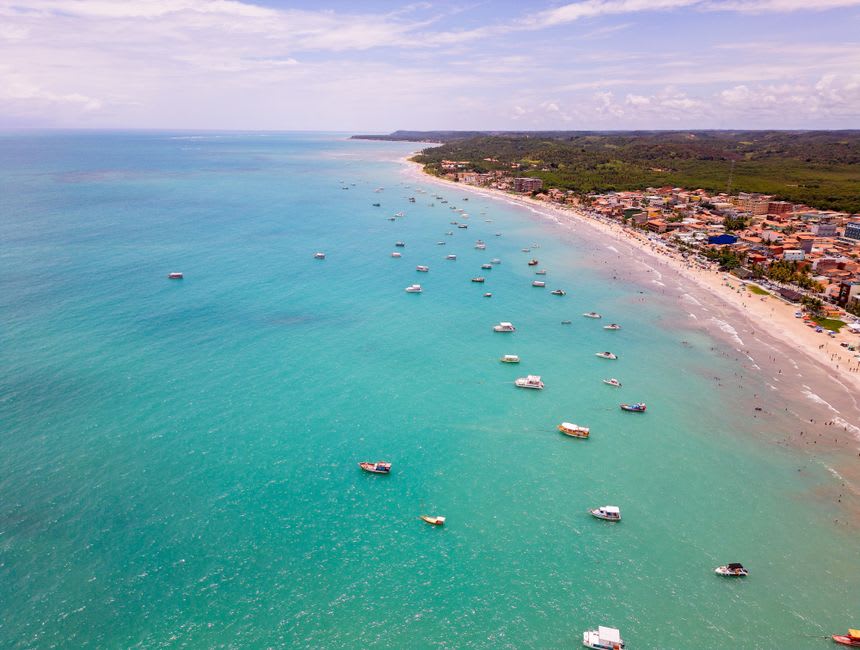
Maragogi earns the nickname “Caribbean of Brazil” more honestly than most places that borrow the comparison, mostly because of geography rather than marketing: a barrier reef runs roughly six kilometers offshore, further out than most of the natural pools further south on this coast, which means the boat ride to reach it takes you well out to sea before the water underneath turns from ordinary blue to the flat, lit-from-within turquoise that gives the town its reputation.
The Piscinas de Galés, the main natural pool complex, form at low tide when the reef traps a shallow, current-free lagoon of astonishing clarity — visibility that on a good day runs twenty meters or more, among the best I found anywhere on the Brazilian mainland coast. Catamarans depart each morning from Maragogi and the nearby village of Barra de São Miguel, and the boat itself becomes part of the experience: an hour or so of open water, live forró or axé music playing from a small sound system, caipirinhas passed around, before the engines cut and everyone slips into water shallow enough to stand in with a horizon that looks close enough to touch.
Snorkeling the reef itself is the point once you’re out there — parrotfish, sergeant-majors, the occasional ray moving over coral formations that, while showing some bleaching like reefs everywhere, remain healthier and more colorful than I expected this far along a coastline this developed. I floated for close to an hour with a mask that kept fogging and didn’t care, watching the light move across the sand six feet below in patterns that shifted with every small swell.
The town of Maragogi itself is unpretentious — a beach village stretched along a long, quiet stretch of sand backed by coconut palms, with a handful of pousadas and beach restaurants rather than the resort towers that mark more developed parts of this coast. I stayed at a small guesthouse two minutes’ walk from a beach that, outside of the boat departure hours in the morning, was essentially empty.
Further south, the neighboring village of Japaratinga offers its own quieter, less-visited version of the same reef system, reachable by a coastal road that runs through a string of small fishing communities, worth the detour if Maragogi itself starts to feel like it’s catching up to its own reputation.
When to go: September through February for the calmest seas and clearest water. As with all the natural pools on this coast, check tide tables — the boats only run out to the reef when the tide is low enough to expose it, so a poorly timed trip means deeper, murkier water and less of the magic. Avoid Brazilian school holidays if you want the pools closer to empty.