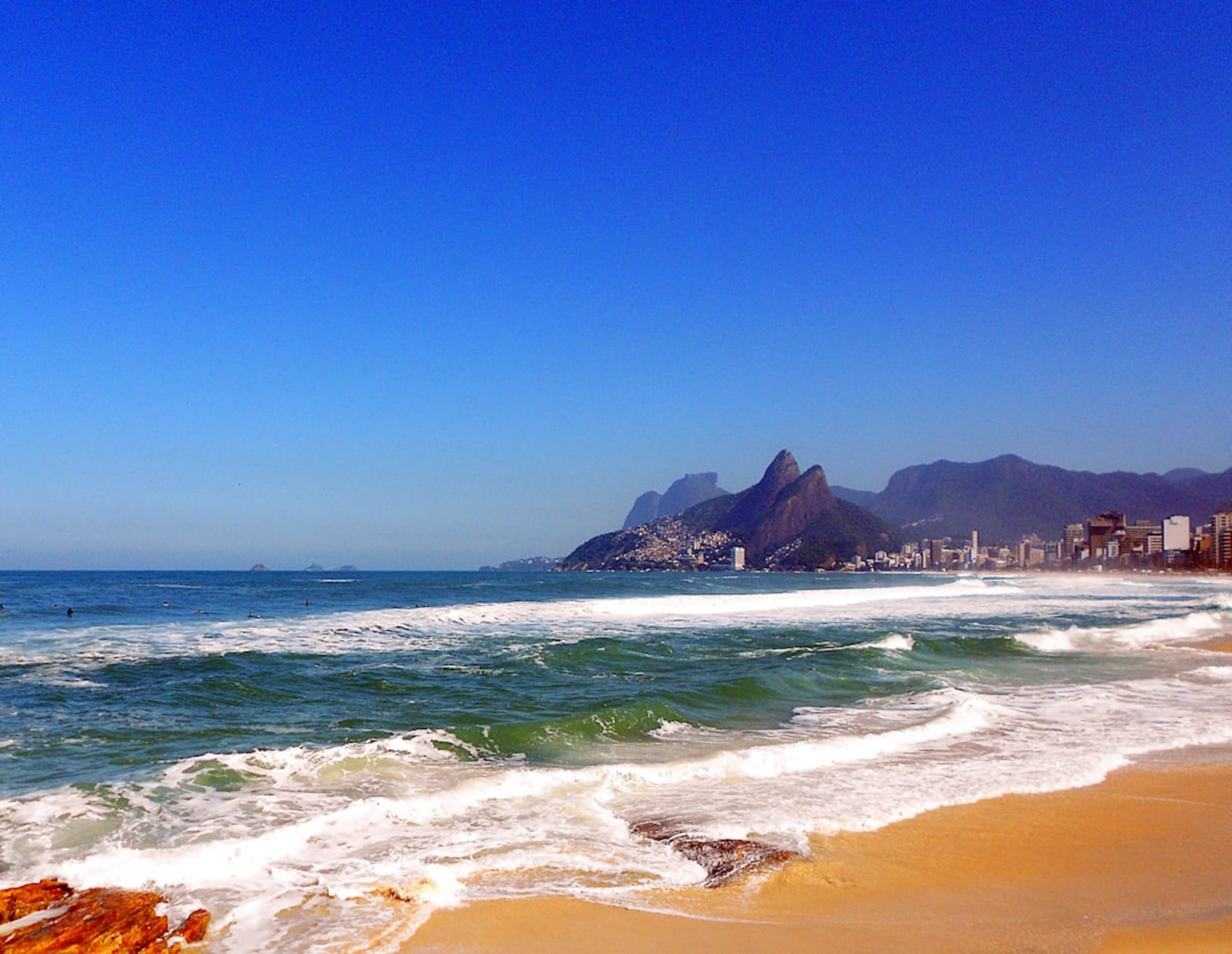
Ipanema
"Every song about Ipanema undersells it slightly. That's the highest compliment I can pay a place."
The neighbourhood that gave the world a song, a beach where the sunset gets a round of applause, and a way of life built entirely around both.
I knew the song before I knew the neighbourhood, which is probably true of most people who have never been to Rio. “The Girl from Ipanema” plays in every elevator and hotel lobby on earth, stripped of context until it means nothing at all. Then you actually stand on Rua Vinícius de Moraes, look at the corner bar where the composer and the poet supposedly watched Heloísa Pinto walk past every day on her way to the beach, and the song snaps back into focus. It was not written about an abstraction. It was written about this exact fifteen-minute walk, in this exact light.
Ipanema itself lives up to the myth with almost suspicious ease. The neighbourhood grid is orderly and low-rise compared to Copacabana’s wall of towers, and the streets running down to the sand — Farme de Amoedo, Vinícius de Moraes, Teixeira de Melo — are lined with the kind of boutiques, juice bars, and quiet cafés that make you want to move here on the spot. I stayed a block back from the beach on my second Rio trip, in an apartment with a balcony just big enough for a coffee and a view of the Dois Irmãos peaks catching the morning sun.
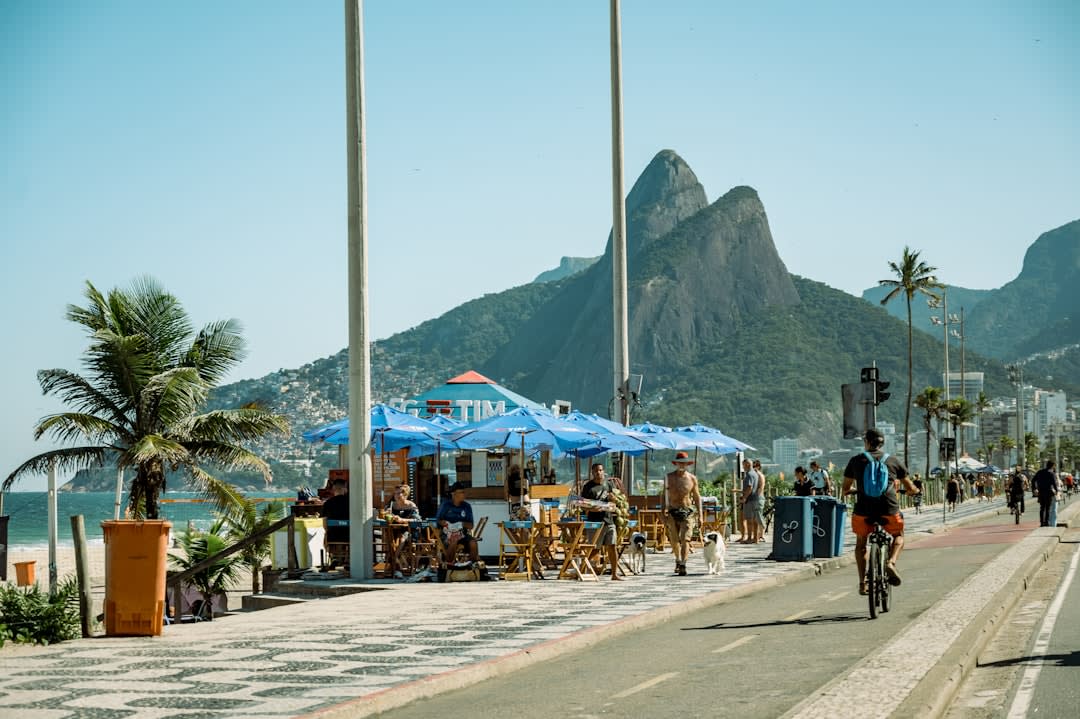
The beach organizes itself with an internal logic you learn quickly. Posto 9 is the bohemian, artsy, LGBTQ-friendly stretch where the crowd skews younger and the volleyball is more serious than it has any right to be. Further along, near Posto 8, families spread out with umbrellas and coolers in a scene that could be any beach town anywhere, except for the mountains rising directly out of the sand. I bought a coconut, a caipirinha from a walking vendor, and a plate of grilled cheese on a stick — queijo coalho — all without standing up, which is close to the entire point of an Ipanema beach day.
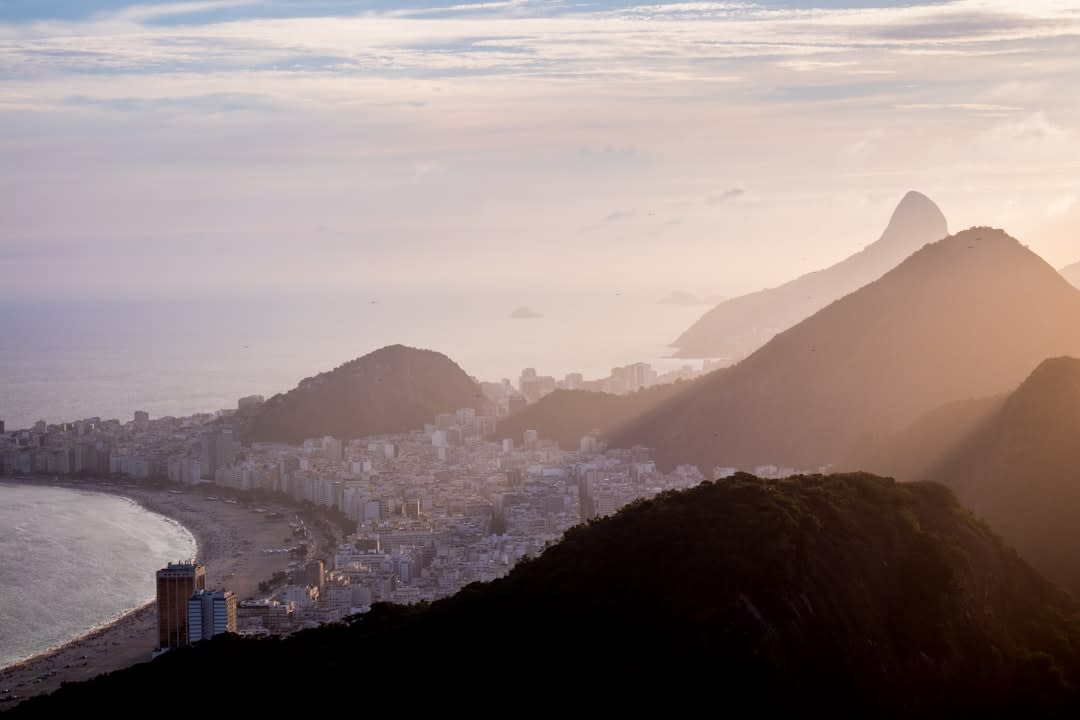
Arpoador, the rocky point where Ipanema meets Copacabana, is where the day properly ends. Every evening, regardless of season, a crowd gathers on the rocks facing west and watches the sun drop behind the mountains toward Barra da Tijuca. Lia and I went four evenings in a row during one visit, and every single time, when the sun finally disappeared, the crowd clapped. Strangers, tourists, surfers still in wetsuits — all applauding a sunset as if it were a performance that could have gone either way.
Away from the sand, Feira Hippie takes over Praça General Osório every Sunday, a crafts market that has been running since the 1960s and somehow still feels more local than touristy. For dinner, Zazá Bistrô Tropical does candlelit Brazilian-fusion in a converted house a few blocks from the beach, and it remains one of the few restaurants in Rio where Lia has asked for the recipe.
When to go: Year-round, but April to June brings the calmest seas and the clearest sunset viewing at Arpoador, before the December-to-February peak season crowds arrive.