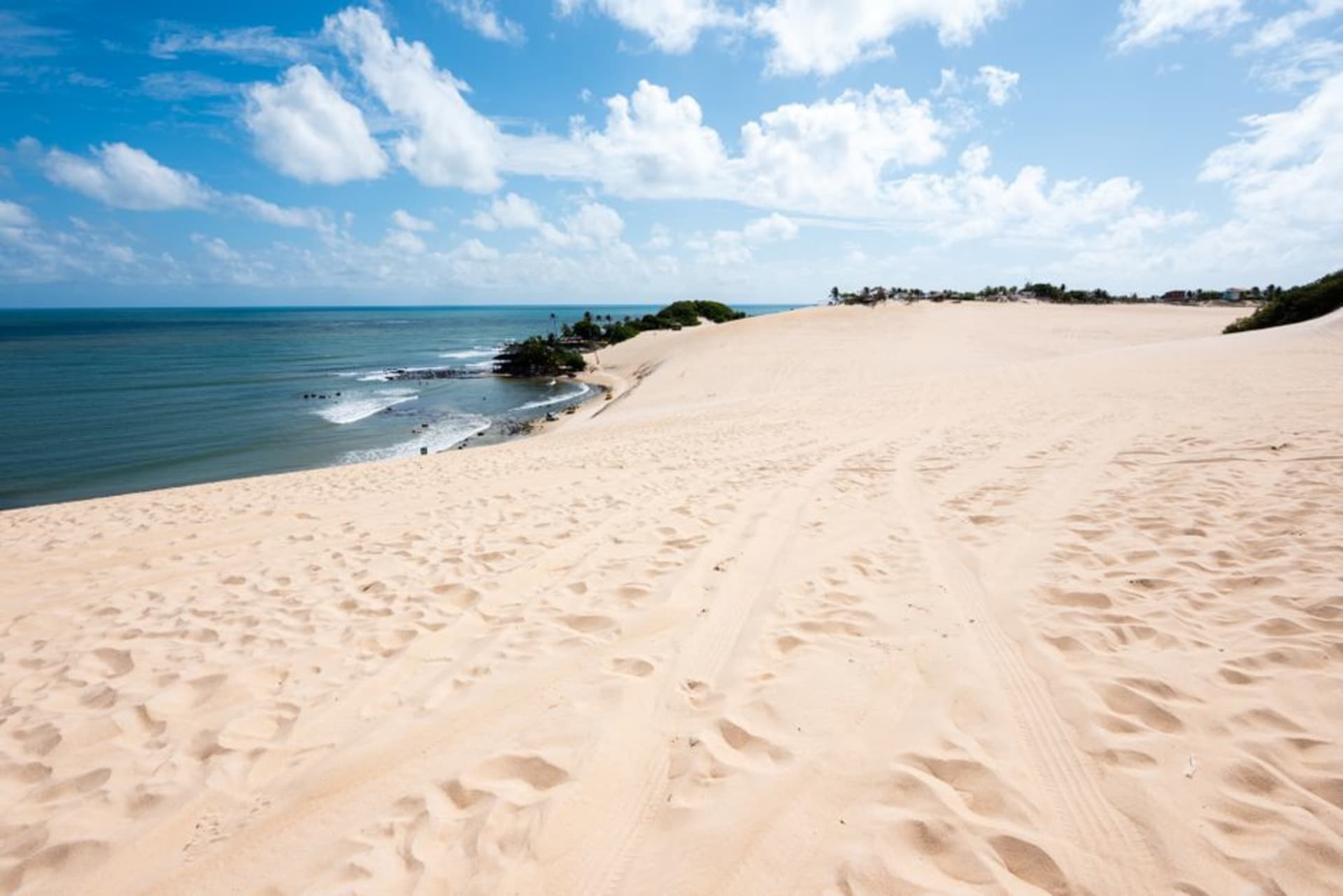
Genipabu
"I told myself I was too cool for the camel ride. I was not too cool for the camel ride."
A wall of towering dunes just north of Natal, where buggies race the ridgelines and camels wait at the bottom for a photo that everyone takes anyway.
Genipabu is, by most measures, a tourist trap, and I mean that almost as a compliment. Thirty minutes north of Natal, a coastal landscape of dunes rises up to thirty meters above the Potengi River estuary and the Atlantic, and the entire local economy has organized itself around driving people over them as fast as possible in open-topped buggies, which sounds like it should be tacky and instead is unreasonably fun.
The buggy rides are the headline activity, and they follow a well-worn script: a driver who has done this ten thousand times picks you up from a hotel in Natal or the village itself, and once on the dunes proceeds to attack the steepest drops at a speed that produces genuine, if slightly manufactured, terror. There’s a particular trick called “wall of death,” where the driver takes a near-vertical dune face at speed and the buggy seems to hang for a half-second before gravity resumes, and every driver on the beach appears to compete quietly over who can make their passengers scream loudest. I did scream. Lia filmed it and has not let me forget the pitch.
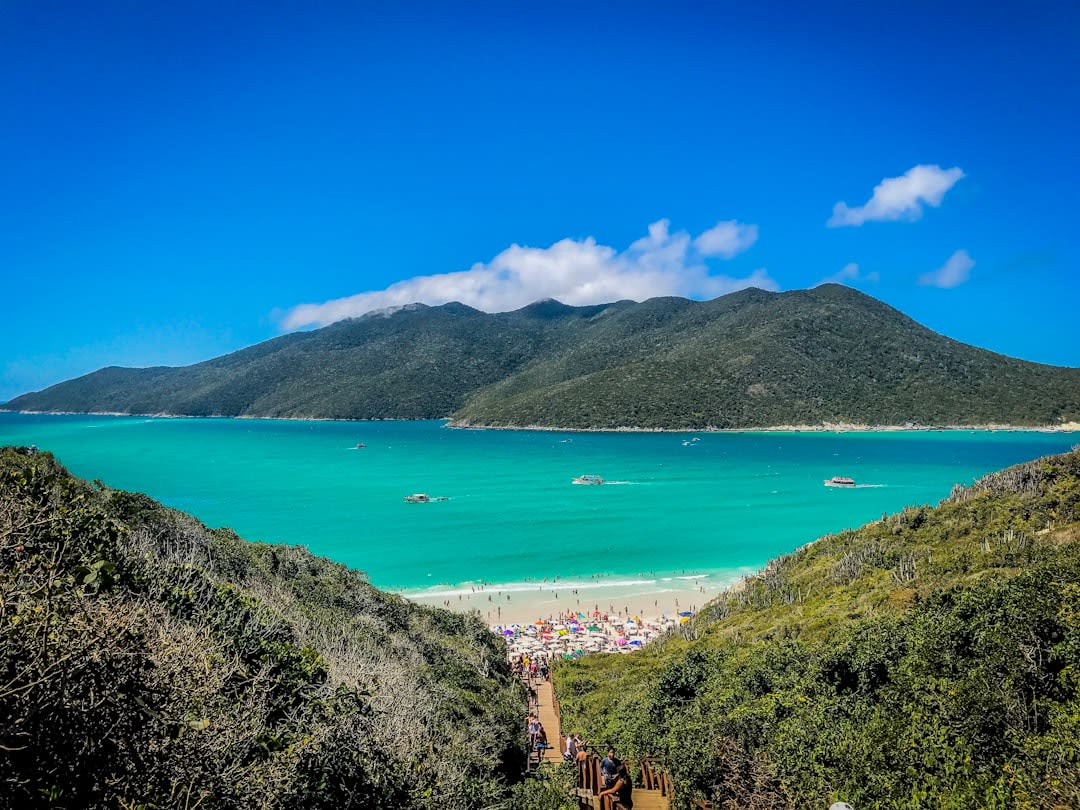
Past the theatrics, the actual landscape earns the trip on its own. The dunes here are part of a continuous system stretching along the coast, and the view from the highest ridges takes in the Potengi estuary curling below, fishing rafts on the lagoon between dunes, and the city of Natal visible in the distance across an unbroken sweep of sand. There’s a lagoon at the base of the largest dune complex where you can rent a sandboard and slide down toward the water, which is a far less terrifying and equally satisfying way to interact with the same terrain the buggies are tearing up.
The camel rides, arranged in a small caravan at the edge of the village, are the most photographed and most mocked part of the Genipabu experience, and I went in determined to skip them and came out having done exactly the ride I’d planned to skip. It is short, slow, slightly absurd, and the camels seem reasonably well cared for by the families who run the operation and depend on it. I don’t feel strongly enough either way to tell you not to do it. I did it.

Genipabu village itself is small and entirely oriented around this single industry — buggy operators, camel handlers, a strip of restaurants serving grilled fish and coconut water to people between excursions — and there’s no reason to stay overnight when Natal is thirty minutes away and considerably more livable.
When to go: Any time of year works for the dunes themselves, though the dry season (roughly August to January) gives firmer sand and clearer skies for photos. Go in the afternoon for the best light over the estuary, and book a buggy through your accommodation or a reputable operator rather than the first driver who approaches you at the entrance.