Garopaba
"Garopaba is what Praia do Rosa was twenty years ago, and everyone there will tell you so, a little proudly."
A former whaling town turned Santa Catarina surf hub, quieter and more local than its famous neighbor Praia do Rosa.
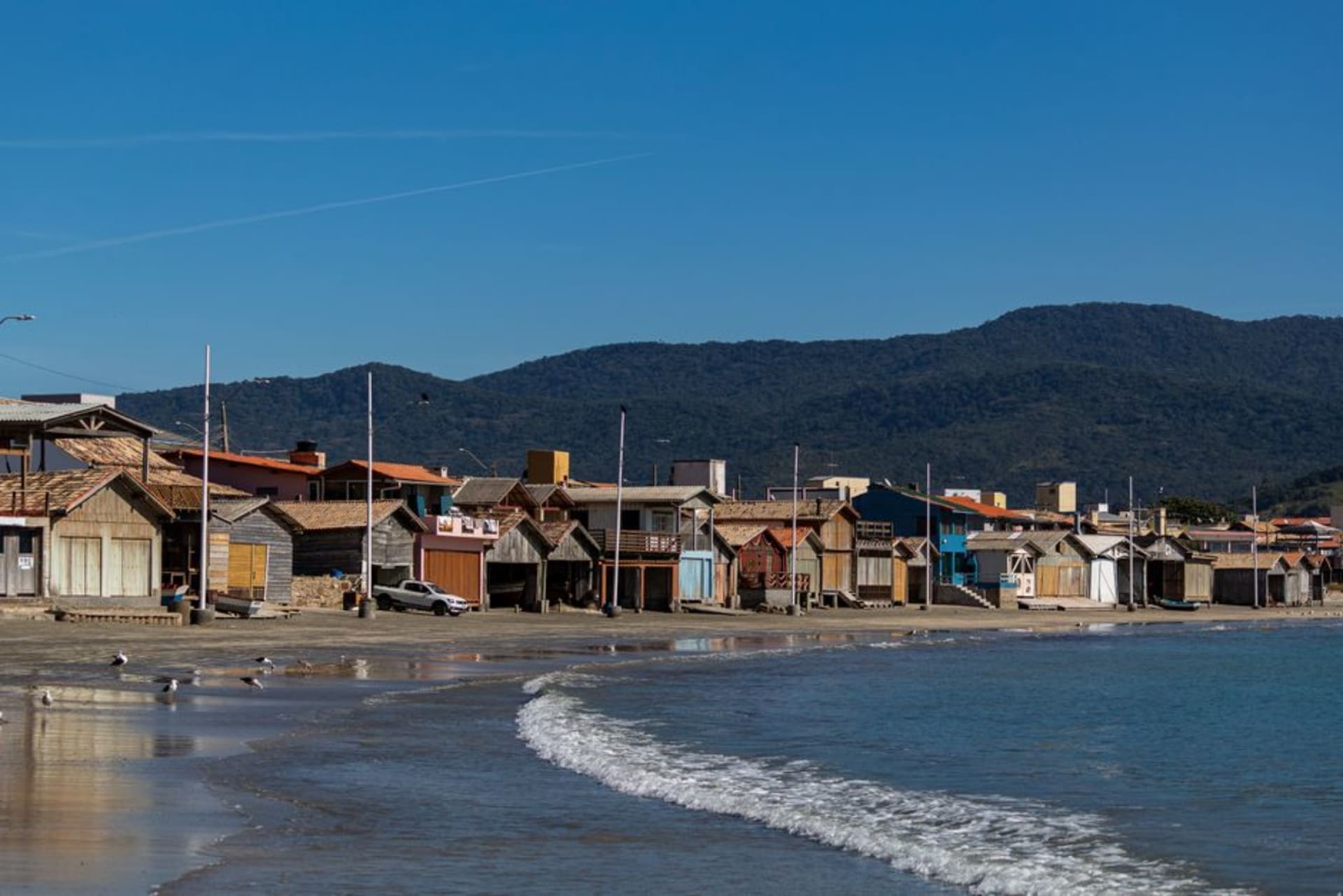
Every surfer I met in Praia do Rosa mentioned Garopaba the way you mention a sibling who stayed home while you moved to the city — with affection and a hint of superiority that didn’t quite hold up once I actually went. It is fifteen minutes north along the coast, a former whaling town whose harbor still fills with small painted fishing boats each morning, and it turned out to be my favorite stop on that stretch of Santa Catarina, not despite being the quieter option but because of it.
The Town and the Fleet
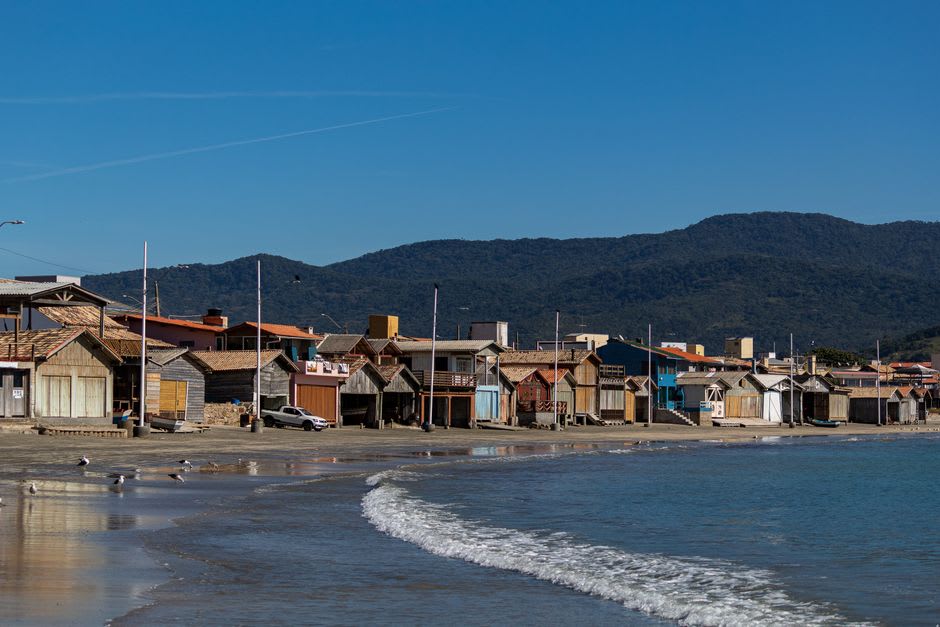
Garopaba’s main beach doubles as a working harbor. At dawn, fishermen haul boats up the sand using nothing more than a pair of wooden rollers and considerable shouted coordination, a scene that has apparently looked identical for a century. I got up early enough one morning to watch the whole operation, coffee in hand, while surfers already sat waiting in the lineup a hundred meters offshore, entirely unbothered by the boats sharing their water.
Praia da Silveira and Ferrugem
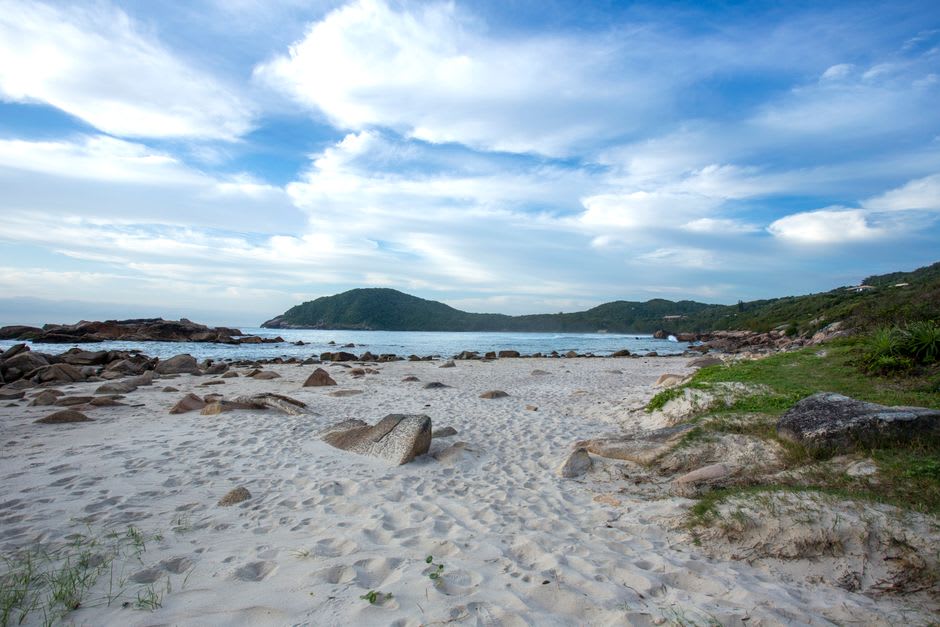
The town’s real surf action happens at the satellite beaches — Praia da Silveira to the south, long and sandy with reliable beach breaks good for learners, and Praia da Ferrugem to the north, rockier, more scenic, and considerably more crowded on weekends when São Paulo and Porto Alegre empty into the region. Lia and I preferred Silveira in the late afternoon, when the wind dropped and the light went gold over the water and the only sound was the occasional shout when someone caught a decent set.
Whales and a Slower Pace
Garopaba shares its winter whale season with neighboring Praia do Rosa, and the same lookout trails and cliffside cafés fill with people scanning the water from June through November. What Garopaba does not share is the crowd. Its restaurants are simpler, its pousadas smaller and family-run, and the general pace of the place suggests a town that has decided, collectively, not to become anything more than it already is.
When to go: June to November for whales and the strongest swells. December to March for warm water, though book pousadas well ahead as capacity is limited relative to demand.