Arraial do Cabo
"I have snorkeled in the actual Caribbean. Arraial made me question why I bothered flying that far."
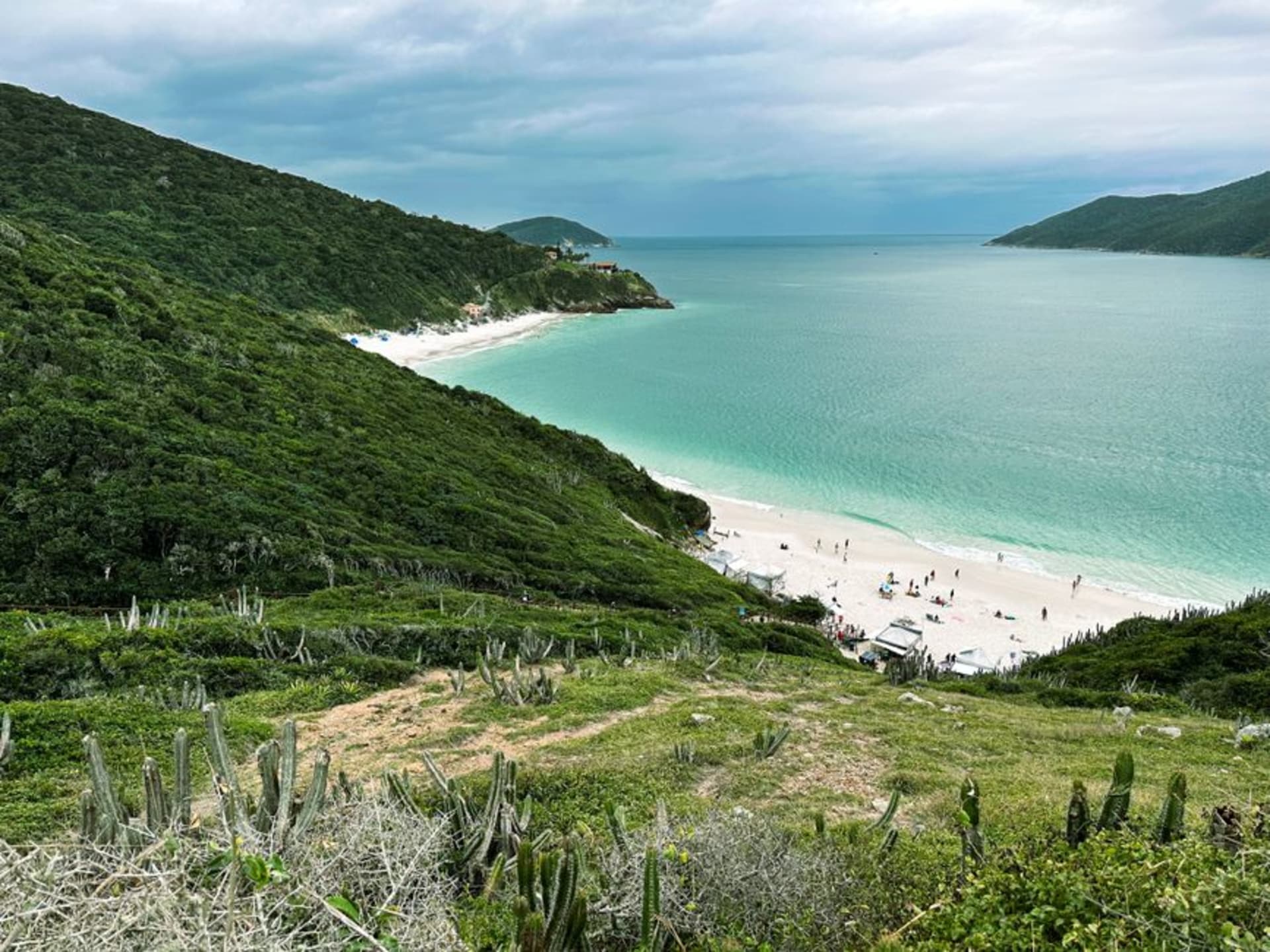
The town that earned the nickname 'Brazilian Caribbean' — water clear enough to see your own feet from a boat, and some of the country's best diving a short drop below.
Every travel article about Arraial do Cabo reaches for the phrase “Brazilian Caribbean” within the first sentence, and having now been there twice, I understand why nobody resists it. The water along this stretch of the Região dos Lagos is a genuinely startling turquoise, a product of a cold-water upwelling current that keeps the sea unusually clear and, notably, unusually cold for a tropical latitude — the one detail that keeps this place from being a total copy of the Caribbean it gets compared to.
The town itself is unglamorous and functional, a working fishing port that happens to sit beside some of the most photogenic water in Brazil. I based myself there for three nights and spent almost none of them in the town proper, because the entire point of Arraial is the boat trips departing every morning from the harbour, looping around the peninsula to a set of beaches and coves that are either difficult or impossible to reach on foot.
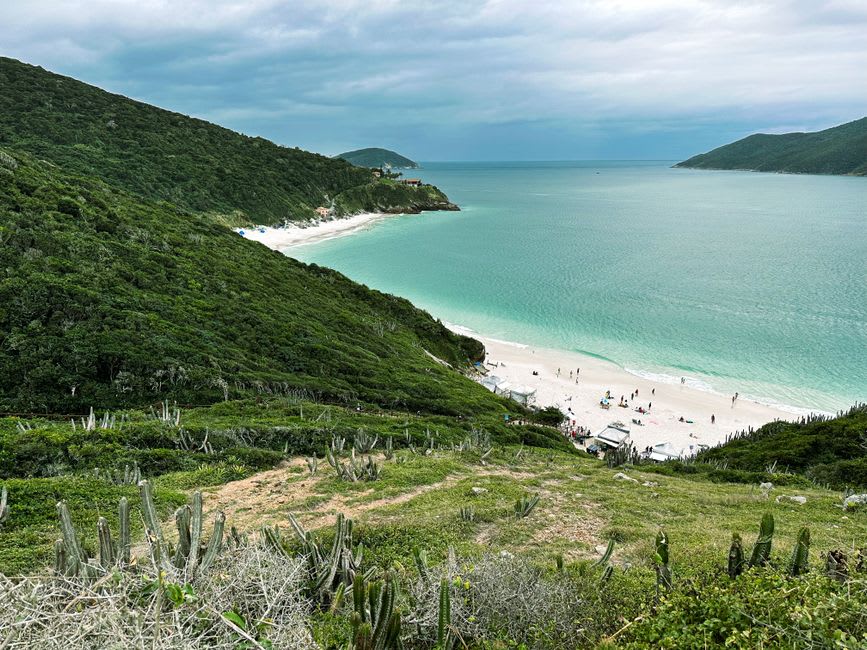
Praia do Farol, on Ilha do Cabo Frio, is the single most photographed beach in the region — a curve of white sand backed by a working lighthouse, reachable only by boat and only with advance permission since it sits within a naval area. The water there is the kind of see-through blue that makes depth impossible to judge; a boat anchored fifty metres out looks like it’s floating on air. Praia do Pontal do Atalaia, closer to town, offers nearly the same water with none of the access restrictions.
The diving is what actually distinguishes Arraial from every other pretty beach town on this coast. The cold current that clarifies the water also draws in an unusually rich mix of marine life for Brazil’s southeast — reef fish, turtles, occasional rays, and enough visibility on a good day to see thirty metres in any direction. I did a single dive with a local operator, in a wetsuit I’d have preferred not to need, and surfaced convinced the country’s best diving reputation belongs less to its famous northeast reefs and more to this unassuming southern town.
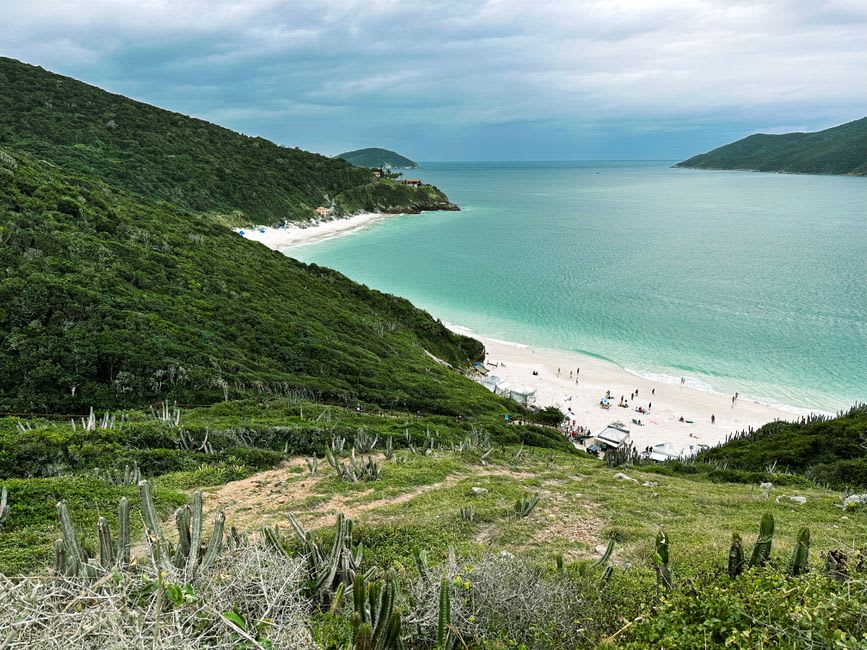
Praia do Forno, a short hike over a headland from the town centre, is the easiest of the standout beaches to reach without a boat — a compact, calm cove that fills up quickly on weekends but rewards an early arrival. Pack a light wetsuit or rash guard regardless of season; the water here is markedly colder than its color suggests, a fact that surprises almost everyone the first time they wade in expecting bathwater.
When to go: September to April for the warmest water and calmest seas, though the upwelling current can drop temperatures unpredictably even in summer. Weekdays are considerably quieter than weekends, when day-trippers arrive from Rio and Búzios in large numbers.