
Makgadikgadi Pans
"On the pans, the sky is so much more sky than usual that the ground starts to feel optional."
I stepped out of the vehicle onto the pans at midday and the light was so complete — bouncing up off the white salt crust, coming down from a cloudless sky — that I could not see shadows. My shadow, usually my most reliable companion, had been erased. The heat came from every direction at once. The salt crunched underfoot in a way that reminded me of fresh snow, except that it was forty degrees and I was standing in the middle of what was once one of the largest lakes in the world, now reduced to alkaline crust and the memory of water.
The Makgadikgadi were a super-lake once — paleontologists estimate it covered some thirty thousand square kilometers and was possibly the biggest freshwater body in the southern hemisphere during wetter epochs. Now it is two main salt pans, Ntwetwe and Sua, plus hundreds of smaller ones, all of them bone-dry for most of the year, all of them covered in a brilliant white crystalline crust that forms as the last of the seasonal water evaporates under the dry-season sun. The emptiness is so total that visitors sometimes get spooked by it — they came for wildlife, for trees, for the familiar grammar of African savannah, and found instead this horizontal infinity where the rules of perspective stop working and your brain has nothing to lock onto.
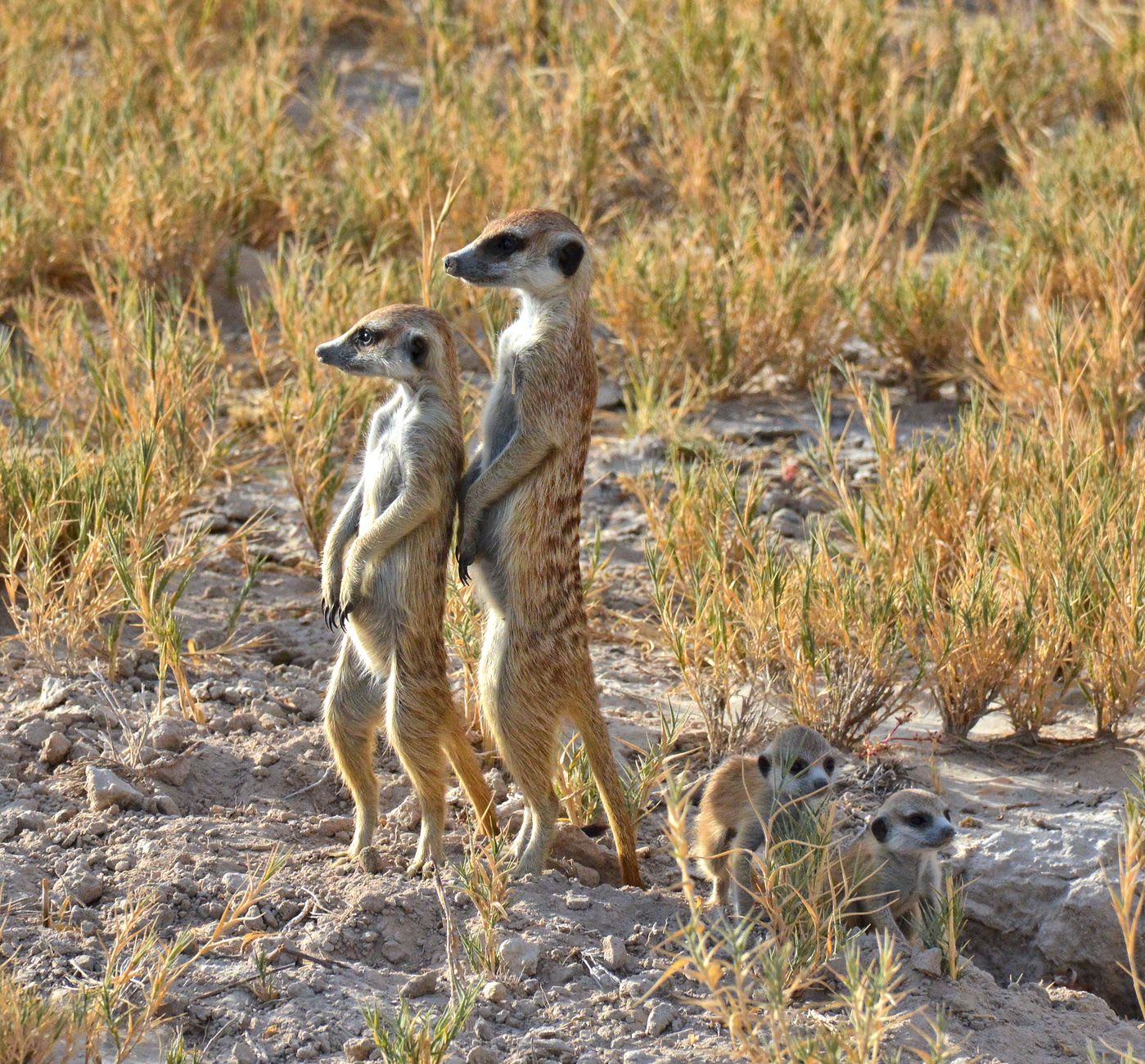
But the pans have their own rhythm. In November and December, when the rains arrive, something extraordinary happens: a shallow sheet of water floods across the flats, and within weeks the Makgadikgadi becomes the destination for one of Africa’s least-publicized animal events — a migration of zebra numbering in the tens of thousands, moving down from the Boteti River area as the water spreads east. Flamingos arrive in their hundreds of thousands to breed on the temporary lake. The meerkats, which live in the islands of scrubland between the pans year-round, become improbably numerous and improbably tame from years of research-station contact. I sat with a meerkat sentry on my head for twenty minutes while it scanned for eagles, its claws light as paper on my scalp.
Sleeping on the pans themselves — which is permitted, in a camp set up on the crust — is an experience of a specifically disorienting kind. There is literally nothing to listen to. No wind because no trees to catch it. No insects because the salt is fatal to them. No animal sounds because nothing lives out here in the dry months. There is just the sound of your own breathing and, if you lie quietly enough, something that might be your heartbeat or might be the settling of the salt crust in the cold. The Milky Way overhead is indescribable — the pans are so flat and so far from any light source that the sky curves down to meet the horizon in a perfect dome, and at two in the morning with no moon, the stars cast actual shadows.
I woke just before sunrise to find the thermometer had dropped to three degrees. The same place that had been trying to bleach me at noon was now frozen still. Botswana does not have an equable climate. It has extremes that follow each other without transition.
When to go: November to March for the wet season zebra and flamingo spectacle — but access can be difficult after heavy rain as the pans flood unpredictably. April and May catch the tail of the migration. June through August brings the dry season, when quad biking and sleeping on the hard pan is possible and the meerkat colonies are at their most accessible. Avoid the deep dry season for the migration, as the zebras have moved on entirely.