Africa
Botswana
"The silence here is so complete it starts to feel like a sound."
I landed in Maun in the middle of the afternoon, in the kind of heat that makes the air shimmer above the tarmac. A tiny prop plane was waiting to take a handful of us north into the Okavango Delta — and from the moment we banked over the floodplains, I understood that whatever I had imagined Botswana to be, I was wrong. Below us, a maze of papyrus channels and palm-studded islands stretched to the horizon, bright green against the Kalahari sand. Hippos traced dark shapes in the tea-colored water. There were no roads, no villages, no signs of anything organized by humans. Just water moving through grass, impossibly slowly, having traveled all the way from Angola’s highlands to evaporate here in the desert.
The Okavango is the thing that makes Botswana unlike anywhere else on earth. It is not a lake. It is not a river in the conventional sense. It is an inland delta — a flood that arrives each year in the dry season, when the rest of southern Africa is parched, and transforms the Kalahari into an aquatic maze. Exploring it by mokoro, the traditional dugout canoe, at six in the morning with mist still sitting on the water, is the quietest and most disorienting kind of travel. Your guide pushes with a long pole in near-silence. Elephants move through the reeds. A fish eagle calls from somewhere you cannot see. There is no agenda, no checklist. Botswana does not rush.
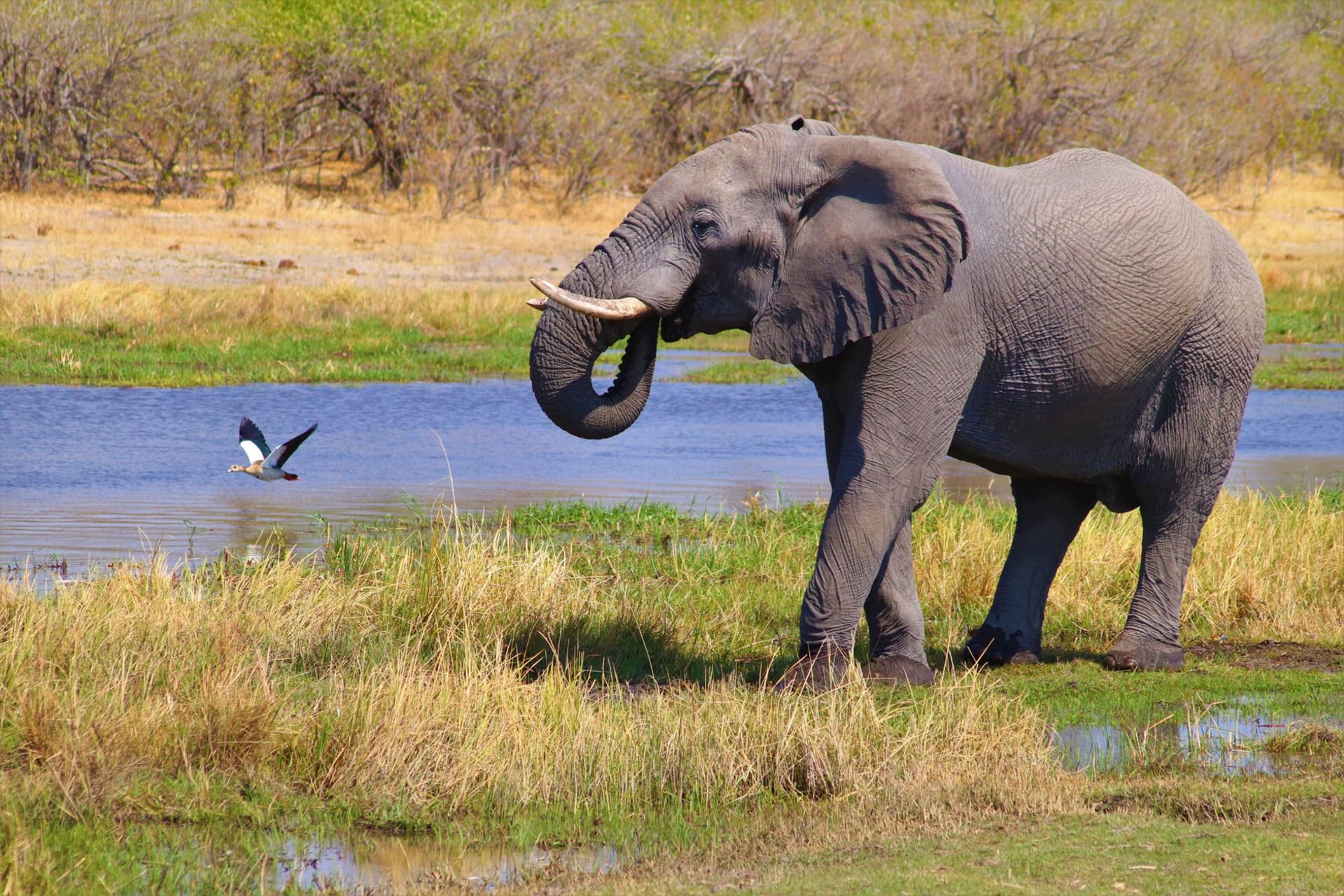
What I did not expect was Chobe. The national park in the north concentrates one of the largest elephant populations on earth along a river that also marks the border with Namibia. We took a boat out at sunset and counted, at one point, more than eighty elephants drinking along a single stretch of bank. Calves stumbling into the shallows. Old bulls with tusks worn smooth from decades of digging. The numbers were staggering, but it was the behavior I could not stop watching — the touching, the rumbling, the precise social choreography of a species that seems to understand something about how to live in groups that we have largely forgotten.
When to go: May to October is the dry season and the best time for wildlife — animals concentrate around permanent water sources and vegetation thins out, making sightings easier. July and August are peak months in the Okavango Delta, when water levels are highest and the contrast between floodwater and parched savannah is at its most dramatic. Avoid January to March if you want easy game viewing; the rains make tracks impassable and animals disperse widely. That said, the green season has a raw beauty of its own, with newborn animals everywhere and birdlife at its most spectacular.
What most guides get wrong: They present Botswana as a single-category destination — expensive, exclusive, tents that cost more per night than most people’s monthly rent. And yes, the high-end lodges exist and are extraordinary. But the framing keeps a lot of travelers away from a country that is genuinely worth the effort to reach on any budget. Camping in the Chobe National Park campsites is legal, relatively affordable, and puts you closer to the action than some guests staying inside. Kasane is a functional town with real restaurants and real prices. The country’s deliberate low-volume tourism policy was designed to protect the ecosystem, not to gatekeep it for the wealthy — though it sometimes ends up feeling that way. Push past the brochures.