Višegrad
"I have read the novel twice and stood on the bridge once, and I can tell you the bridge wins."
Some places you visit because of a building, and a few because of a book. Višegrad, in the far east of Bosnia where the country leans against Serbia, gives you both at once — and they happen to be the same thing. Ivo Andrić won the Nobel Prize in 1961 for The Bridge on the Drina, a novel that uses a single stone bridge as the stage on which four centuries of Balkan history play out, and that bridge is still standing in the middle of town, doing exactly what it has done since 1577. Lia had read the book and I had not, which meant she arrived reverent and I arrived skeptical, and we both ended up leaning on the same parapet saying nothing for a long while.
The bridge that earned a Nobel
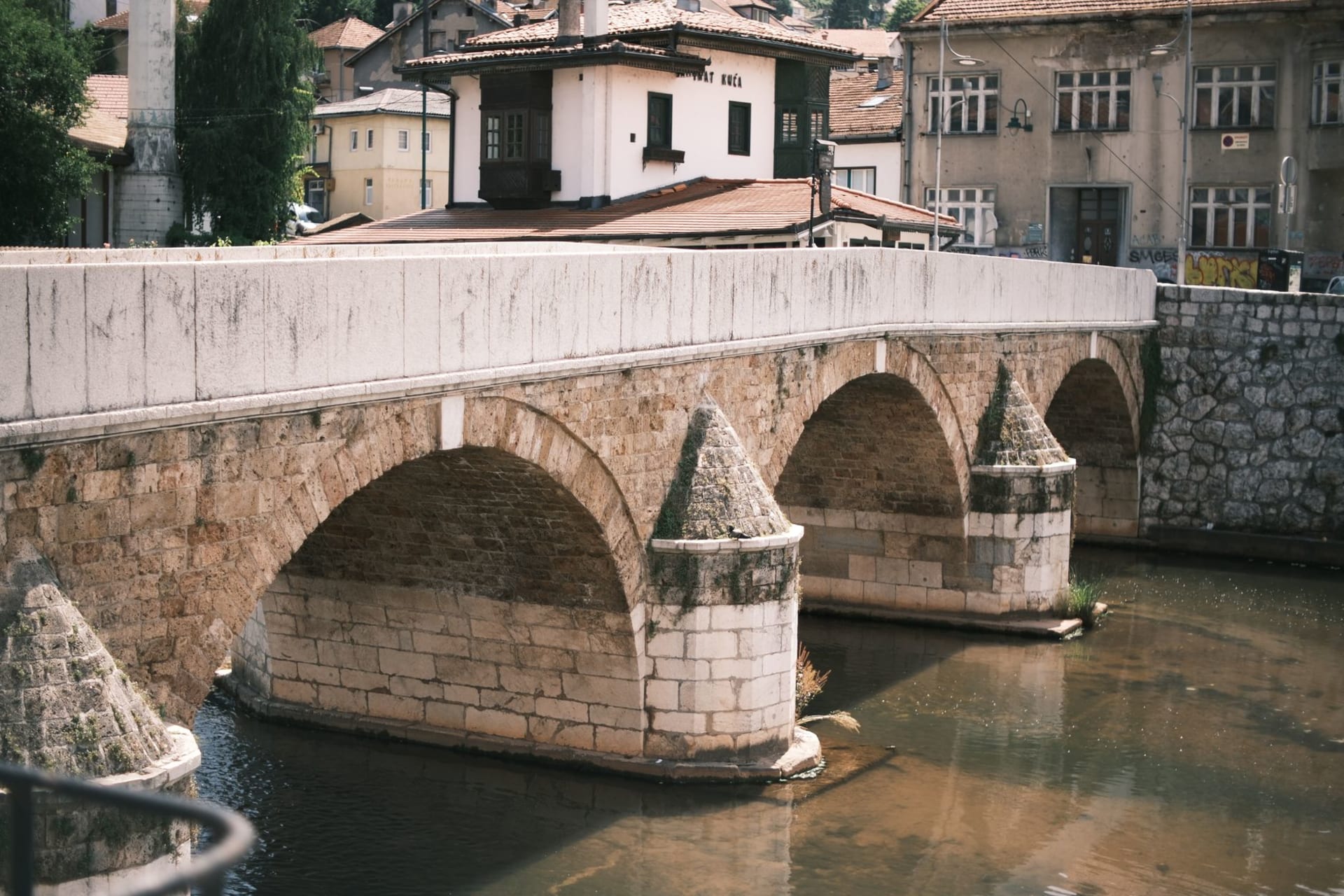
The Mehmed Paša Sokolović Bridge was commissioned by an Ottoman grand vizier — born a Christian boy in a nearby village, taken in the devshirme, raised to the second-highest office in the empire — and designed by Mimar Sinan, the architect responsible for the great mosques of Istanbul. It has eleven arches of pale limestone that step across the Drina with a rhythm that feels less like engineering and more like a held breath. UNESCO listed it in 2007, and it deserves the listing, but the thing the inscription cannot convey is how used it is: kids fishing off it, old men playing cards on the kapija, the wide central terrace where Andrić set half his novel. We sat on the kapija eating burek from a paper bag while the river slid underneath the color of bottle glass.
The Drina here is an astonishing green, the cold clean green of a river that has come down fast from mountains, and the bridge frames it perfectly from every angle. I kept walking back and forth across it, partly to read the Ottoman inscription carved into the central pier, partly because crossing a 450-year-old bridge on foot never stops being slightly absurd in the best way.
Andrićgrad, the town built for a film
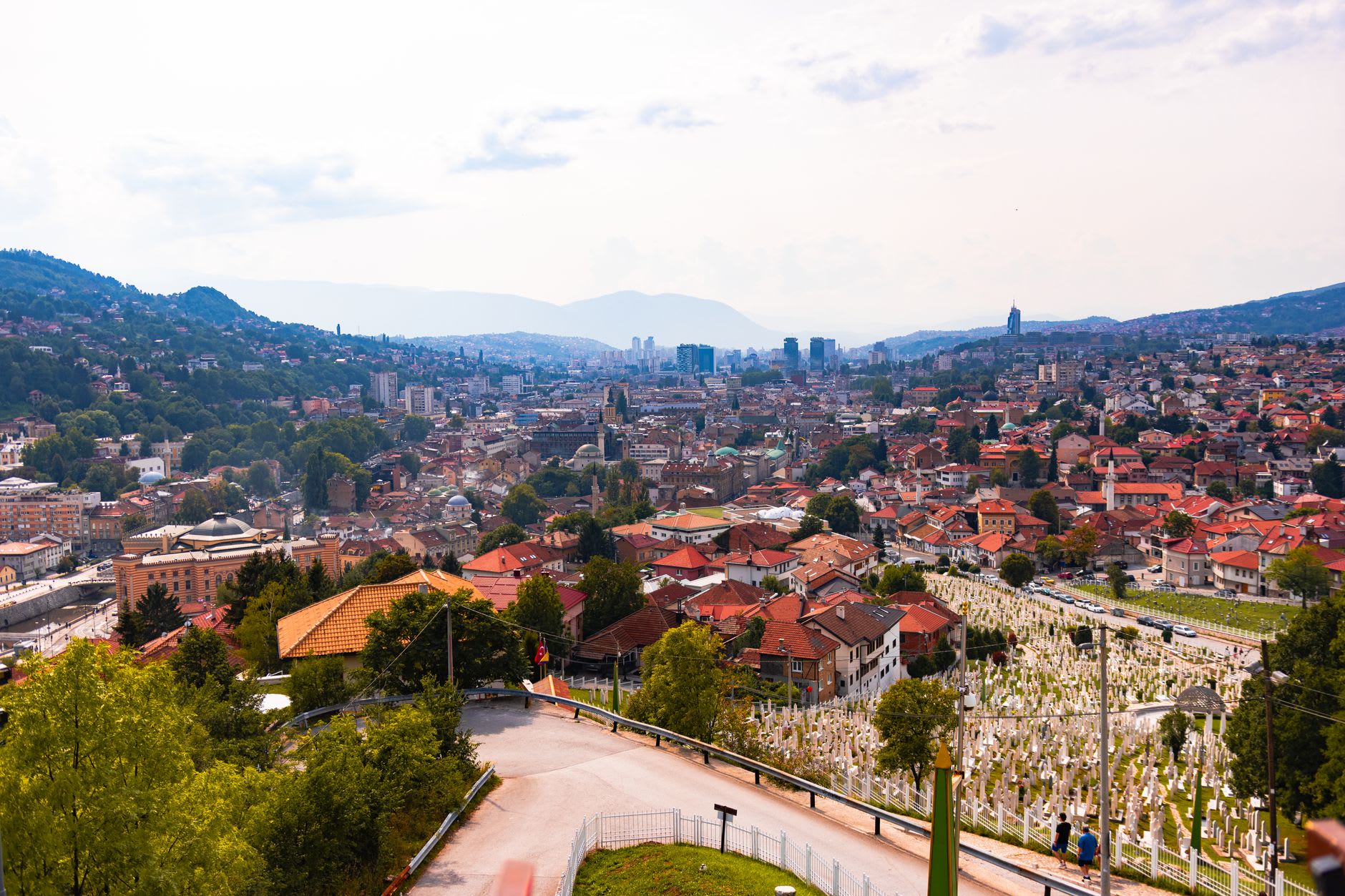
A short walk from the bridge is something far stranger and much newer: Andrićgrad, a small stone town built from scratch between 2011 and 2014 by the film director Emir Kusturica, ostensibly as a set for a film of Andrić’s novel and now standing as a permanent, slightly surreal homage. It is a compressed catalogue of every architectural era the region has passed through — Byzantine, Ottoman, Renaissance, Austro-Hungarian — squeezed into a few hundred meters of brand-new old buildings, with a church, a cinema, cafés, and a statue of Andrić himself looking faintly bemused.
I expected to hate it. A theme-park version of history, built by a famous man with strong opinions, in a town with a heavy and contested wartime past — it had every ingredient of a place I would dismiss. And yet, sitting there with a coffee while Lia photographed the mosaic of Andrić, I found it oddly moving, the way a sincere folly can be. It is one man’s argument, in stone, about who this place is. You do not have to agree with all of it to find the conversation interesting. Then you walk back to the real bridge, four and a half centuries old and indifferent to all of us, and the argument settles itself.
When to go: Late spring and early autumn, when the Drina runs full and green and the heat in this sheltered valley is bearable. Read the Andrić novel first if you can — Višegrad is one of the rare places that is genuinely improved by homework.