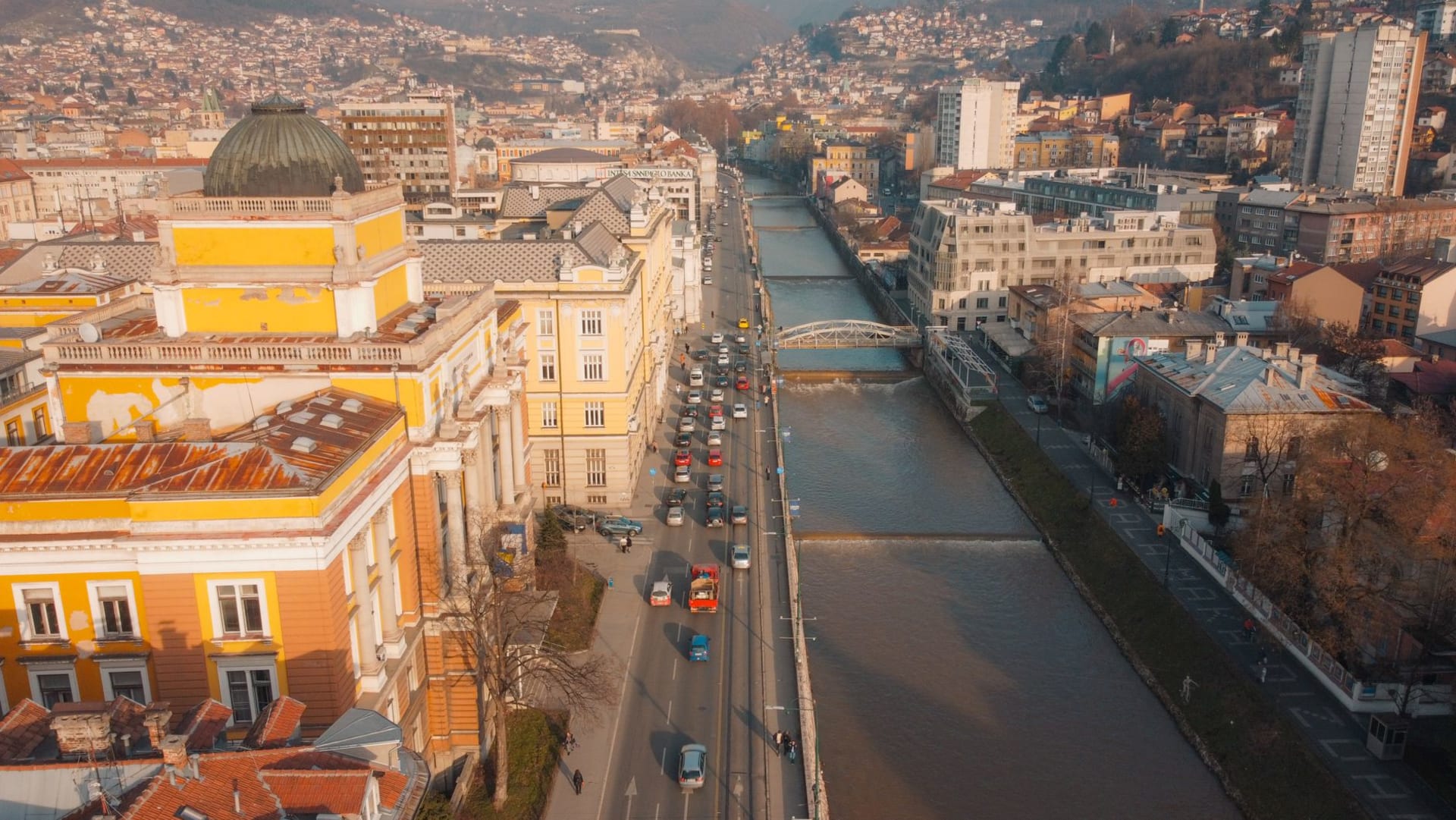
Sarajevo
"Four places of worship in five minutes of walking — Sarajevo doesn't perform multiculturalism, it just lives it."
I arrived in Sarajevo on a night bus from Belgrade, and the city announced itself with woodsmoke and grease at two in the morning. The bus station was a Soviet-era box on the edge of town, and the taxi driver who drove me to Baščaršija said almost nothing the entire way, which suited me fine because I was busy pressing my face to the window. The streets narrowed as we climbed into the old quarter, and then suddenly there were cobblestones, Ottoman-era wooden shopfronts, and a mosque whose minaret was the tallest thing visible in any direction. I paid him, dragged my bag down an alley, and stood there for a moment in the dark feeling like I’d arrived somewhere that hadn’t finished deciding what it was.
Baščaršija in the morning is a different proposition entirely. By seven the coppersmiths are already tapping — that thin, methodical sound carries for blocks — and the bakeries on Bravadžiluk have trays of burek cooling in the window, the phyllo glazed and still steaming. I ate mine standing up, burning my fingers, with a cup of Bosnian coffee that arrived in a džezva with a small bowl of sugar cubes on the side. The coffee is strong and unfiltered and you let the grounds settle. You do not rush it. The entire culture seems to have organized itself around not rushing coffee, and I found this deeply admirable.

The city’s layering is what makes it impossible to reduce to a single narrative. Within two blocks of the Ottoman bazaar, the architecture shifts into Austro-Hungarian boulevard — wide, imperial, with yellow facades and tram lines running down the middle. This is the district built after 1878, when the Habsburgs took over and tried to impose Vienna on an Ottoman city. Then beyond that: socialist-era apartment blocks climbing the hillsides, and tucked among them, houses with the pockmarks of the siege still visible in their walls. Not as monuments. Just as buildings that were shot at and patched and are still standing. I walked the Sniper Alley stretch of Zmaja od Bosne and felt the geography of it — that long exposed boulevard, the hills on either side — in a way that no photograph had prepared me for.
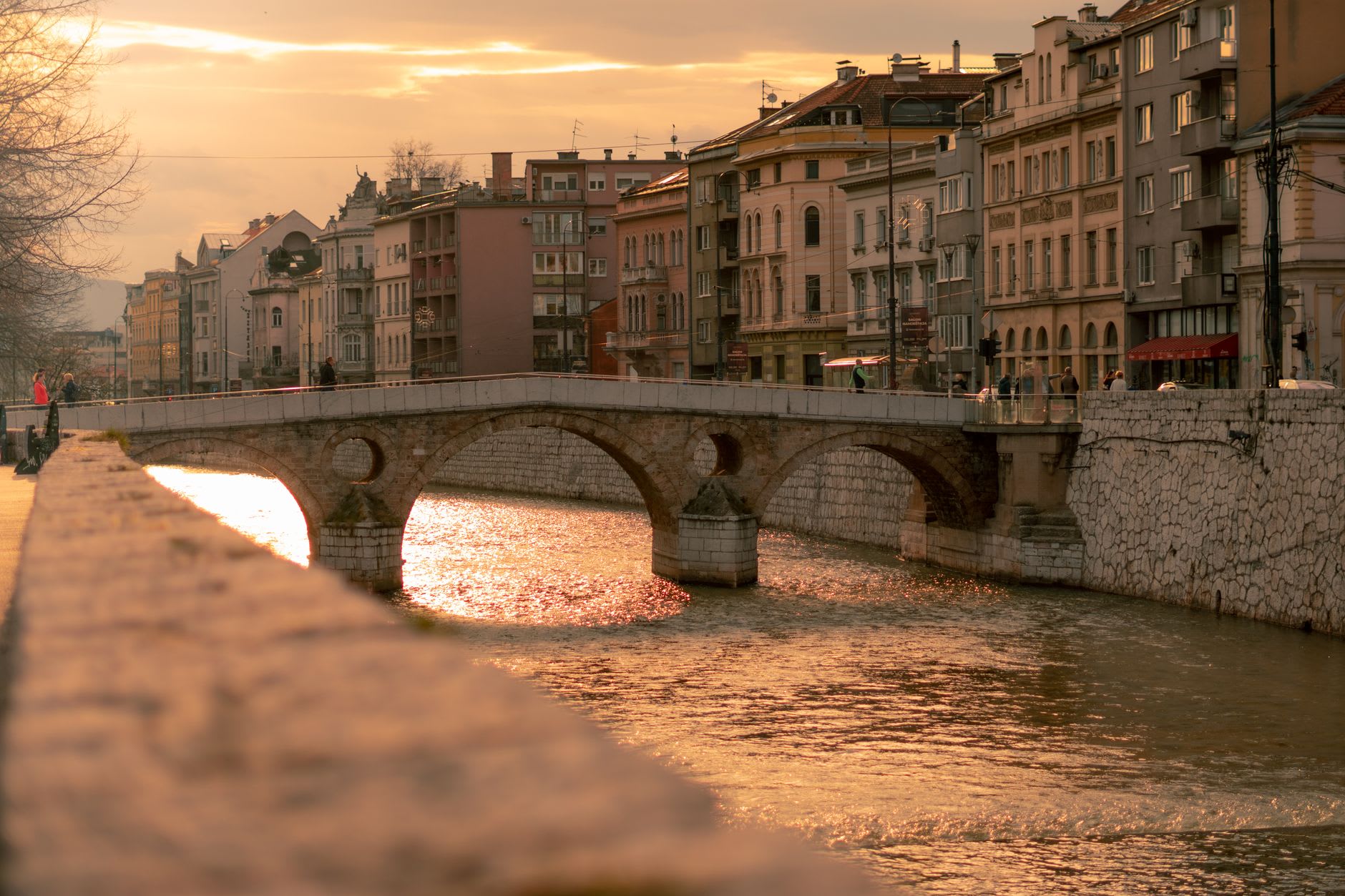
What surprised me most was the energy of the place. I’d expected something heavier, more muted. Instead Sarajevo has a music scene, a film festival, cafés full of students arguing, a craft brewery scene that would not embarrass Berlin. The young people here are sardonic and quick and uninterested in being pitied. A bartender in a basement bar in the Ferhadija area told me, when I fumbled some question about the war, that it was history, and that his parents dealt with it, and that he had his own problems, namely the government, which was useless. This felt honest and clarifying.
When to go: April through June for mild mountain air and the city before summer crowds. September and October are quieter and the hills turn amber. December is genuinely atmospheric — snow on the minarets, the winter market in the old town, and the cold that makes you want to stay inside every warm kafana you find.