Jajce
"A waterfall in the middle of a town sounds like a theme park detail — in Jajce it just feels like geology doing what it wants."
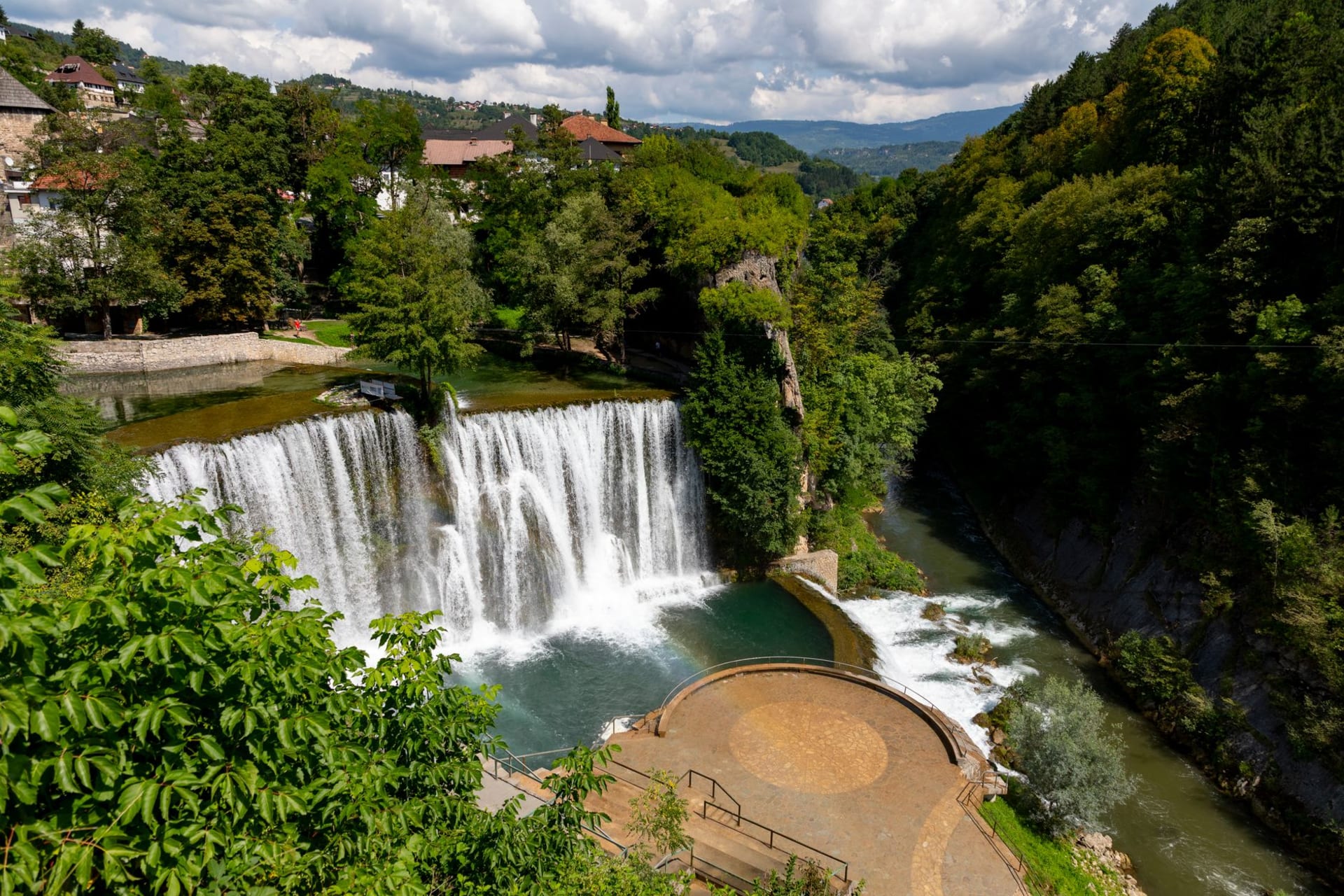
Jajce announces itself through sound before sight. Coming down into the Vrbas valley on the road from Banja Luka, you’re still above the town when you hear it — a low, continuous roar that doesn’t let up and that you can’t quite locate. Then the road bends and the town appears below you, and there at its centre, where the Pliva river drops into the Vrbas, is the waterfall. Seventeen metres of white water falling through the middle of a human settlement, with houses and cafés and a parking lot arranged around it with the casualness of something that has always been there and always will be. Which, more or less, it has.
The town occupies a triangular peninsula between the two rivers, with its medieval fortress — the stari grad — crowning the highest point. The fortress dates to the fifteenth century, when Jajce was the last capital of medieval Bosnia before the Ottoman conquest in 1463. Climbing its walls takes twenty minutes and delivers a view that makes clear why this location was chosen: the confluence of the two rivers, the surrounding hills, the defensible geometry of the triangle below. The old royal chapel inside the fortress walls contains early frescoes, faded to the point where you have to work at seeing them, which makes the looking feel earned.
There are layers here that accumulate strangely. The catacomb of Saint Luke beneath the old town is a Roman-era structure that became a Christian church, then served as a mausoleum for medieval Bosnian kings, then became a storage facility under Ottoman occupation. The Esma Sultan mosque nearby is an Ottoman structure built partly using stones from destroyed medieval buildings. And then there is the AVNOJ museum — a function room where, in November 1943, the second session of the Anti-Fascist Council for the National Liberation of Yugoslavia was held, establishing the foundations of post-war socialist Yugoslavia. The room has been preserved exactly as it was. Tito sat in this particular chair. The chandeliers are the originals. The decisions made in this room shaped the country my parents’ generation grew up reading about. Standing in it felt strange in a way I couldn’t easily explain.
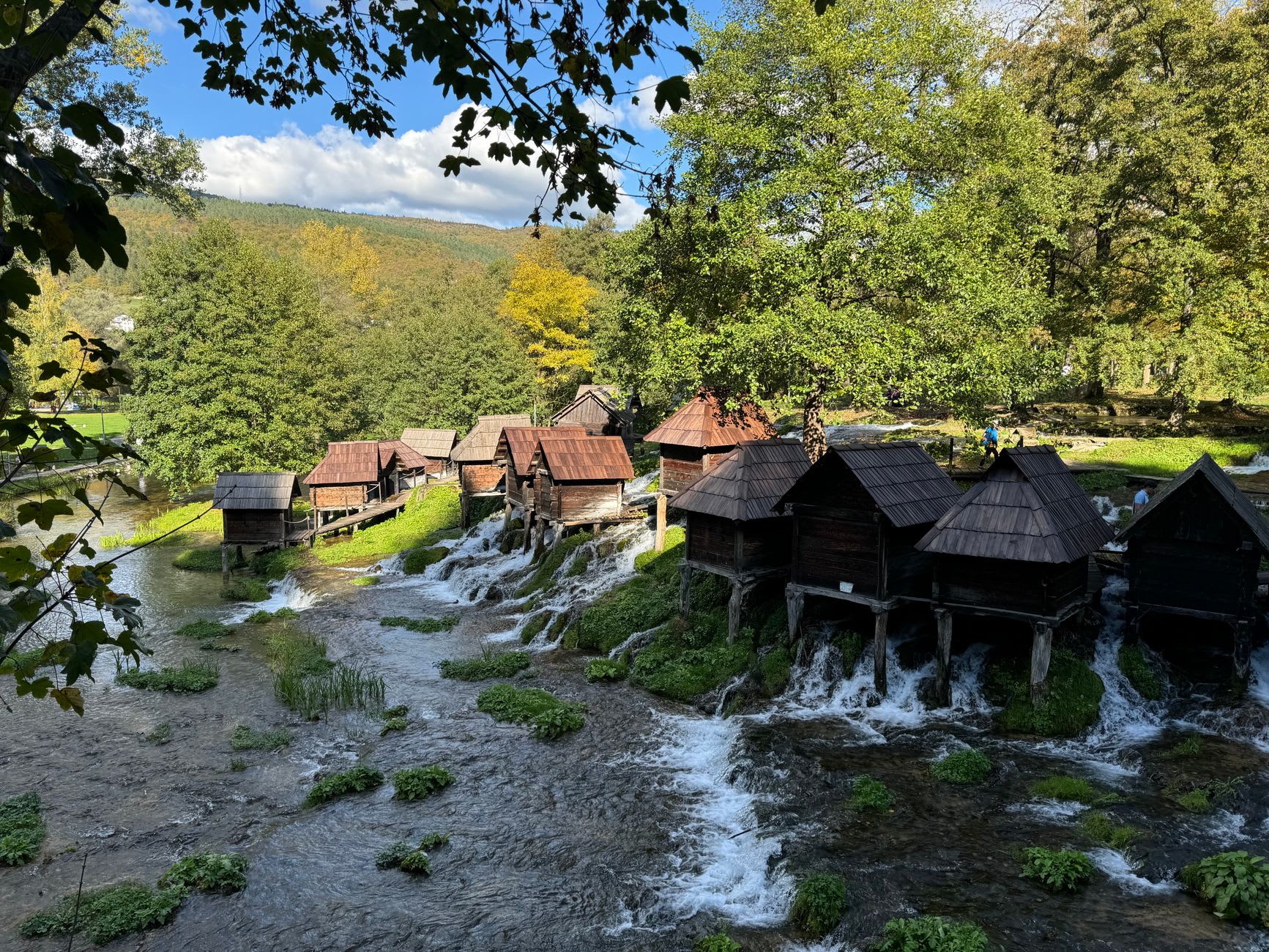
The Pliva lakes upstream from the waterfall are where locals go on weekends — two elongated glacial lakes lined with old wooden mills that have been there since Ottoman times, now mostly serving as photogenic backdrops for café terraces. I rented a kayak one morning and paddled the lower lake in the fog, which felt theatrical in a way I appreciated without being embarrassed by.

The town itself is small and not especially set up for tourists in the way Mostar is — the restaurants are plainly furnished, the menus are in Bosnian, and the guesthouses are run by families who seem genuinely surprised anyone stays more than a day. I stayed three. The food was lamb, potatoes, and bread, every meal, and it was excellent every time.
When to go: May and June when the rivers run highest after snowmelt and the waterfall is at full force. September for dry weather and autumn light. The lakes are best in morning fog before the kayak rentals open, which means arriving early.