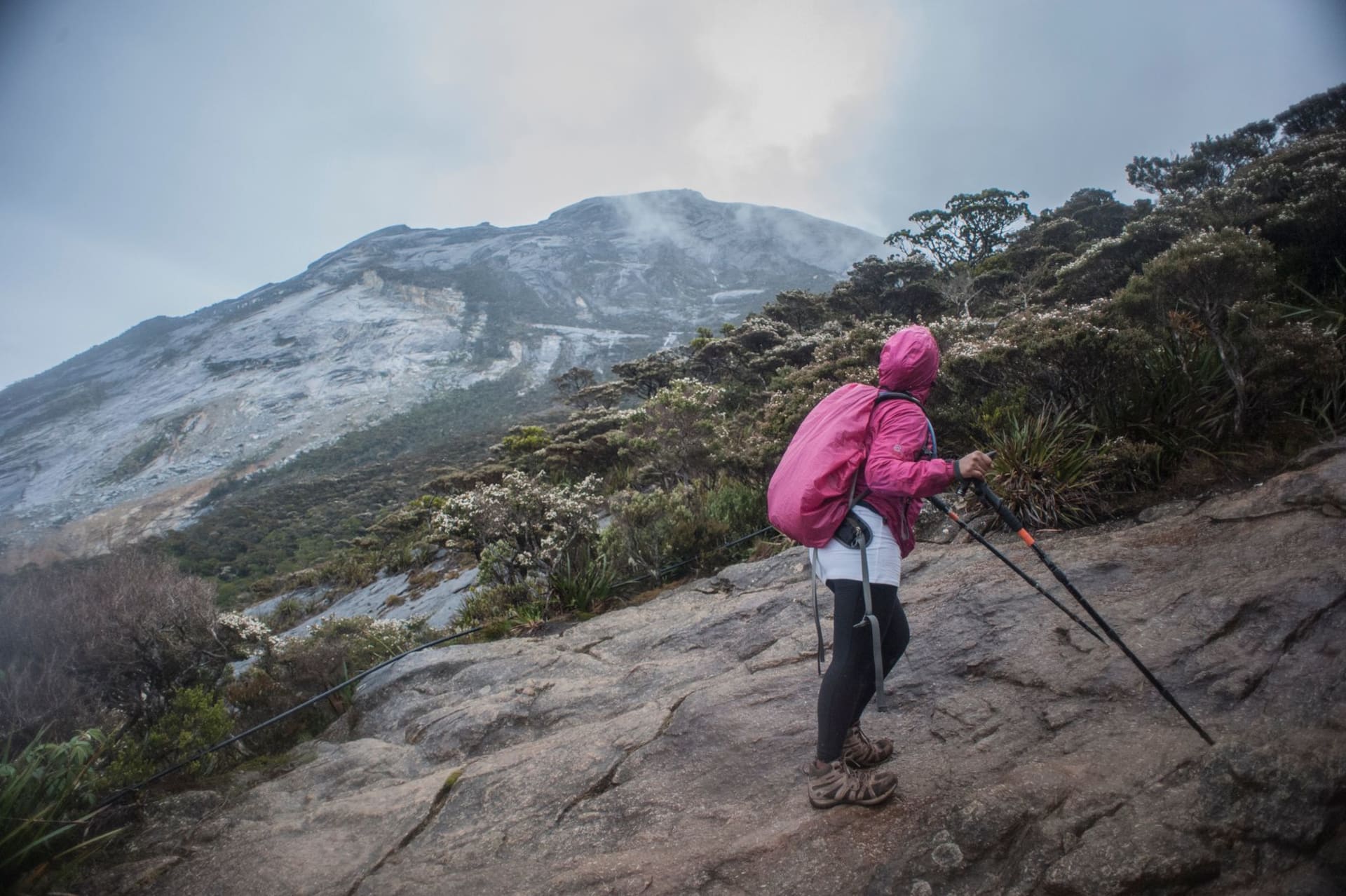
Mount Kinabalu
"At 3am on the summit trail, the headlamp reveals about two metres of granite ahead — which is exactly enough."
Southeast Asia's highest peak, a 4,095-metre granite massif whose mossy middle slopes hold some of the strangest and most beautiful walking on earth.

Nobody tells you about the mossy forest zone. Everyone talks about the summit — the granite plateau, the altitude, the sunrise — and those things are real and worth the effort. But the two hours you spend in the mid-mountain cloud forest, somewhere between 2,500 and 3,200 metres, in a world where every branch wears a full-length coat of soaking wet moss and the orchids grow out of the air itself, is the part I kept thinking about on the descent. The trees there are ancient and stunted, pressed down by altitude and cloud, and the path moves through them like something from a fever dream.
The standard Kinabalu summit attempt is two days. You hike from Timpohon Gate through lowland and montane forest to the Laban Rata resthouse at 3,270 metres, sleep for a few hours, then rise at 2am for the final push to Low’s Peak. The pre-dawn summit push is cold — cold in the way that surprises people who came from the coast at 35 degrees — and the granite slabs near the top require rope fixed lines and a willingness to trust your own footing on steep bare rock in the dark. I wore a headlamp, borrowed gloves from my guide, and ate a piece of bread I had been carrying since Kota Kinabalu. The sky above was unreasonably clear and the stars were doing something I had no vocabulary for.

The summit at 5:30am is not a quiet place. The timing is fixed by permit regulations, so forty or fifty people arrive within the same thirty minutes, clustered at the rock cairn marking Low’s Peak, photographing one another against the pinking sky. But the light is extraordinary — the South China Sea visible to one side, the interior cloud forest below, and the granite formations of the upper mountain catching the first horizontal rays in shades of orange and rose. I sat off to one side, away from the selfie concentration, and ate another piece of bread, and felt the altitude press gently on my temples, and tried to understand what 4,095 metres of geological uplift from equatorial jungle actually means when you’re sitting on top of it.

The descent reveals what you missed in the dark on the way up: the pitcher plants — Nepenthes lowii, Nepenthes rajah — growing in the exposed zones near the summit with their lidded traps glistening with digested insects. The guides from the Kadazan-Dusun communities are worth talking to on the descent when the pace slows and conversation becomes possible. They treat the mountain with a reverence that predates the UNESCO listing by several thousand years; their ancestors believed the spirits of the dead resided on the summit, and that context changes the way you think about arriving there with trekking poles and a permit.
When to go: February through April is the driest window and offers the highest chance of a clear summit sunrise. The mountain is climbable most of the year, but summit cloud cover is common from October through January. Book your climbing permit and Laban Rata accommodation months in advance — slots sell out far ahead, especially in peak season. The Park headquarters at Kinabalu Park village is also worth a half-day for its extraordinary botanical garden.
Keep exploring
More from Borneo
 borneo
 Mulu Caves
A World Heritage cave system in the Sarawak interior that contains the largest cave chamber on earth and the most concentrated bat exodus you have ever witnessed.
Explore borneo
 Niah Caves
A cathedral-sized cave mouth in the Sarawak jungle, where a 40,000-year-old skull rewrote what we know about early humans.
Explore borneo
 Sandakan
A north Sabah port town carrying the quiet gravity of the Death Marches and the strange hopefulness of the wildlife corridor that begins at its edge.
Explore borneo
 Semporna
A chaotic Sulu Sea port town that is simply the gateway to Sipadan, one of the finest dive sites on earth, and doesn't pretend to be anything else.
Explore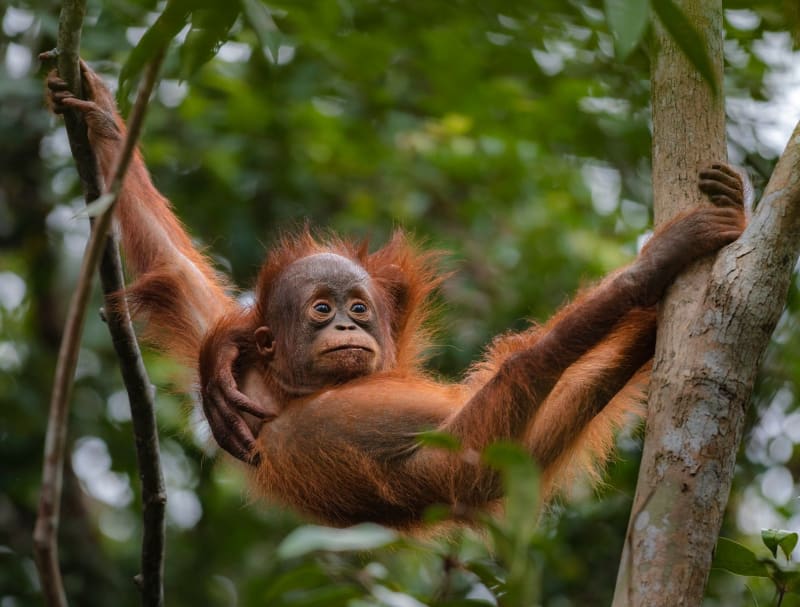 borneo
 Sepilok
A patch of protected forest in Sabah where orphaned orangutans learn to be wild again, and you learn to be still.
Explore borneo
 Tanjung Puting
A black-water river in Kalimantan that you ride upstream on a wooden klotok boat, sleeping on deck while orangutans crash through the trees on both banks.
Explore