Derawan Islands
"Lia counted eleven turtles before dinner and stopped trying to keep track after that."
A scatter of coral islets off East Kalimantan where turtles nest on the sand and jellyfish drift, stingless, through a hidden lake.
I’ll admit I had never heard of the Derawan Islands until a diver we met in Berau kept insisting we cancel our next two days and just go. Getting there from Balikpapan wasn’t quick — a flight, a long drive, then a speedboat bouncing across water so clear I could see the seafloor shift from sand to reef and back again — and by the time we stepped onto Derawan Island itself, sandy-legged and sunburnt already, I understood why he wouldn’t let it go. This is the edge of the Coral Triangle, the part of the map marine biologists get excited about, and even wading in from the jetty you can feel that something denser and more alive is happening under the surface here than in most places we’d been in Borneo.
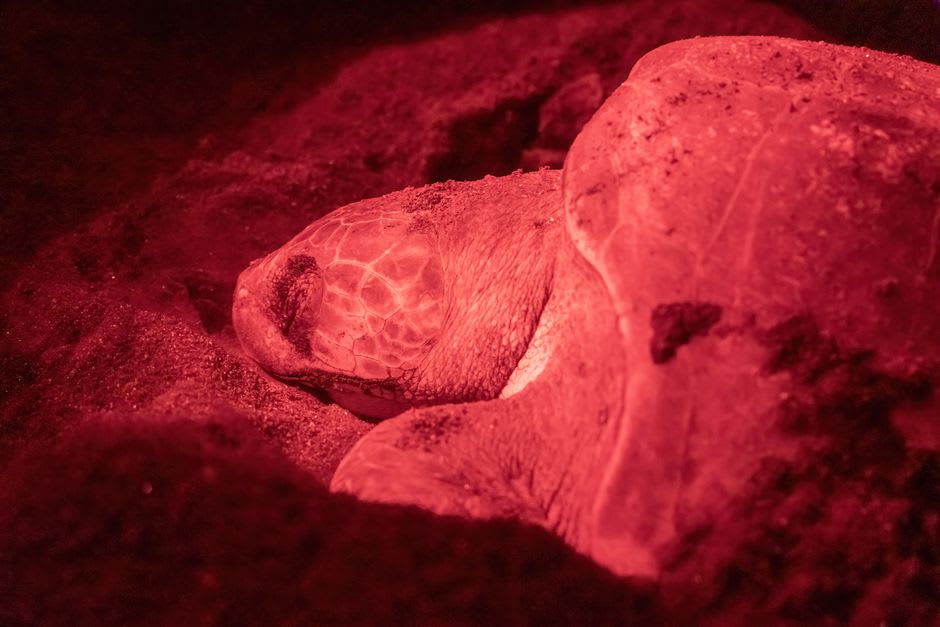
Derawan Island is where we based ourselves, in a wooden guesthouse on stilts with a floor that had gaps wide enough to watch fish pass beneath the bed. Green turtles have been nesting on this beach for decades, and local monitoring teams have been tracking them since the early 2000s — every night after dinner we’d walk the sand with a guide’s red flashlight, watching for the telltale drag marks of a female hauling herself up past the tideline. The first night we found one already digging, and Lia crouched there for almost an hour in total silence, not wanting to spook her, until the eggs were laid and she lumbered back to the sea.
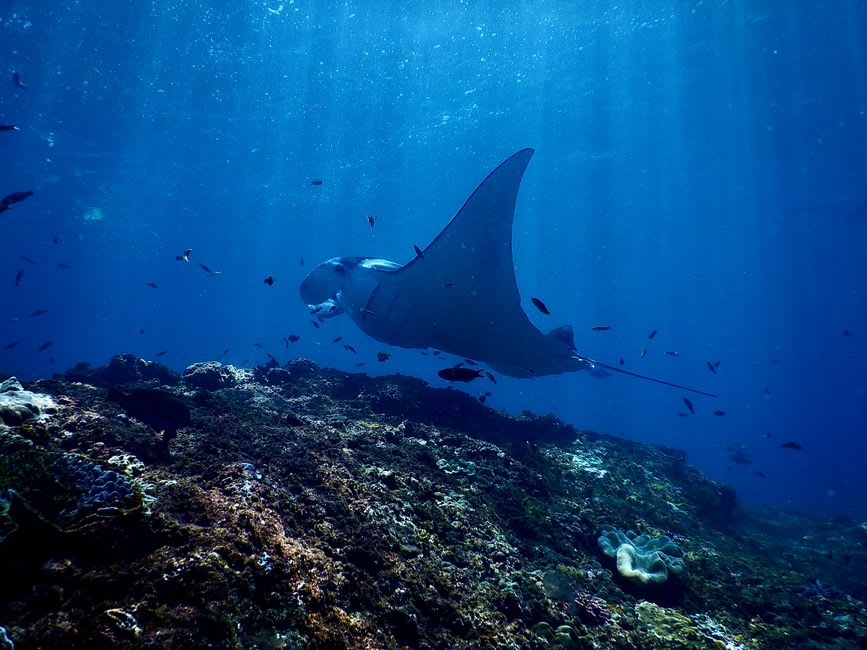
The two day trips out from Derawan were what really stayed with me, though. Kakaban Island doesn’t look like much from the boat — a jungle-topped rock ringed by cliffs — but inside it holds a landlocked marine lake where millions of jellyfish have evolved, over thousands of years of isolation, to lose their sting almost entirely. I swam through them not quite believing it, dozens of soft golden bodies bumping harmlessly against my arms and mask, something I’ve never managed to describe properly to friends back in France without them assuming I’m exaggerating. Then Sangalaki, a short hop further out, where we anchored above a cleaning station and waited — and within twenty minutes a manta ray glided directly beneath us, wingspan wider than I am tall, close enough that I forgot to check my air gauge until Lia tapped my shoulder.
We ate grilled fish every night at the same warung by the jetty, run by a family who’d point out which boat had just come in with the day’s catch, and fell asleep to the sound of water slapping against the stilts under our room. It’s a small, slow place — no real nightlife, patchy signal, days that revolve entirely around tide charts and boat schedules — and that’s exactly what made it feel like somewhere worth the effort to reach.
When to go: aim for April through December, when the seas settle and visibility opens up — outside those months the monsoon swells make the crossings rougher and the diving far less rewarding.
Keep exploring
More from Borneo
 borneo
 Kinabatangan River
Borneo's great wildlife river, where proboscis monkeys crash through the bank trees and pygmy elephants arrive on sandbanks like rumours made solid.
Explore borneo
 Kuching
Sarawak's waterfront capital, where Iban longhouse culture and Cantonese coffee shops coexist under the same colonial arcade and nobody seems to find this strange.
Explore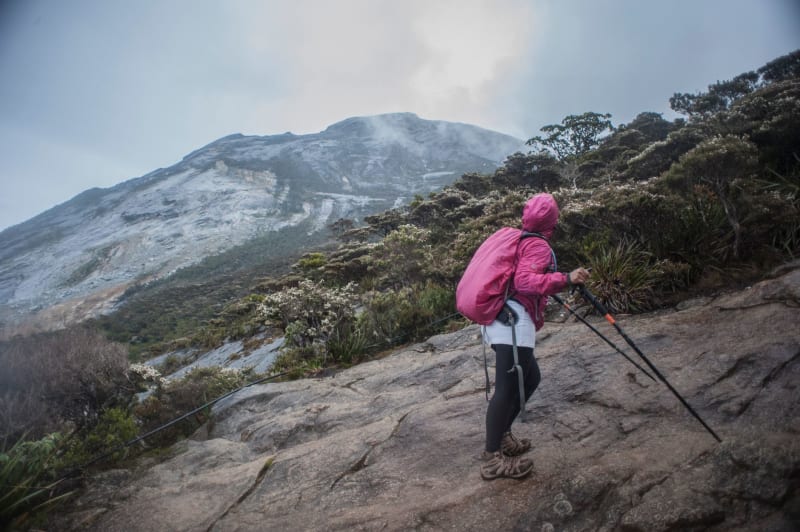 borneo
 Mount Kinabalu
Southeast Asia's highest peak, a 4,095-metre granite massif whose mossy middle slopes hold some of the strangest and most beautiful walking on earth.
Explore borneo
 Mulu Caves
A World Heritage cave system in the Sarawak interior that contains the largest cave chamber on earth and the most concentrated bat exodus you have ever witnessed.
Explore borneo
 Niah Caves
A cathedral-sized cave mouth in the Sarawak jungle, where a 40,000-year-old skull rewrote what we know about early humans.
Explore borneo
 Sandakan
A north Sabah port town carrying the quiet gravity of the Death Marches and the strange hopefulness of the wildlife corridor that begins at its edge.
Explore