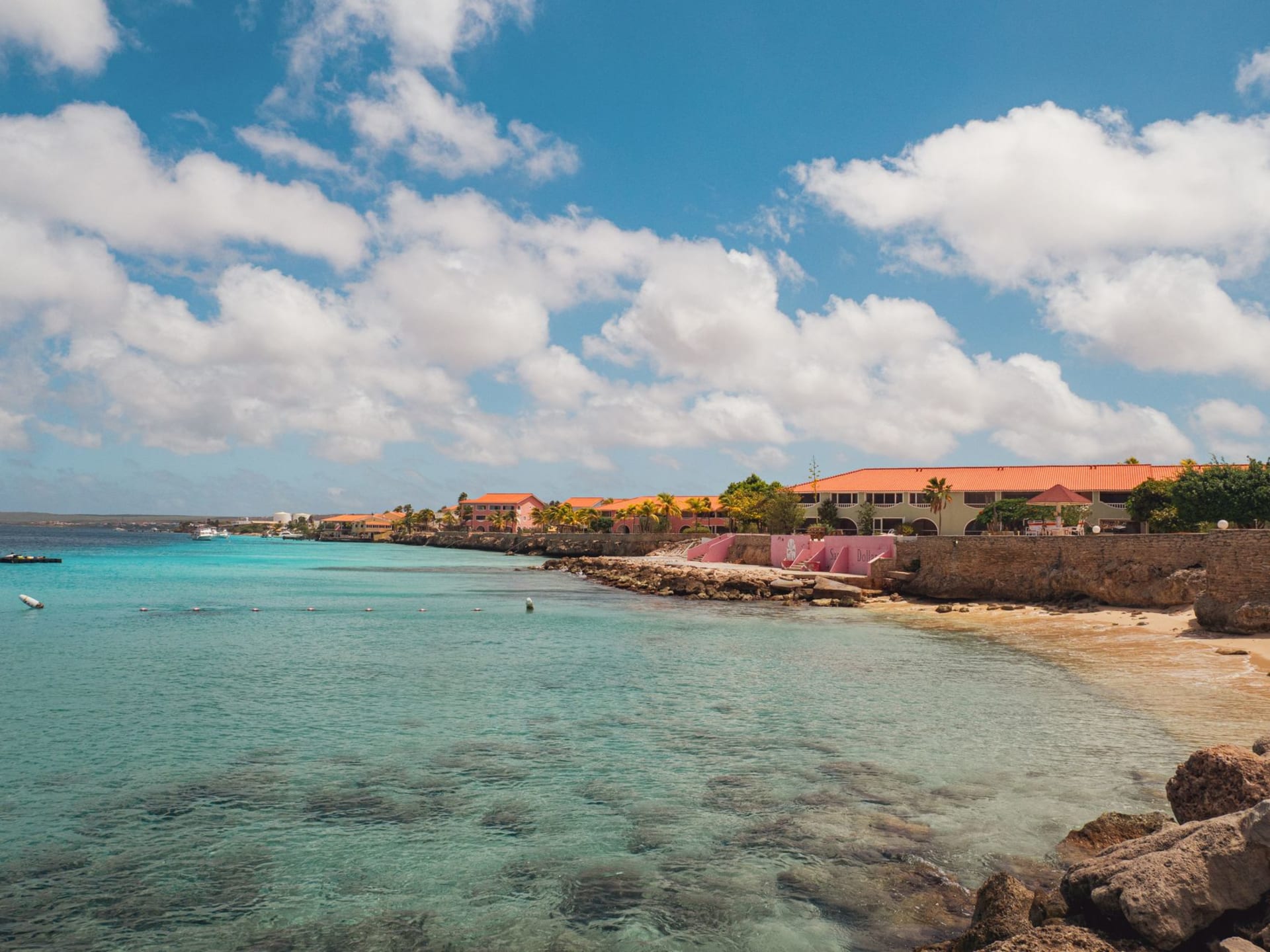
Willemstoren Lighthouse
"It is the windiest place I have ever tried to stand still in, and I have stood on a lot of headlands."
The southern tip of Bonaire is where the island stops pretending to be a gentle dive paradise and shows you what it actually is: a low, dry, wind-hammered rock in the middle of a very large sea. The Willemstoren is the lighthouse that has stood out here since 1837, the oldest on the island, and getting to it means driving the full length of the southern coast road past the salt pans until the pavement and most of the human world simply run out. We did it on our last afternoon on Bonaire, partly for the lighthouse and partly because Lia wanted to see where the road went. It went here, to the edge of everything.
The end of the road
The lighthouse itself is a simple, square white tower, weathered and unfussy, with a keeper’s cottage beside it that has long since been abandoned to the wind and the lizards. You cannot go up it, and there is no visitor centre, no cafe, no ticket — just the tower, the rock, and a sign or two. This is part of the appeal. After the resorts of the west coast and the orderly mangroves of Lac Bay, the raw indifference of the place is bracing. The southeastern shore takes the full force of the trade winds and the open Caribbean swell, and the surf here does not lap; it detonates, throwing white spray over the black volcanic rock in a constant, thunderous rhythm.
I tried to take a photograph and discovered the wind was strong enough to lean against. Lia’s hat made a bid for freedom and was last seen heading, at speed, toward Venezuela. We stood there for a long time anyway, half because it was beautiful and half because turning around felt like conceding to the wind.
Salt, shipwrecks, and the long road back
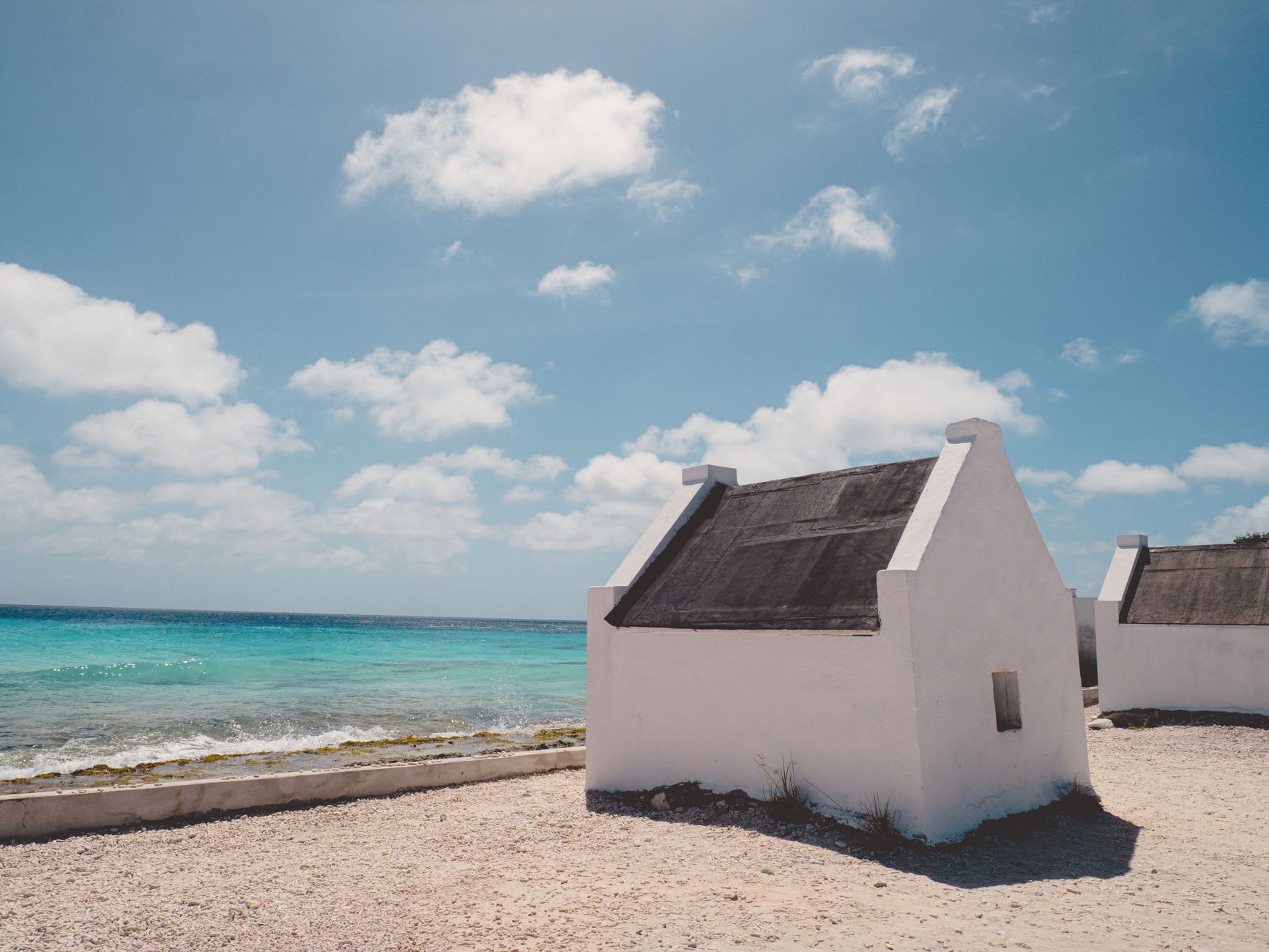
The drive out to the lighthouse is half the experience, because it runs past Bonaire’s southern salt works — the blinding white mountains of harvested salt, the pink shimmer of the condenser pans, and the small stone slave huts near the shore, barely tall enough to sit up in, where enslaved salt workers were once housed in conditions it is sobering to stand beside. The lighthouse, the salt, and those huts together tell the real history of this end of the island, and I would not skip past them to get to the view.
The rocky shoreline around the point is also a graveyard for things the sea has thrown up: bleached driftwood, fishing floats, ropes, and the occasional rusting remains of a wreck. Beachcombing here is genuinely good, in the melancholy way of all wild coasts. We found a fishing buoy with Spanish lettering and an entire ship’s fender, neither of which we could plausibly take home, and admired them and left them.
Heading back north with the wind finally behind us, the salt pans turning gold and then rose in the low sun, I thought the lighthouse was the right place to end a trip to Bonaire — not the prettiest corner of the island, but the most honest one.
When to go: Any time of year — Bonaire sits below the hurricane belt and stays dry and warm. Late afternoon is best for the light on the salt pans and to have the wind at your back on the drive home. Bring something to hold your hat on with; I am not joking about the wind.