Caribbean
Bonaire
"The Caribbean stripped of its performance — just reef, salt, and silence."
I arrived on Bonaire expecting a Caribbean island. What I found was something closer to an arid Antillean outpost with an improbable underwater world attached to it. The airport is small enough that you walk across the tarmac. The main town, Kralendijk, is a single street of pastel Dutch colonial buildings facing a harbour calm as glass. There are no casinos, no beach clubs pumping reggaeton, no cruise ship infrastructure. And almost immediately, I understood why the divers who come here never want to leave.
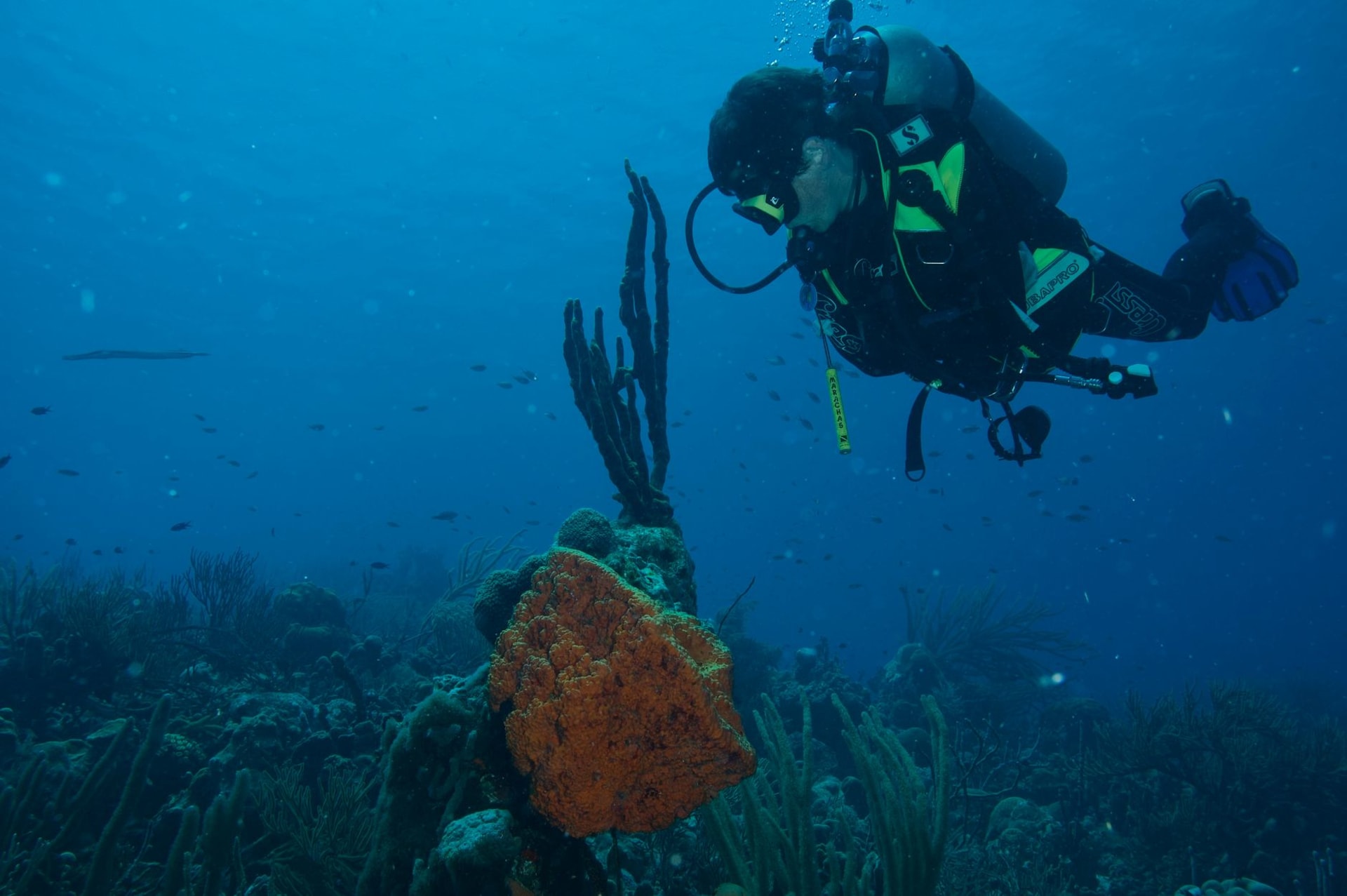
Bonaire is part of the ABC islands — Aruba, Curaçao, Bonaire — the trio of Dutch territories just off the Venezuelan coast that technically sit below the hurricane belt. But while Aruba has surrendered to resort tourism and Curaçao has its own identity politics to wrestle with, Bonaire has stayed oddly focused. The entire island is designated a national marine park. You pay a nature fee before you can enter the water. Yellow painted rocks mark the dive sites along the leeward coast road, and you can literally drive your truck to the edge, strap on a tank, and walk into one of the best coral ecosystems left in the Caribbean. No boat required. This is not a metaphor — it is the daily routine here.
I spent most mornings in the water before nine, when the light comes in at a low angle and turns the brain coral gold. In the afternoons I drove the northern tip of the island past the Washington Slagbaai National Park, where the land is parched and cactus-covered, more Baja than Barbados. The salt pans in the south are another world entirely: vast geometric pools that shift from white to deep pink depending on the hour, with actual flamingos stalking through them in slow motion, their reflections doubling in the brine. I ate most meals at the small local spots around town — fresh wahoo with funchi, Bonairean cornmeal porridge that holds up a fork, and cold Polar beer from Venezuela that was inexplicably better than any of the European imports. By seven in the evening, Kralendijk is quiet. This is not a shortcoming. It is the point.
When to go: Bonaire has remarkably stable weather year-round — it sits outside the main hurricane track and receives very little rain. December through April is the driest period and the most popular with divers. May through July can be slightly windier, which affects snorkelling off the leeward shore less than you might think. Avoid late August and September not for weather reasons but because visibility in the water can drop as warmer currents push through.
What most guides get wrong: They sell Bonaire as a diving destination to divers, which is true but misses what makes the island unusual. The appeal is not just the reef quality — it is the complete absence of the Caribbean-resort apparatus. There are no seven-star hotels, no overwater bungalows, no beachfront cocktail menus engineered to photograph well. The beaches are actually not that impressive by Caribbean standards — rocky, narrow, occasionally weedy. But that is exactly why the water is what it is. Bonaire stayed boring by conventional tourism metrics, and the coral paid it back in full.