
1000 Steps
"They count sixty-seven steps. With a tank on your back, they might as well count a thousand."
Sixty-seven limestone steps cut into a sea cliff — the honest, painful entry to one of Bonaire's finest underwater walls and the dive site's most accurate name.

The joke about 1000 Steps is that there are sixty-seven of them. The name, though, makes complete sense the first time you carry a steel tank and a full set of dive gear down the limestone staircase cut into the cliff face on Bonaire’s northwest coast, and then — after the dive — back up it. On the descent, the stairs are irregular, uneven, worn smooth by decades of fins and boots, and they drop you to a narrow ledge of coral rock at the water’s edge where you sit to put on your fins and roll backwards into what might be the clearest water you’ll encounter in the Caribbean. Going down I paused three times. Not out of caution — the stairs are fine — but because the sea kept appearing through gaps in the cliff vegetation in that specific shade of leeward Caribbean blue that takes something from you every time.
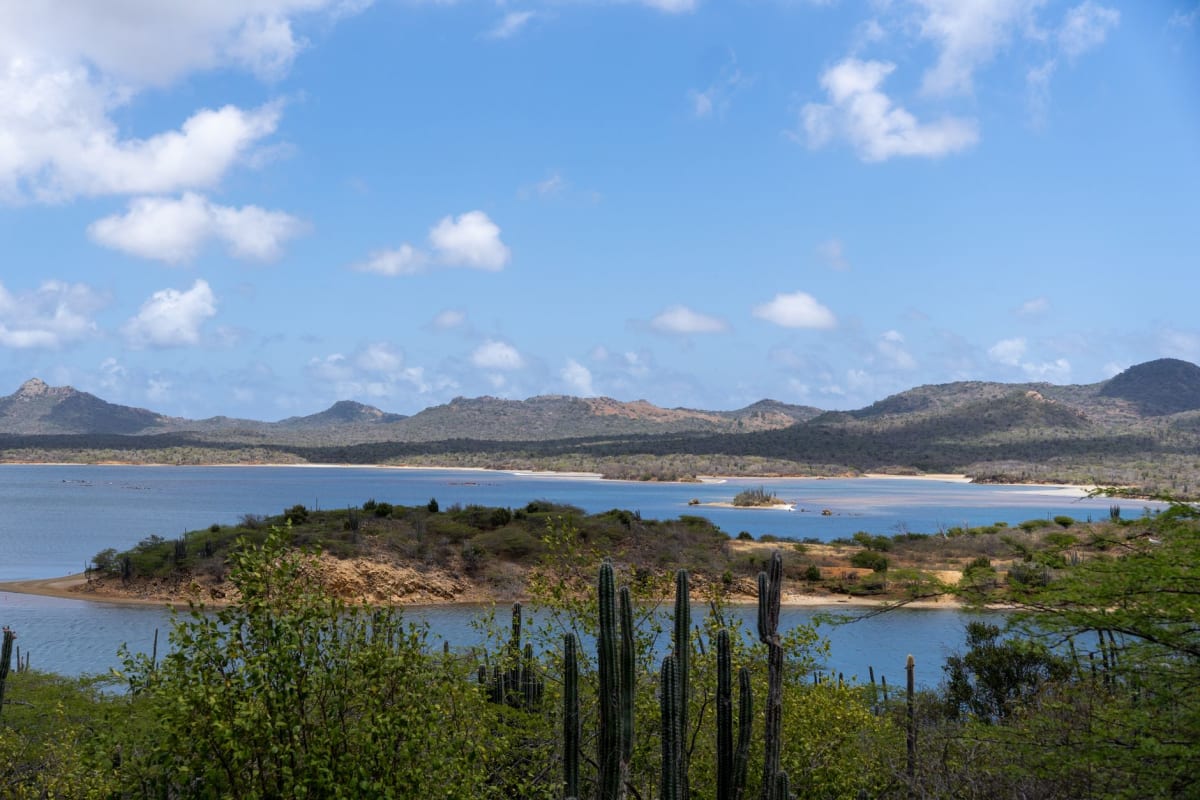
I did the site twice: once in the morning with my own gear rented from a shop in Kralendijk, once in the afternoon with a more experienced diver who showed me the sections of the wall I’d missed the first time. The reef begins almost at the surface — the top of the wall sits at around four to six metres, well within snorkelling range — and then drops precipitously to forty or fifty metres and beyond. What makes 1000 Steps distinct from other leeward dive sites is the density of fish life on the wall itself. Large tarpon hover in the water column with the calm of creatures that nothing hunts, silver-armoured and unhurried. Schools of blue tangs move through the branching coral in formations that don’t seem to have a leader or a plan. The coral quality is exceptional even by Bonaire’s high standards: large star coral mounds, healthy branching formations, barrel sponges so old they’ve grown to the size of armchairs. I hovered above the wall edge at about twelve metres and looked down into the darkening blue depth and felt the familiar vertigo that vertical reef edges produce — the water getting darker in stages, the shapes becoming less distinct, the understanding that the world continues long after you’d be comfortable.
I surfaced from the second dive and began the climb back up. This is the part the photographs don’t convey. It is genuinely punishing in the midday heat — the weight of the tank redistributing with each step, the fins clipped to your BCD slapping against your leg, the sun on the white limestone cliff bouncing back at double temperature. Locals do it with an unhurried practicality that I tried to imitate and mostly failed. I rested twice, drank half a litre of water on the ledge at the bottom before even starting, and arrived back at the truck in a state I’d describe as successfully humbled.
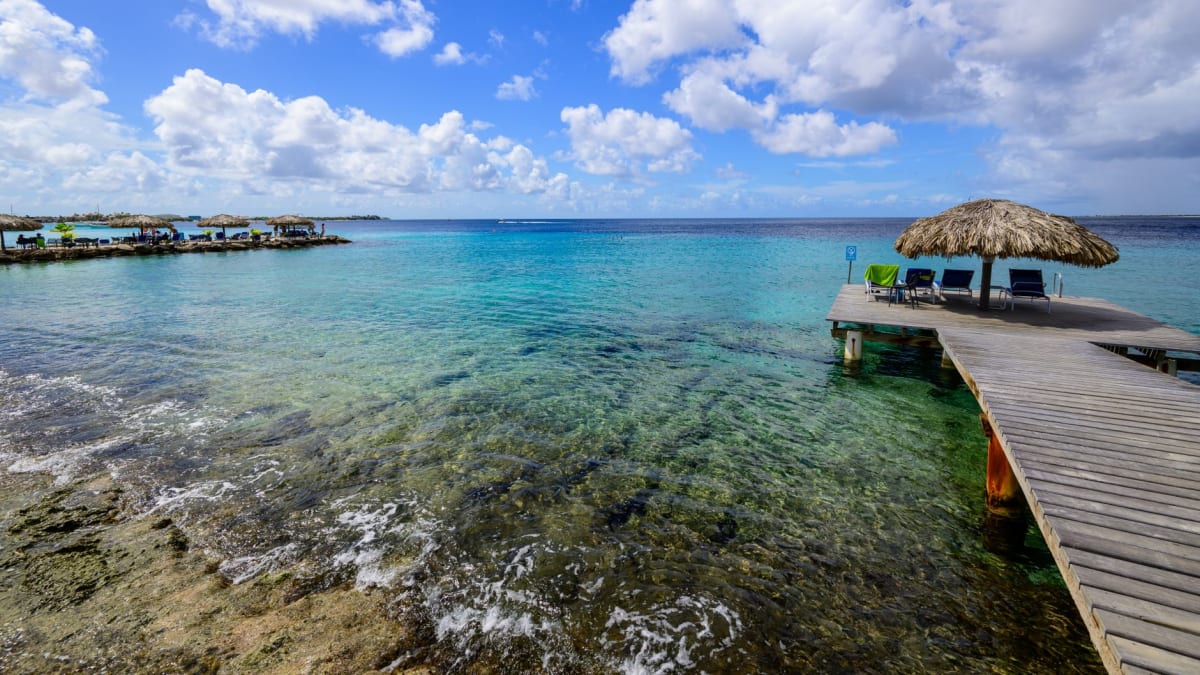
The site can be snorkelled as well as dived — the shallow coral above the wall’s lip is rich enough to justify the descent without a tank — but the wall itself rewards depth. An underwater torch picks out the sponge colours that daylight can’t reach: deep red encrusting sponges, orange cup sponges, purple sea fans swaying at twenty metres that in ambient light look uniformly dark but in torchlight reveal themselves as vivid as anything in the shallows.
When to go: 1000 Steps is best dived in calm conditions — go in the morning before the trade wind picks up and creates surface chop that complicates the entry and exit on the narrow ledge. December through April offers the clearest water and calmest seas. Bring more water than you think you’ll need for the climb back up, and don’t underestimate the heat on the exposed cliff face.
Keep exploring
More from Bonaire
 bonaire
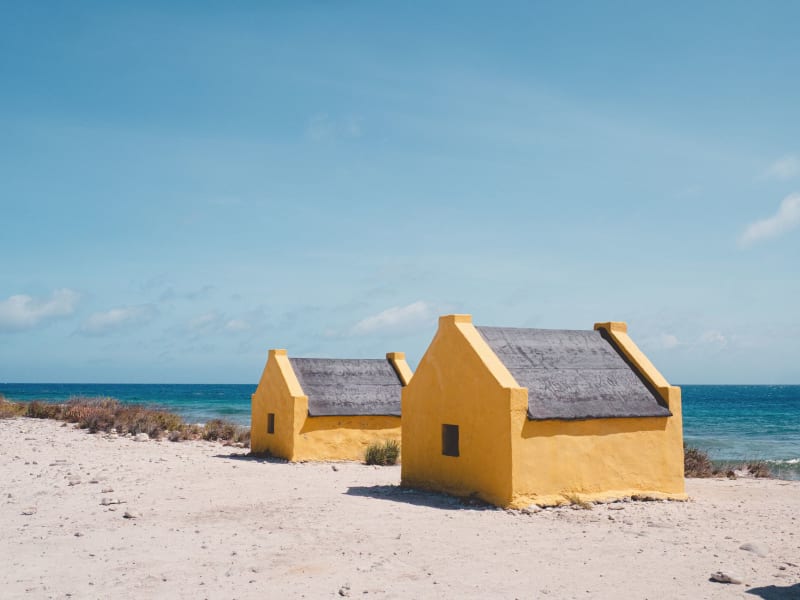
Town Pier
Kralendijk's working cargo pier hides one of the Caribbean's most extraordinary night dives — a forest of sponge and coral where frogfish and seahorses wait in the dark.
Explore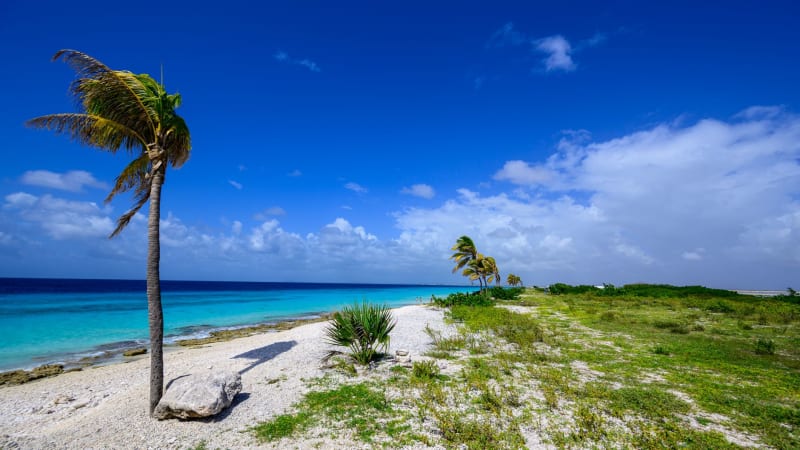 bonaire
Washington Slagbaai National Park
An arid wildlife sanctuary in Bonaire's north where cactus forest, sea cliffs, and flamingo lakes make the Caribbean feel like the wrong word entirely.
Explore bonaire
Willemstoren Lighthouse
Bonaire's oldest lighthouse, standing alone at the wild southern tip where the salt pans meet a coast of black lava, crashing surf, and relentless trade wind.
Explore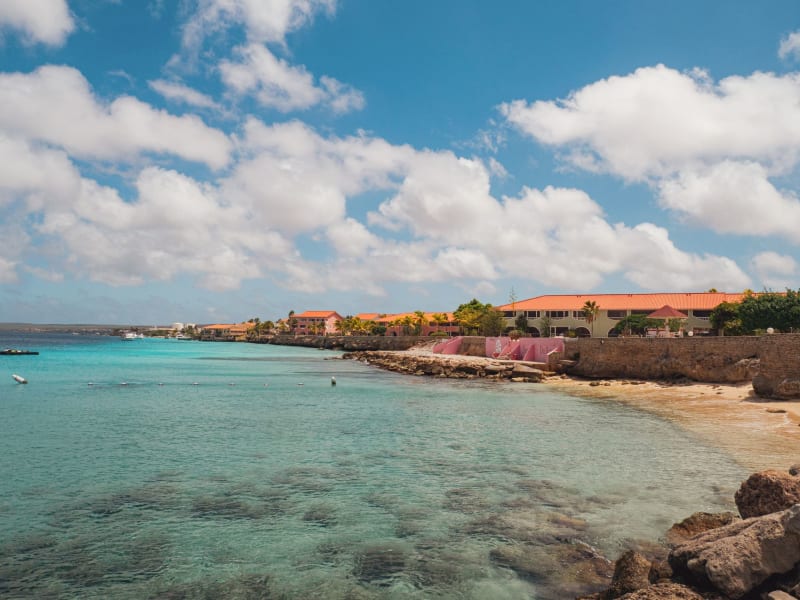 bonaire
Goto Meer
A hidden inland saltwater lake in Bonaire's north where flamingos gather in the morning silence and endemic parrots call from the cactus overhead.
Explore bonaire
Klein Bonaire
An uninhabited flat island five minutes by water taxi from Kralendijk, with talcum sand and a coral reef that begins where the sand ends.
Explore bonaire
Kralendijk
Bonaire's pastel-painted capital where Dutch colonial architecture meets the Caribbean's most unapologetically quiet waterfront.
Explore