A working salt pier where cargo ships load and orange sponges bloom on the pilings below, when the ships let you in.
Lia and I almost gave up on Salt Pier. We’d driven down the southern coast road with our tanks already rinsed, only to find a cargo ship parked right against the pilings, engines idling, loading salt from the conveyor belt overhead. No diving while a ship is docked — the loading operations come first, always, and the dive shops in Kralendijk had warned us this could happen. So we sat in the truck with the AC off and the windows down, eating crackers and watching white mountains of salt get scooped from the flats, until the ship finally eased away from the dock around four in the afternoon.
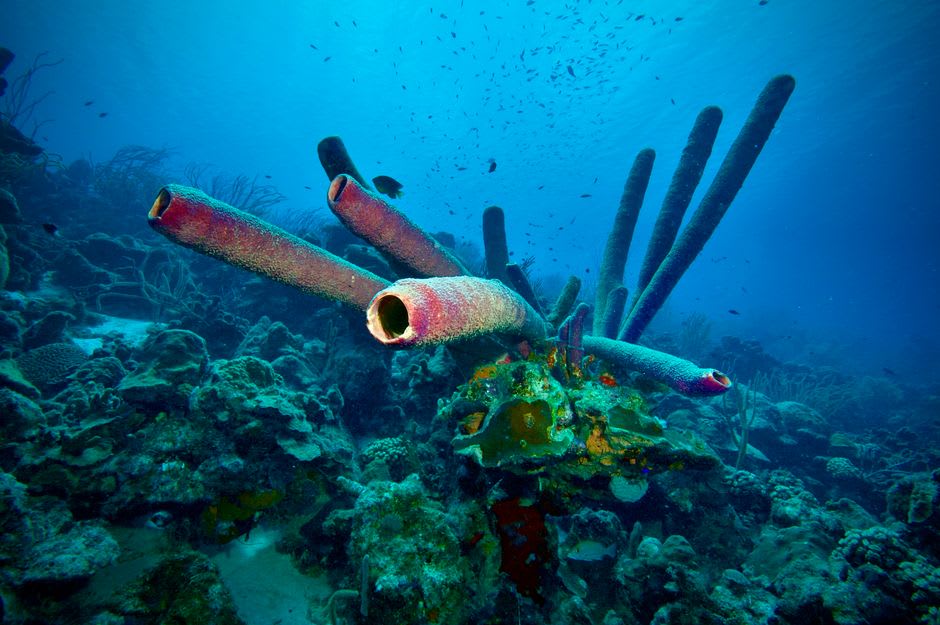
What’s underneath that pier is genuinely one of the strangest, most beautiful dives I’ve done. The concrete pilings drop straight down into water that never goes much past 12 meters, and every single column is furred with orange tube sponges, packed so densely in places that the sponges are touching each other. Shafts of afternoon light came down between the pilings in these solid, dusty beams, and small schools of silversides moved through them like they were choreographed. I remember hanging weightless at maybe eight meters, just turning slowly to look at row after row of these concrete legs disappearing into the blue, and thinking that a place built purely for industry had accidentally become one of the most photogenic dive sites on the island.
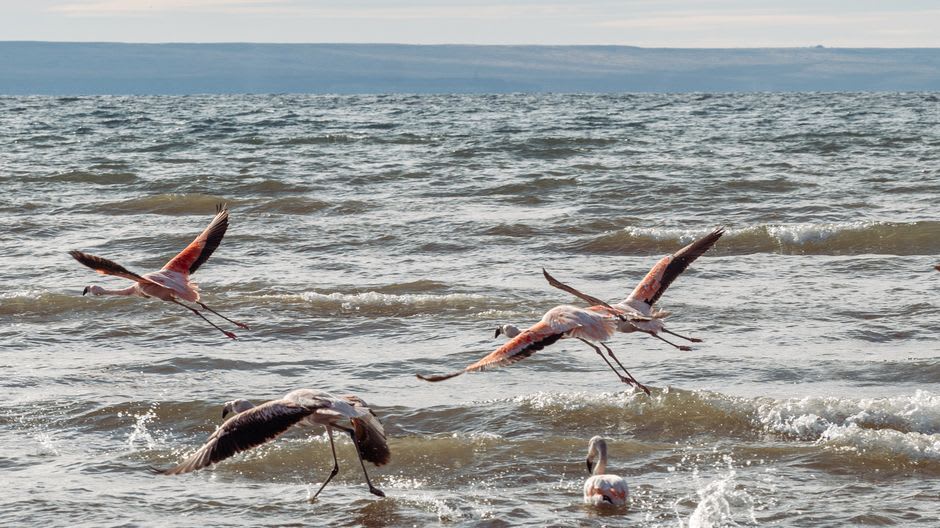
Above the surface, Salt Pier sits right next to the pink evaporation ponds that belong to Cargill’s saltworks, and that color isn’t a filter or a trick of the light — it’s algae that thrives in that much salt, and it’s also exactly why flamingos gather there. We pulled over on the way back to Kralendijk and watched a loose flock working the shallows against that impossible pink water, totally indifferent to us. Lia had brought her long lens for once and used almost none of it, because honestly the wide shot — pink pond, white salt pyramids, pink birds — needed no zoom at all.
We came back a second time a few days later, timed it better, and got in the water within twenty minutes of arriving. That’s the trick, if there is one: call a dive shop or just look at the pier before you gear up, because the ships don’t run on a tourist’s schedule, and no amount of wanting to see those sponges will move a cargo vessel along any faster.
When to go: You can dive Salt Pier any time of year, but always check locally first — the pier closes to divers whenever a ship is loading, and that schedule can shift without much warning.
Keep exploring
More from Bonaire
 bonaire
 Sorobon
The windward lagoon where Bonaire's only real sandy beach meets relentless trade winds and a windsurfing community that has been coming back for decades.
Explore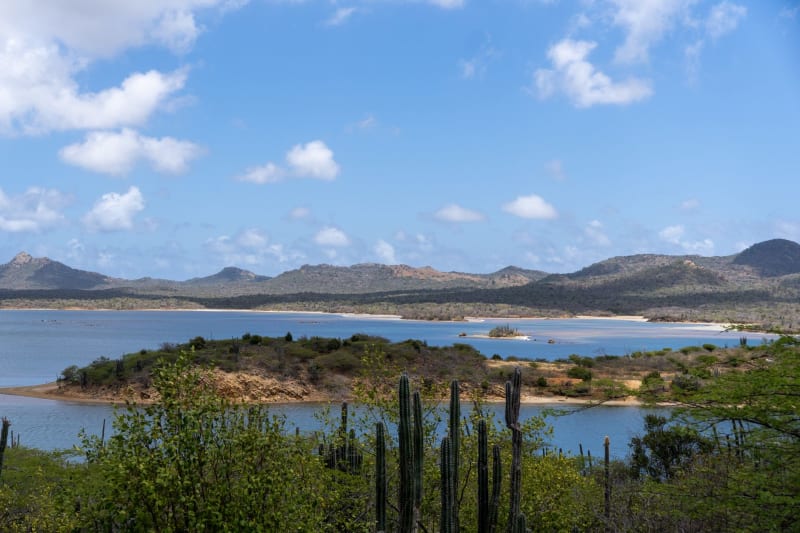 bonaire
 1000 Steps
Sixty-seven limestone steps cut into a sea cliff — the honest, painful entry to one of Bonaire's finest underwater walls and the dive site's most accurate name.
Explore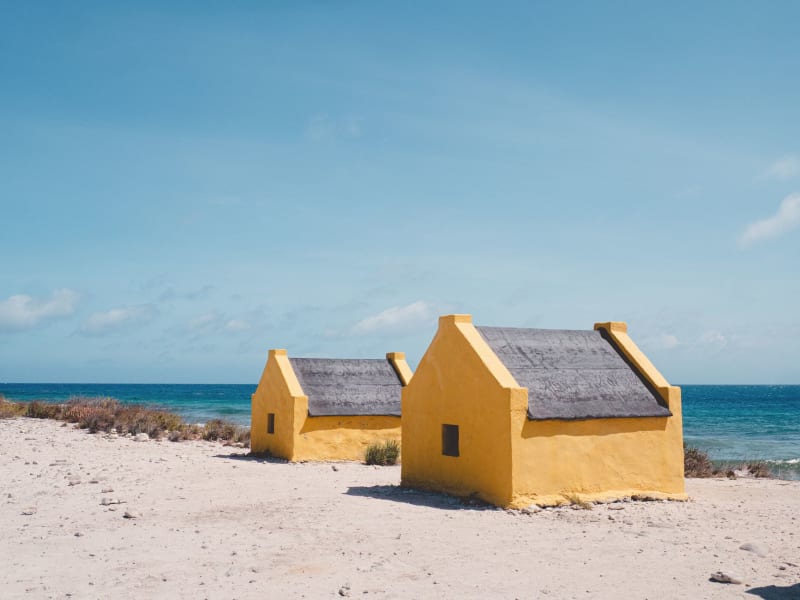 bonaire
 Town Pier
Kralendijk's working cargo pier hides one of the Caribbean's most extraordinary night dives — a forest of sponge and coral where frogfish and seahorses wait in the dark.
Explore bonaire
 Washington Slagbaai National Park
An arid wildlife sanctuary in Bonaire's north where cactus forest, sea cliffs, and flamingo lakes make the Caribbean feel like the wrong word entirely.
Explore bonaire
 Willemstoren Lighthouse
Bonaire's oldest lighthouse, standing alone at the wild southern tip where the salt pans meet a coast of black lava, crashing surf, and relentless trade wind.
Explore bonaire
 Goto Meer
A hidden inland saltwater lake in Bonaire's north where flamingos gather in the morning silence and endemic parrots call from the cactus overhead.
Explore