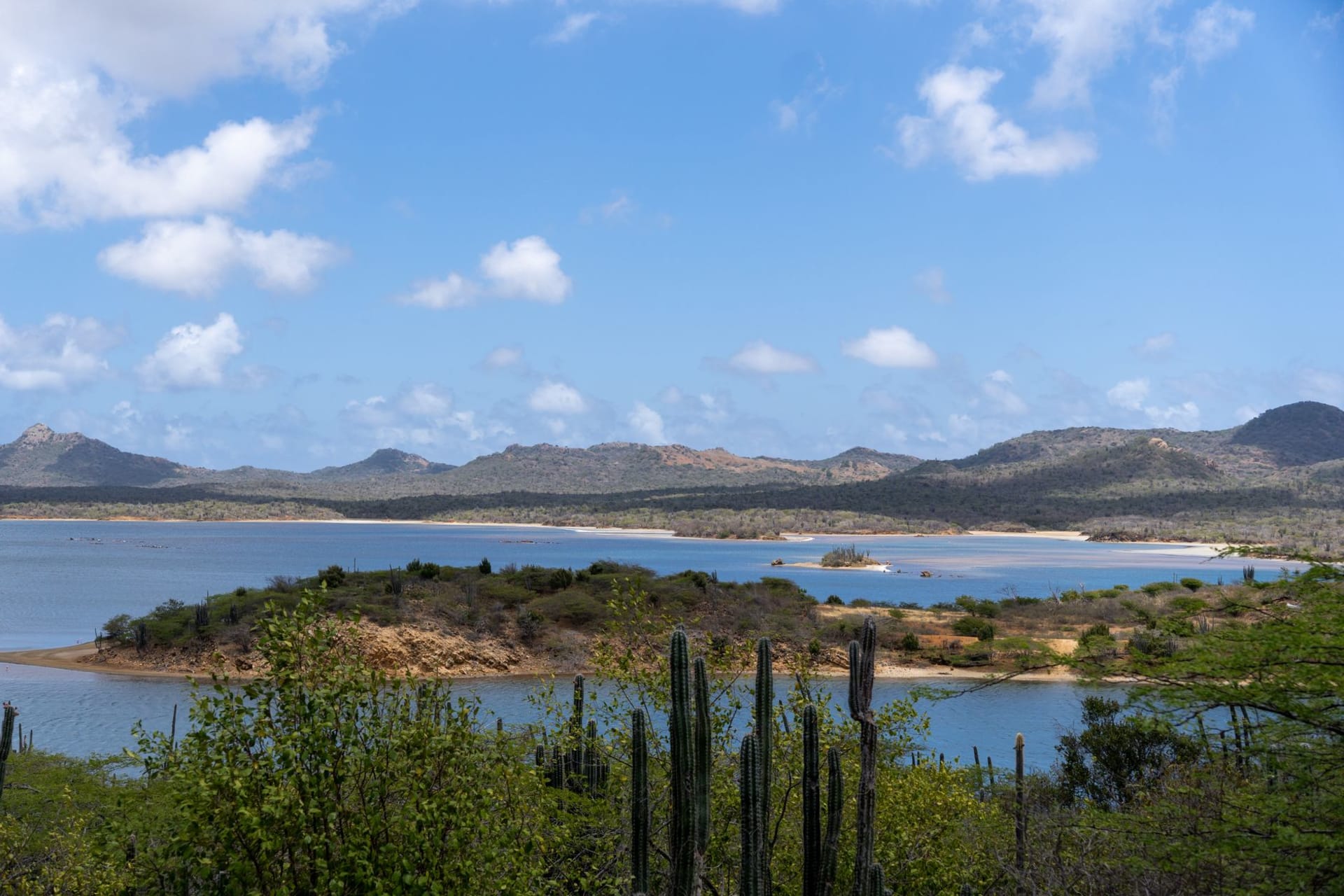
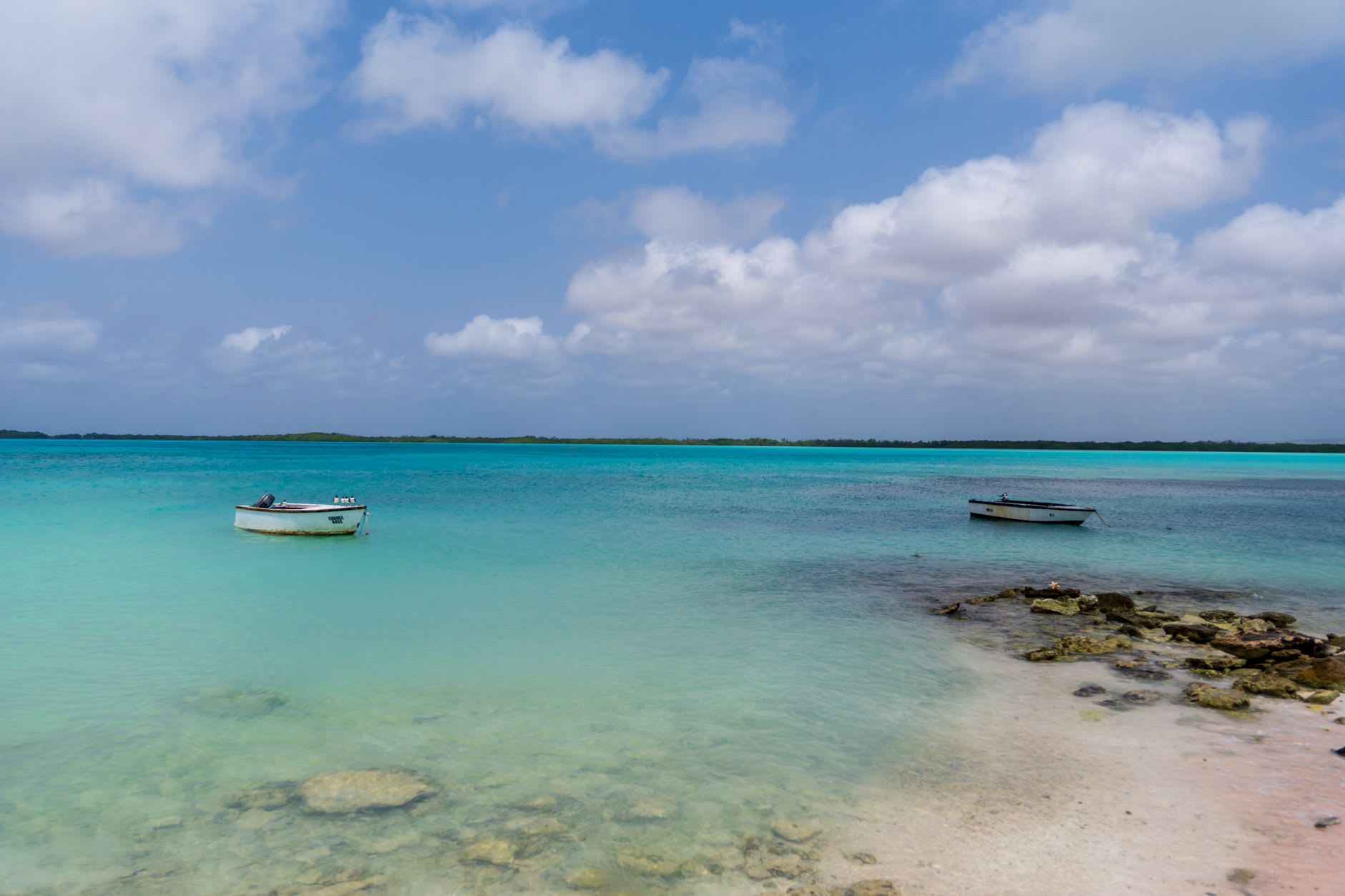
You take a water taxi from the harbour at Kralendijk — a ten-minute crossing that costs almost nothing — and step off onto a beach that is essentially empty. Klein Bonaire is not technically off the beaten path, because the path leads directly here, but it has the quality of remoteness anyway because nothing has ever been built there and nothing can be built there and the island has settled into a stillness that development reliably disturbs. There is one main beach on the north side, No Name Beach, where the sand is the crushed coral variety that is simultaneously white and slightly pink in the right light. A few palms lean at angles the wind has decided for them over decades. That is the entirety of the infrastructure.
I went twice: once in the morning with dive gear, once in the afternoon with just a mask and fins and a paperback I didn’t open. The morning dive took me along the western wall of the island, where the reef drops in stages from the surface to beyond anything you’d follow without specialist equipment. The coral here is dense in a way I found genuinely startling — brain coral formations the size of small cars, staghorn thickets recovering in pale green bursts, giant sea fans catching the current at depth. Hawksbill turtles move through the scene with an indifference to divers that speaks to decades of protection from the marine park. I counted five in a single dive. One let me drift alongside it for perhaps a minute before it adjusted its course with a single slow fin stroke and was gone.
The afternoon visit was quieter in a different way. I swam the shallows near the beach, which are only waist-deep over a sand bottom, and then pushed further out to where the seagrass starts and the water turns a different shade of green. At a certain point I stopped swimming and just floated, face down, watching nothing in particular. A small spotted eagle ray moved beneath me without urgency. The trade wind came over the island and touched the back of my neck. I thought: this is what the Caribbean must have looked like before people decided it needed to be improved.
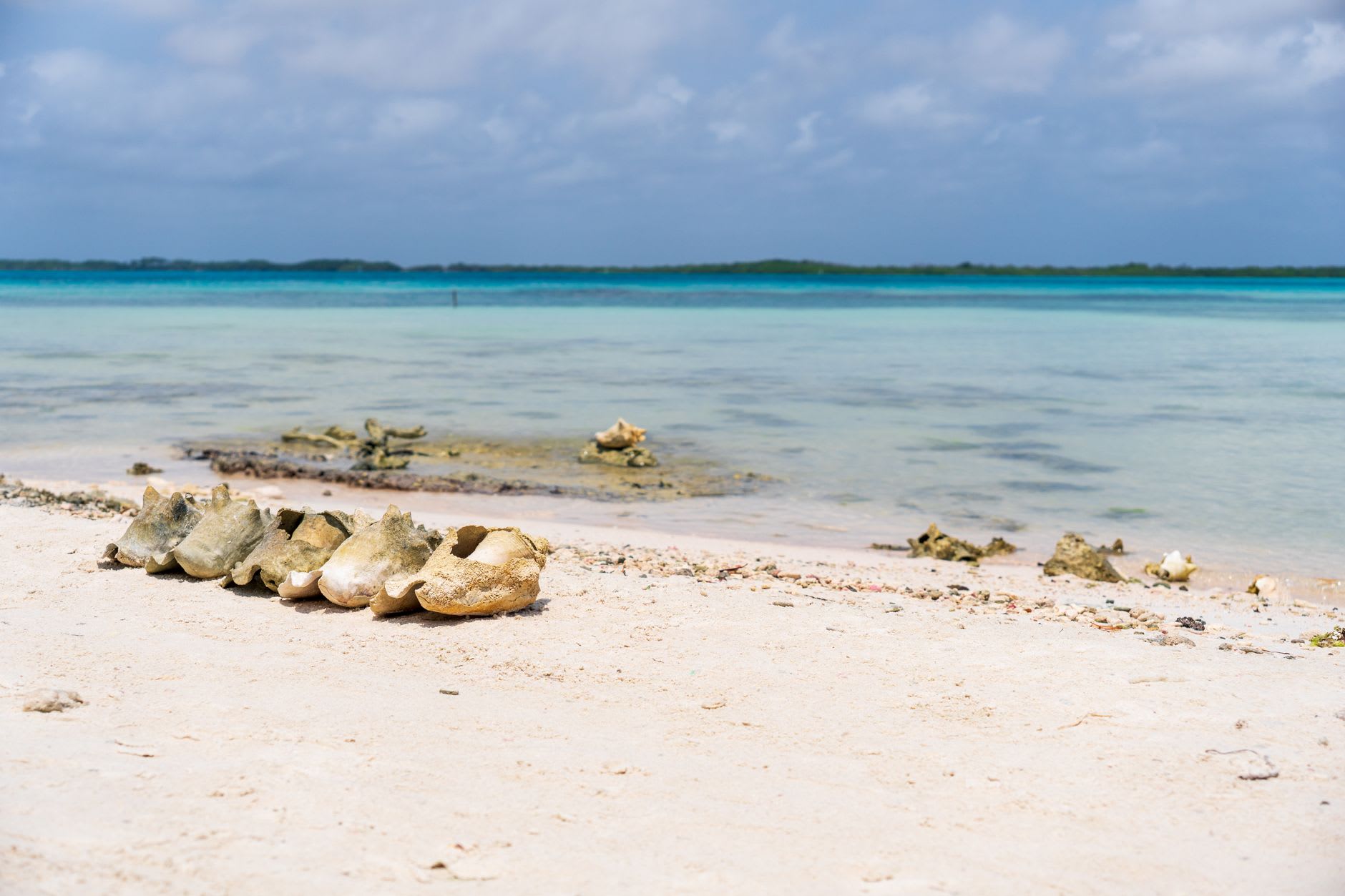
Klein Bonaire is also a nesting site for sea turtles — loggerhead, hawksbill, and green turtles all use the beaches — and during nesting season (May through September) you might arrive in the early morning to find the sand crossed with turtle tracks, the wide punctuated trail of a leatherback returning to the sea after a night’s work. The island has no fresh water, no food, and no shade except under the palms. Bring everything. Stay as long as you can justify it, and then stay a little longer.
When to go: Klein Bonaire is diveable and snorkellable year-round. The clearest visibility comes in the dry months, December through April. Turtle nesting season runs May through September; nesting typically happens at night, but morning visits may reveal fresh tracks in the sand. Water taxis from Kralendijk run throughout the day from the main harbour — the first departure is typically around 9 AM.