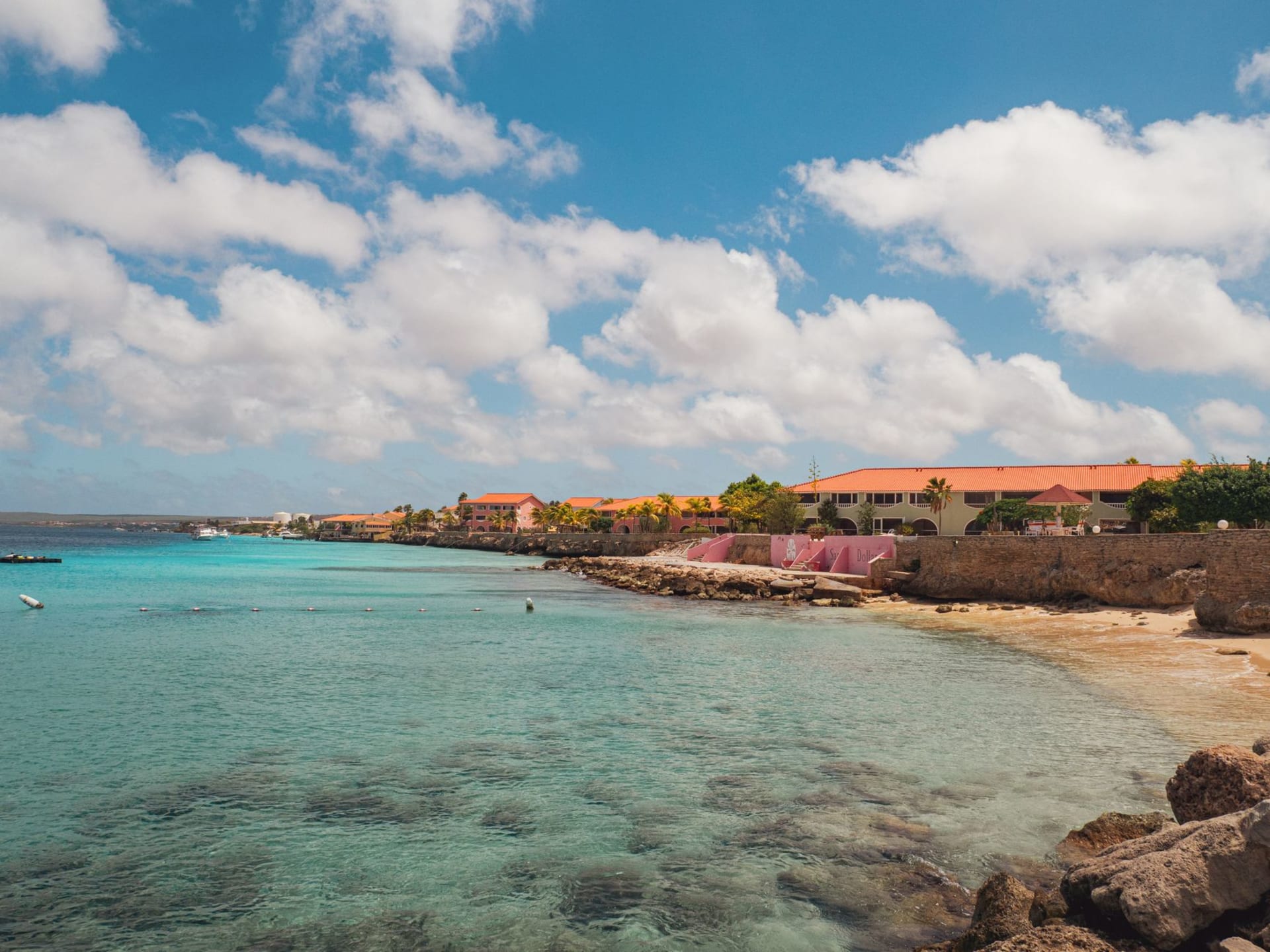
Goto Meer
"The lake appeared around a bend and there they were — forty flamingos, pink as a mistake."
I found Goto Meer by accident, which is probably the right way to find it. I was on the northern road toward Washington Slagbaai, following the coast, when the land dipped inland and the lake appeared through a gap in the cactus. It was early — maybe seven-thirty — and the light was still low and amber, and the flamingos standing in the lake’s shallows were casting long reflections in water the colour of old glass. I stopped the truck and sat in it for several minutes before getting out, not wanting to startle them, but also needing a moment to accept what I was seeing. There had been no sign. No entrance fee. No car park. Just the road bending around a ridge and then the lake, and the birds, and the silence.
Goto Meer is a saltwater lake — connected to the sea in the geological past, now isolated and concentrating slowly behind a low ridge on Bonaire’s northwest coast. The access point is a small pull-off where you can walk to the water’s edge along a path through the cactus scrub. There are no facilities of any kind. The flamingos use the lake for the same reason they use the southern salt pans: the salinity supports the brine shrimp they filter-feed on, and the shallow flats let them wade. What distinguishes Goto Meer from the Pekelmeer pans in the south is scale and intimacy. At Pekelmeer the birds number in the hundreds, spread across industrial evaporation infrastructure. At Goto Meer you might find thirty or fifty birds on a lake the size of a few city blocks, with nothing around them except cactus and the occasional brown pelican picking its way along the shore.
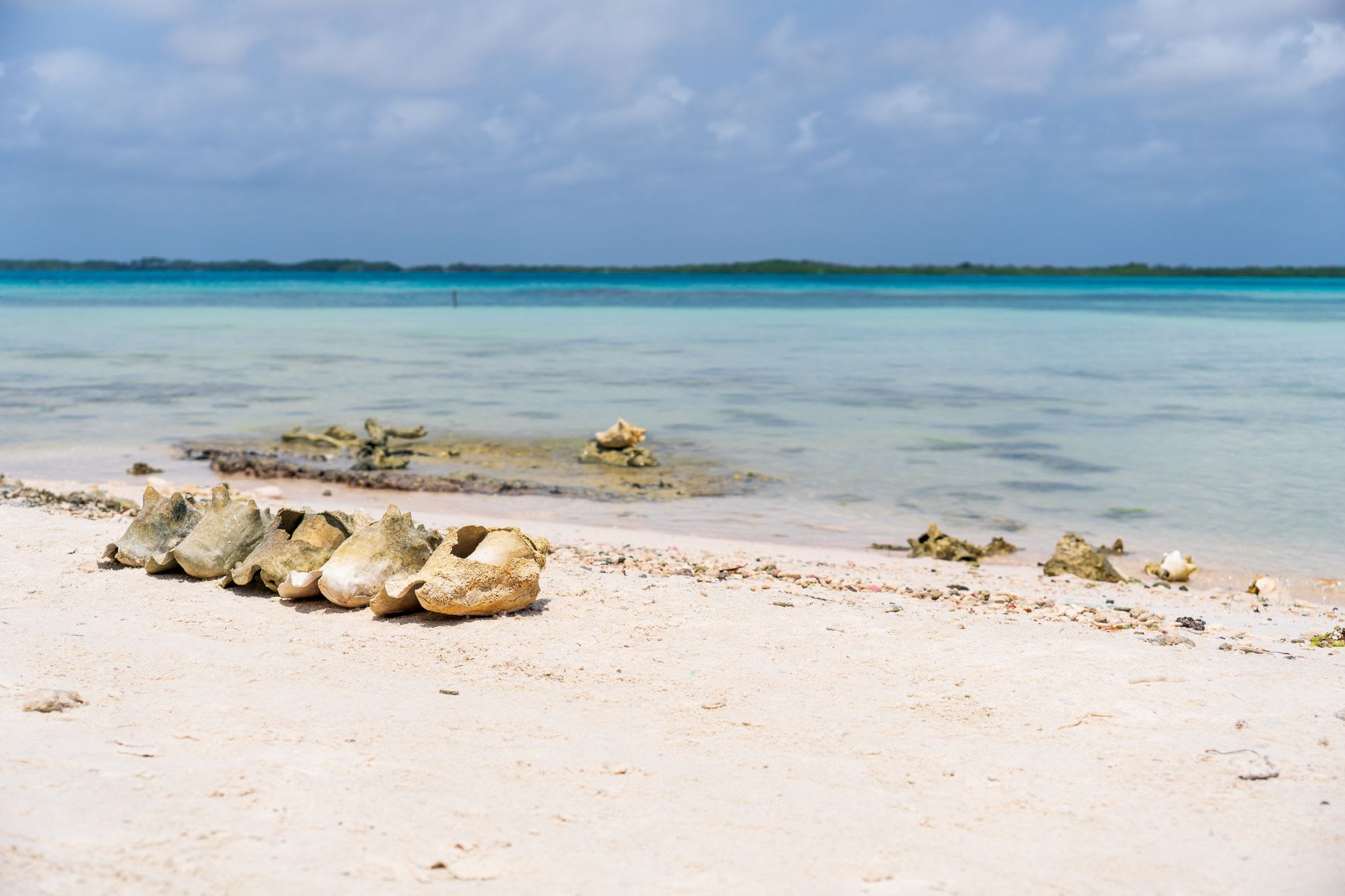
The water is a specific blue-green that I want to call turquoise but is actually something more mineral than that — there is an algae component to the colour that gives it a slight opacity, so that it looks almost painted. The flamingos against it have the quality of a composition that nobody planned and that therefore nobody could have improved. I walked the edge of the lake slowly, staying back from the water to keep the birds calm. They watched me with one eye at a time, rotating their heads slowly, assessing. None of them left.
The yellow-shouldered Amazon parrot — the Bonaire sub-species, endemic to the island, increasingly rare — lives in the cactus forest that surrounds the lake, and if you listen through the wind you can hear them occasionally: a hoarse, proprietorial call that has nothing in common with the parakeets of pet-shop imagination. A great blue heron stood perfectly still at the far edge of the lake for so long I began to doubt whether it was alive. It was. When I moved too close it lifted off with that prehistoric slowness, its legs trailing, and disappeared into the cactus without a sound.

Goto Meer doesn’t appear in most itineraries as a dedicated stop. It is a pause, an interruption in the drive north, something you encounter while going somewhere else and which ends up being the thing you most clearly remember. I went back the next morning at the same time, with coffee, and sat on the hood of the truck until the light shifted and the flamingos moved further out into the lake. Then I drove on.
When to go: Flamingo numbers at Goto Meer are highest between January and June, before the main nesting season at Pekelmeer pulls them south. Go in the early morning — by nine the light is too high and the birds have often moved to the deeper centre of the lake. The pull-off is at roughly the 10-kilometre mark on the northern road from Kralendijk; look for the gap in the cactus where the lake becomes visible.