The Yungas
"Going from La Paz to Coroico feels like falling through three seasons at once."
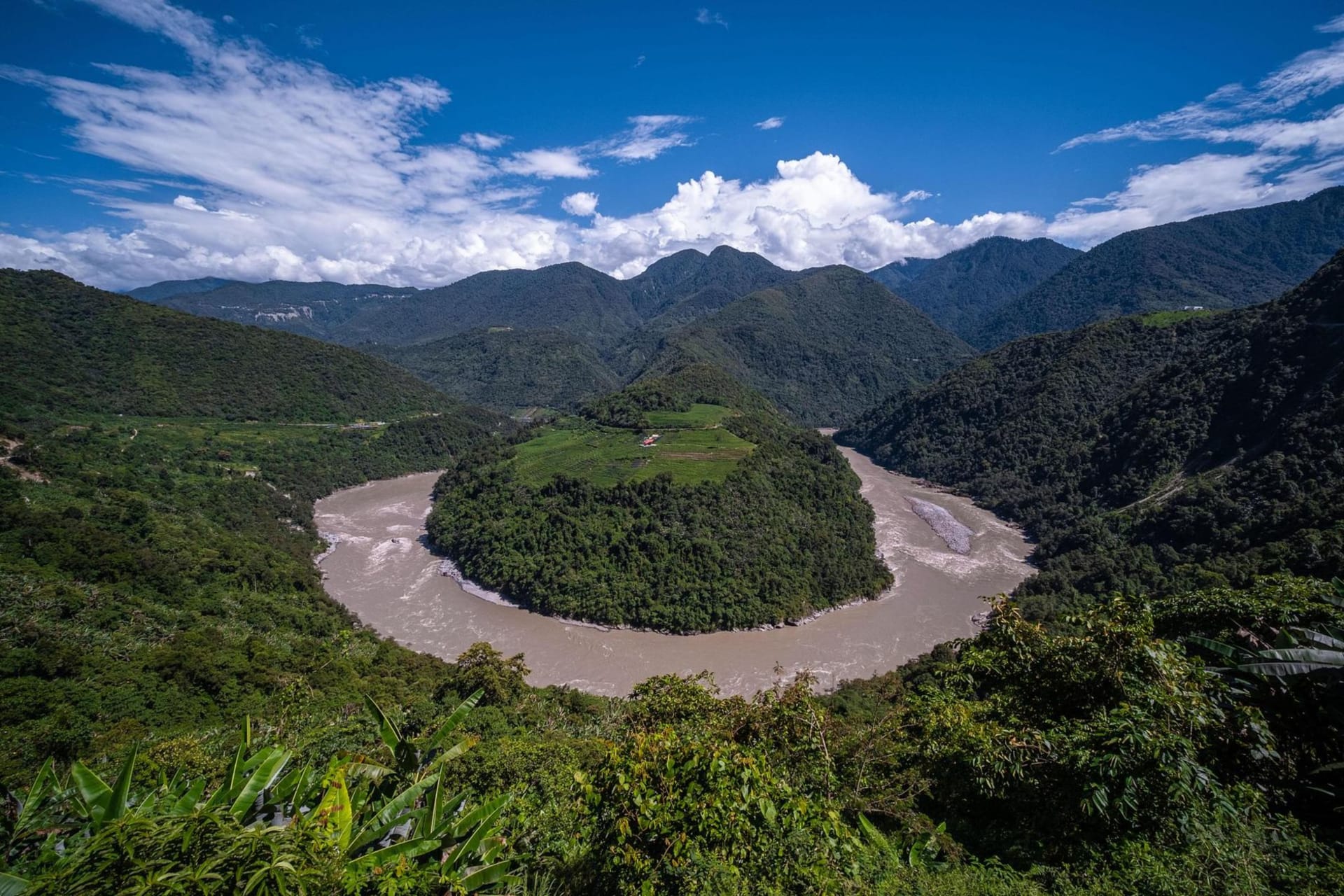
La Paz sits at over 3,600 meters and the Yungas begin roughly ninety minutes away by road, but the distance between them is not primarily geographic. It’s thermal, ecological, sensory. You leave the altiplano’s flat grey light and treeless plateau, climb briefly over a pass above 4,600 meters where snow can fall in July, and then drop — steeply, continuously — into a zone where cloud forest clings to vertical slopes and waterfalls emerge from the rock face without warning and the air, the air, changes everything.
The Road Down
The old road to Coroico — the Camino de la Muerte, or Death Road, now largely replaced by a paved alternative — is one of those places where the reputation has outgrown the experience but the experience is still valid. The road is a single unpaved lane, cut into a cliff face, with a drop of several hundred meters on one side and no guardrails. It’s terrifying if you think too carefully about the geometry. Today it’s mostly used by downhill mountain bike tours, which tells you something about how humans process danger when adrenaline is reframed as recreation.
I drove the new road, which is safer and still spectacular: switchbacks through cloud forest at different elevations, each turn revealing a different atmospheric layer, from alpaca-grazed highlands through tree ferns and orchids to something almost tropical at the bottom. The villages along the route materialize suddenly in clearings, their houses surrounded by citrus trees and coffee plants.
Coroico
The town of Coroico, at around 1,700 meters, is the main destination in the North Yungas. It’s not large — a plaza, a church, a handful of hotels with pools that use the word “infinity” with some justification given the valley views — but it has a pleasantly suspended quality. People come from La Paz on weekends for the warmth and the fruit and the sense of having escaped something. The surrounding hillsides are planted with coca and coffee and citrus, and the market on Sunday morning has the particular generosity of subtropical produce: mangoes, chirimoyas, avocados the size of a fist.
The swimming hole at one of the rivers below town is cold enough to be bracing and clear enough to see the bottom. I spent an afternoon there reading badly and swimming when the heat got to a certain point, which it does reliably after noon.
Chulumani and the South Yungas
The South Yungas — reached via a different road from La Paz — centers on Chulumani, a smaller and quieter town that sees fewer visitors. The landscape is similar but the atmosphere is more plainly local: the café tables face the plaza, not a view engineered for tourists, and the weekend bustle is Bolivians rather than backpackers.
The Yungas coca is grown here in serious quantities. The leaf is legal and fundamental to Andean culture — chewed for altitude, brewed as tea, sold in every market — and the fields covering the hillsides are simply agriculture, not the loaded symbol they become when they cross a border. Walking past them in the morning, the smell is faintly herbal, green.
When to go: The Yungas is wetter than La Paz year-round, but the dry season from May to October brings clearer skies and more passable roads. The rainy season (November to April) can close the Death Road to bikes and makes some lower roads muddy and unstable. September and October offer a good balance of warmth, greenery, and reasonable road conditions.