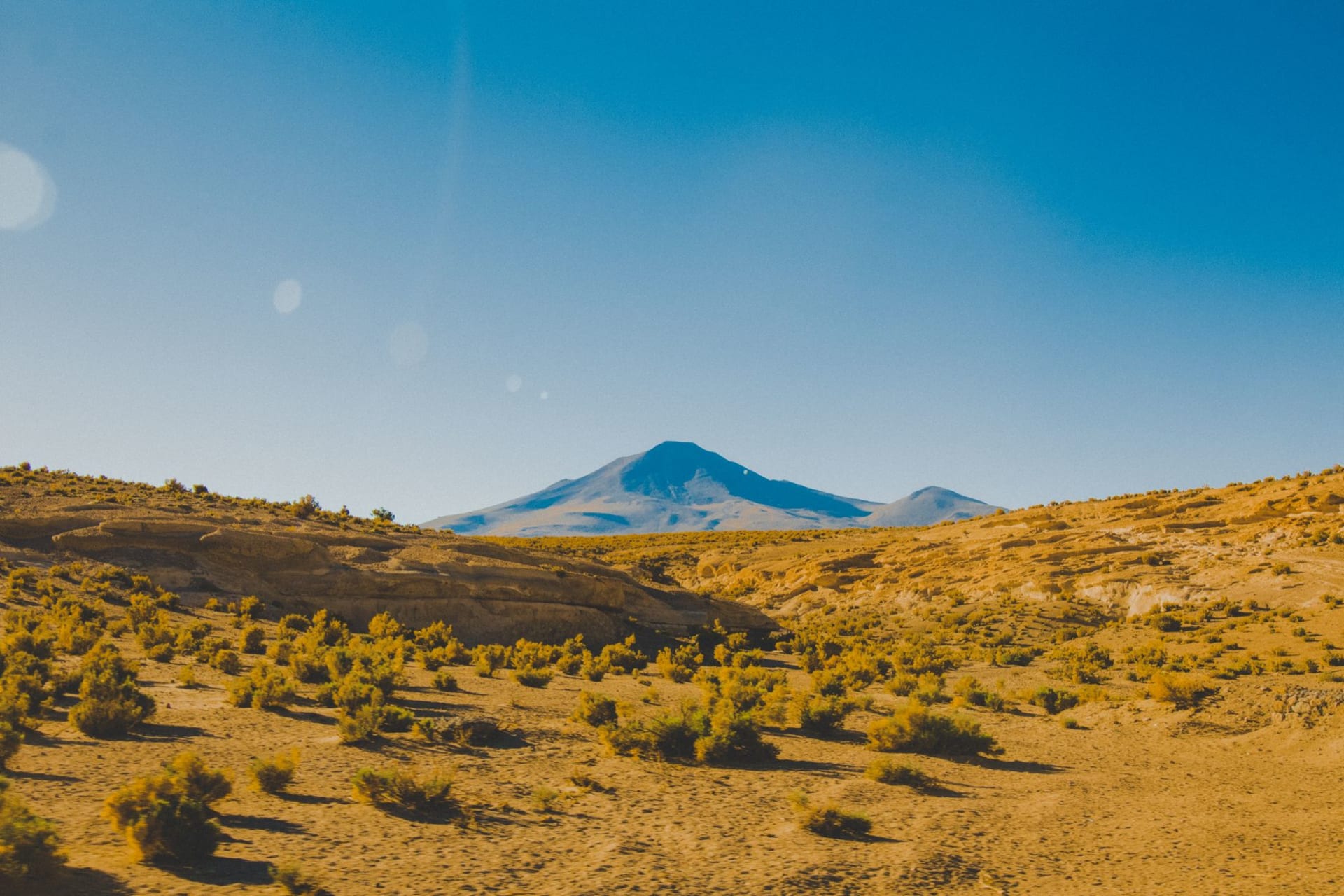
The bus from La Paz dropped us at a junction in the middle of nothing, and for a moment I genuinely thought the driver had made a mistake. There was a sign, a dirt track, and a wind that went straight through three layers of clothing. Then Lia pointed, and there it was — Nevado Sajama, 6,542 meters of perfect white cone, floating above the brown plain like something that had been pasted onto the sky. We stood at the roadside for a full minute before either of us spoke.
The Roof of Bolivia
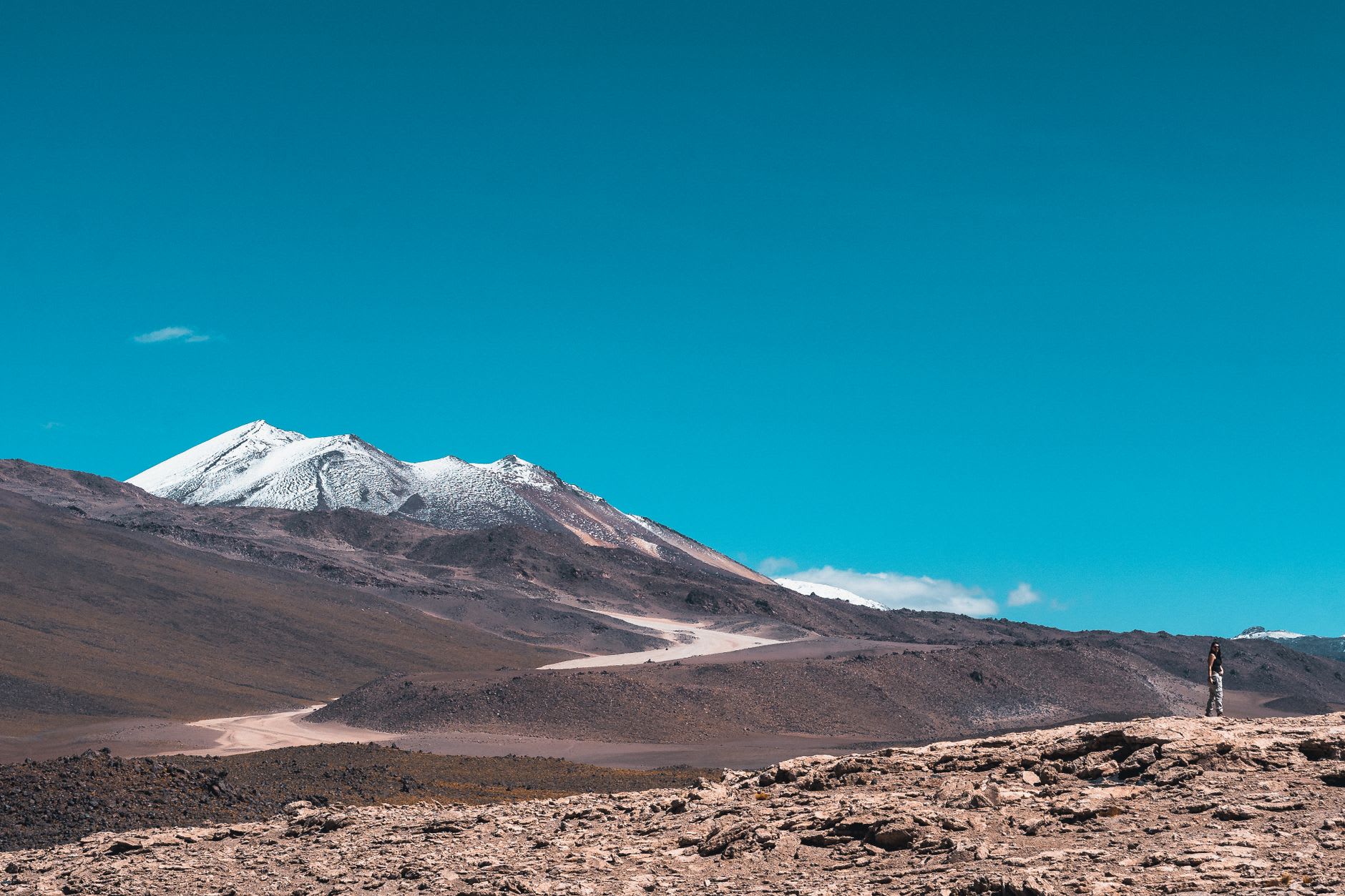
Sajama is the country’s oldest protected area, established in 1939, and it remains gloriously, stubbornly empty. The volcano dominates everything, but what surprised me were the forests at its feet — queñua trees, gnarled and copper-barked, growing higher up the slopes than any other tree on earth. I had read about them and assumed the figure was exaggerated. It is not. We walked among them at well over four thousand meters, breathing like old men, while the trees just stood there having solved the problem of altitude millennia ago.
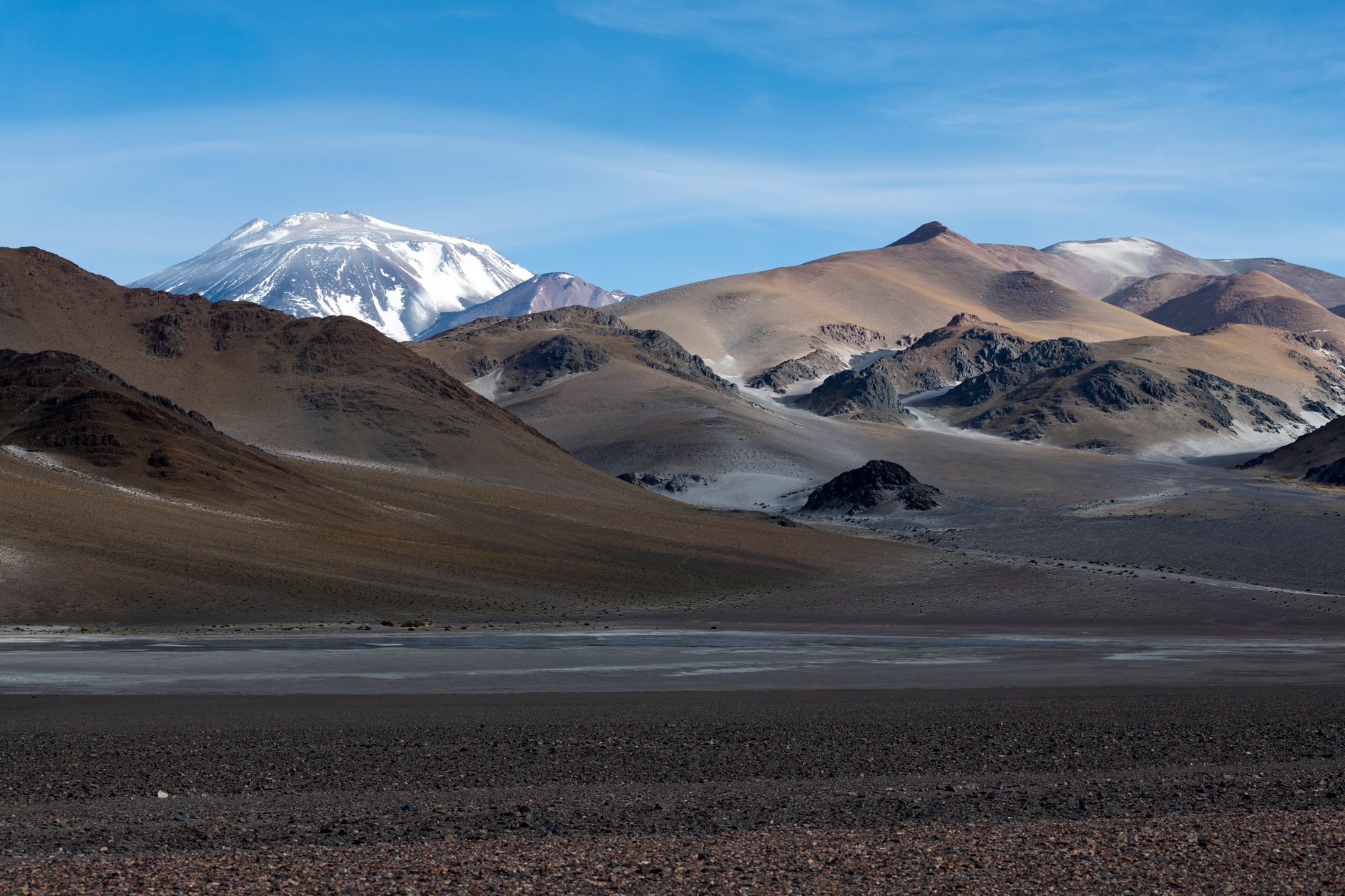
The plain itself is a strange, beautiful austerity. Vicuñas — wild, smaller and more nervous than their domesticated alpaca cousins — drift across the grass in tight family groups, looking up in unison whenever you stop walking. Flamingos work the shallow lagoons. And on the horizon, the twin volcanoes of Parinacota and Pomerape sit on the Chilean border like a matched pair, so symmetrical they look invented.
The Hot Springs at Manasaya
The thing I will remember longest is the hot springs. There is a small geothermal field near the village of Manasaya, a scatter of pools steaming in the cold, and a simple concrete bath that someone had the good sense to build over one of them. We arrived at dusk, the temperature already dropping toward zero, and lowered ourselves into water hot enough to make us gasp. Above us the sky did the thing it only does at this altitude with no light pollution for hundreds of kilometers — it filled completely with stars, the Milky Way a solid bright smear directly overhead.
A local woman who ran the small lodge in Sajama village had warned us the water would still be hot at midnight. She was right. We stayed far longer than was sensible, two French people boiling gently under the Bolivian stars, until the cold finally won the argument about getting out.
Going, and Going Slowly
A word of honest warning: this is high. Sajama village sits above 4,200 meters, and altitude here is not a suggestion. Acclimatize in La Paz first, walk slowly, drink the coca tea the lodge offers without complaint, and do not attempt the volcano itself unless you genuinely know what you are doing — it is a serious mountaineering objective, not a day hike.
When to go: May through September, the dry season, brings cold nights but crystalline days and the most reliable conditions. Bring far more warm clothing than you think you need; the wind does not negotiate.