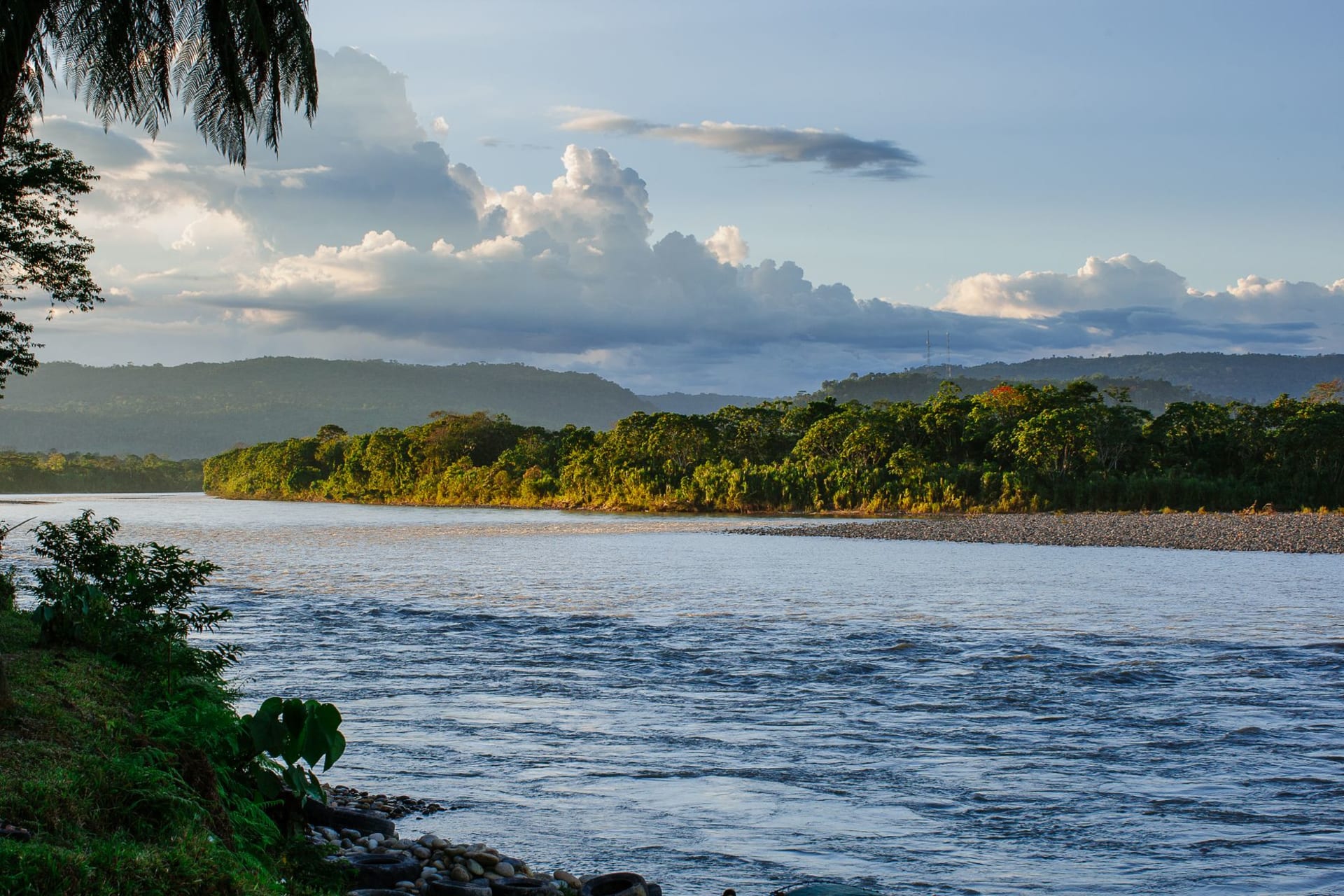
The flight from La Paz to Rurrenabaque lasts twenty-five minutes and crosses a thousand years of altitude. You leave at 3,600 meters, grey and cold, and land in a green bowl at 200, the heat rising off the tarmac in visible waves. The town is small — a main street, a market, a few dozen tour agencies jostling for the same customers — but it’s the gateway to two of Bolivia’s most intact wildlands: the pampas and the Madidi jungle. You don’t come to Rurrenabaque for the town. You come to leave it.
The Pampas
The pampas tour takes you downriver by motorized canoe, into flooded grasslands where the wildlife density feels almost theatrical. Within the first hour I saw three different species of heron, a family of capybaras grazing at the waterline, and a caiman close enough to touch — not that I tried. The guides stand in the bow scanning the banks with an ease that suggests they’ve been doing this since childhood, which most of them have.
The pink river dolphins show up without warning, surfacing alongside the boat to breathe, their skin the color of salmon. I’d read about them and still wasn’t prepared. They move with a slowness that seems deliberate, unhurried. At night, back at the jungle camp, the sound was constant — frogs, insects, something larger moving in the grass — and I slept badly and didn’t mind.
The Madidi Jungle
The jungle tour operates differently: more walking, more silence required, more patience. Madidi National Park is one of the most biodiverse protected areas on earth, though the forest doesn’t announce this. You have to look slowly. A guide who knows how to stop and wait will show you things that a rushed walk won’t — a toucan parting branches high up, a column of leafcutter ants crossing the trail in both directions at once, the exact spot where a jaguar passed the previous evening.
The heat in the jungle is different from the pampas heat. It has weight to it, a thickness in the lungs. The smell is layered: decomposing leaves, damp bark, something floral overhead. I noticed I started breathing slower after the first hour, like the forest was setting the pace.
Getting There and the Town Itself
Most people fly from La Paz on a small propeller plane that banks hard over the escarpment before dropping into the valley. The road exists but takes most of a day and involves sections that close seasonally. The flight is worth the cost of not spending a day on a bus.
Rurrenabaque town is easy enough — cheap meals on the main drag, cold beer, tour operators who all quote the same price and differ mostly in the quality of their guides. The market in the morning sells fruit I couldn’t name but ate anyway, sweet and slightly fermented in the heat.
When to go: May to October is dry season — lower water levels on the pampas means more wildlife concentrated near the river. June and July are the busiest months. The rainy season (November to March) floods the pampas more dramatically and the jungle fills with biting insects; not impossible but harder. April and September offer a reasonable compromise.