The world's highest administrative capital, where teleférico gondolas float above indigenous markets and colonial plazas.
I arrived at El Alto airport and stepped off the plane into air that felt thin and bright and slightly hostile. Four thousand meters. My body took note immediately — a pressure behind the eyes, a shortness of breath that made every flight of stairs a small negotiation. Lia sat on the edge of the hotel bed and laughed at both of us, wheezing. The remedy, the locals say, is coca tea, rest, and acceptance. We drank three cups and looked out the window at a city that appeared to have no intention of accommodating anyone.
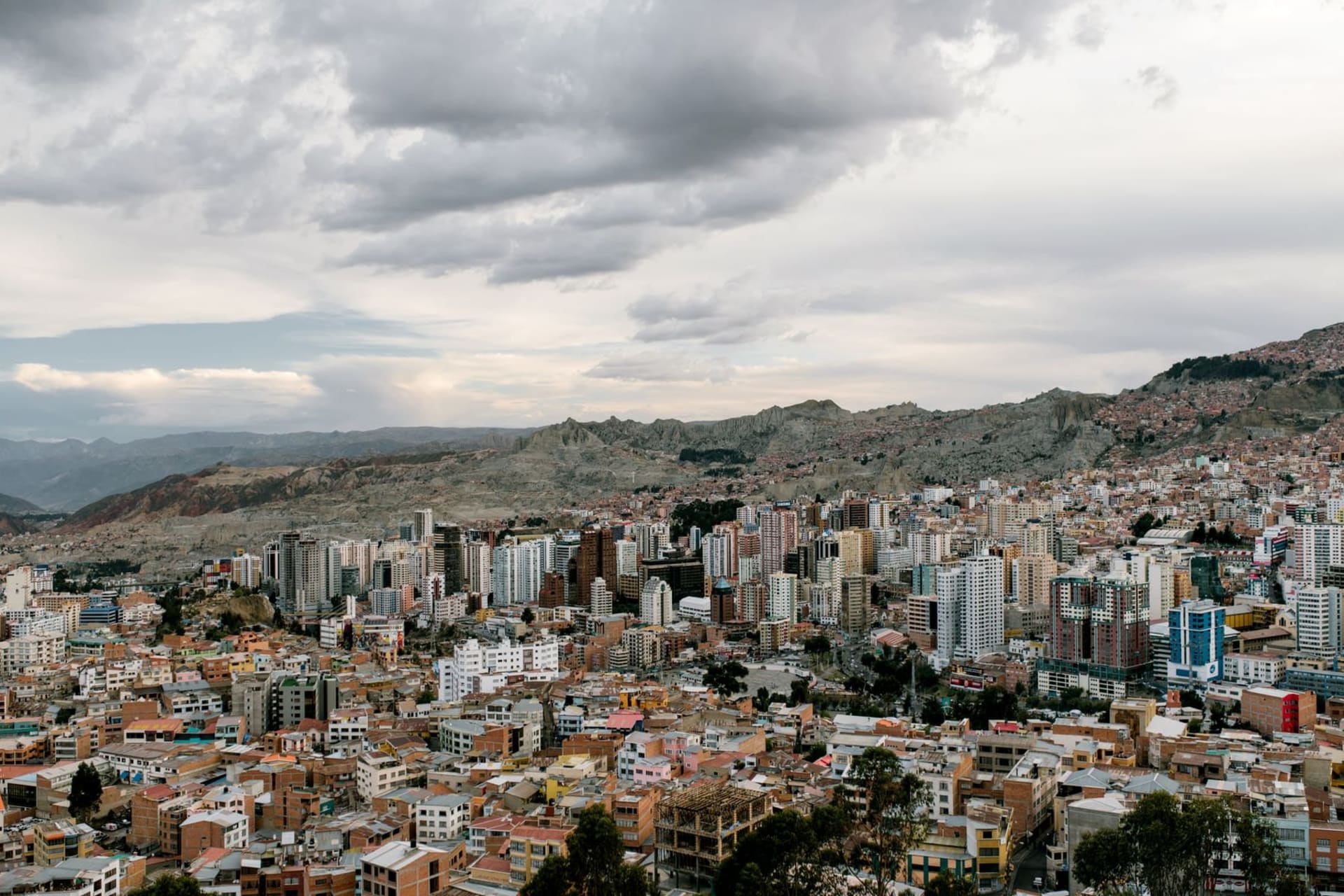
La Paz is built inside a canyon. The wealthier neighborhoods cling to the basin floor along the Choqueyapu River; the poorer districts — El Alto, the sprawling Aymara city above — ring the rim at dizzying elevation. The teleférico gondola system connects them, stringing cable cars across the void in bright primary colors. We rode Línea Roja from the Sopocachi station on a clear morning and the city appeared below us in its full improbable geometry: a tangle of red-brick buildings, no horizontal surface anywhere, church domes and market tarps and satellite dishes crammed onto slopes that should not be habitable.
Witches, Markets, and the Mercado de las Brujas
The Calle Sagárnaga leads into the Mercado de las Brujas — the Witches’ Market — and whatever I expected, this wasn’t it. Not a tourist performance. Stalls run by Aymara women in layered skirts and bowler hats selling dried llama fetuses, incense bundles, love potions labeled in careful Spanish, and packets of colored confetti for ritual offerings to Pachamama. The smell is resinous, herbal, not quite sweet. I bought a bundle of something — sage-adjacent, the vendor said it was for good journeys — without understanding half the transaction and felt, strangely, that this was exactly right.
A block further and you’re in the main market sprawl off the Plaza San Francisco, where the Baroque facade of the 16th-century basilica faces a square permanently occupied by vendors selling everything from phone cases to roasted corn. Eat a salteña here — a baked pastry stuffed with spiced meat and olive and egg, juicy enough that it requires a strategy — and accept the juice on your shirt as an initiation.
The Light at the Bottom of the Canyon
What I had not anticipated about La Paz was the light. The city sits low in its bowl, and the sun hits the rim of the canyon walls at a particular late-afternoon angle that turns the red brick amber and the white colonial buildings almost gold. We stood at the viewpoint on the Mirador Killi Killi above the Miraflores neighborhood and I understood, for the first time, that the city’s chaos had a shape — concentric and almost theatrical, the whole thing arranged as if for an audience.
The surprise came on our third day, descending into the lower Valle de la Luna — a landscape of eroded clay spires and labyrinthine gullies just twenty minutes from the city center by micro-bus. Nothing had prepared me for the moonscape appearing suddenly at the end of a suburban street. We walked the circuit alone, in near-silence, the clay pinnacles casting shadows across each other, and for an hour La Paz felt entirely elsewhere.
When to go: May through October is the dry season — clear skies and the best views of Illimani. June and July are coldest but clearest. Avoid January to March when rain can make the canyon roads difficult.