Loket
"Loket is twelve minutes from Karlovy Vary and two hundred years away. Some distances are not measured in kilometres."
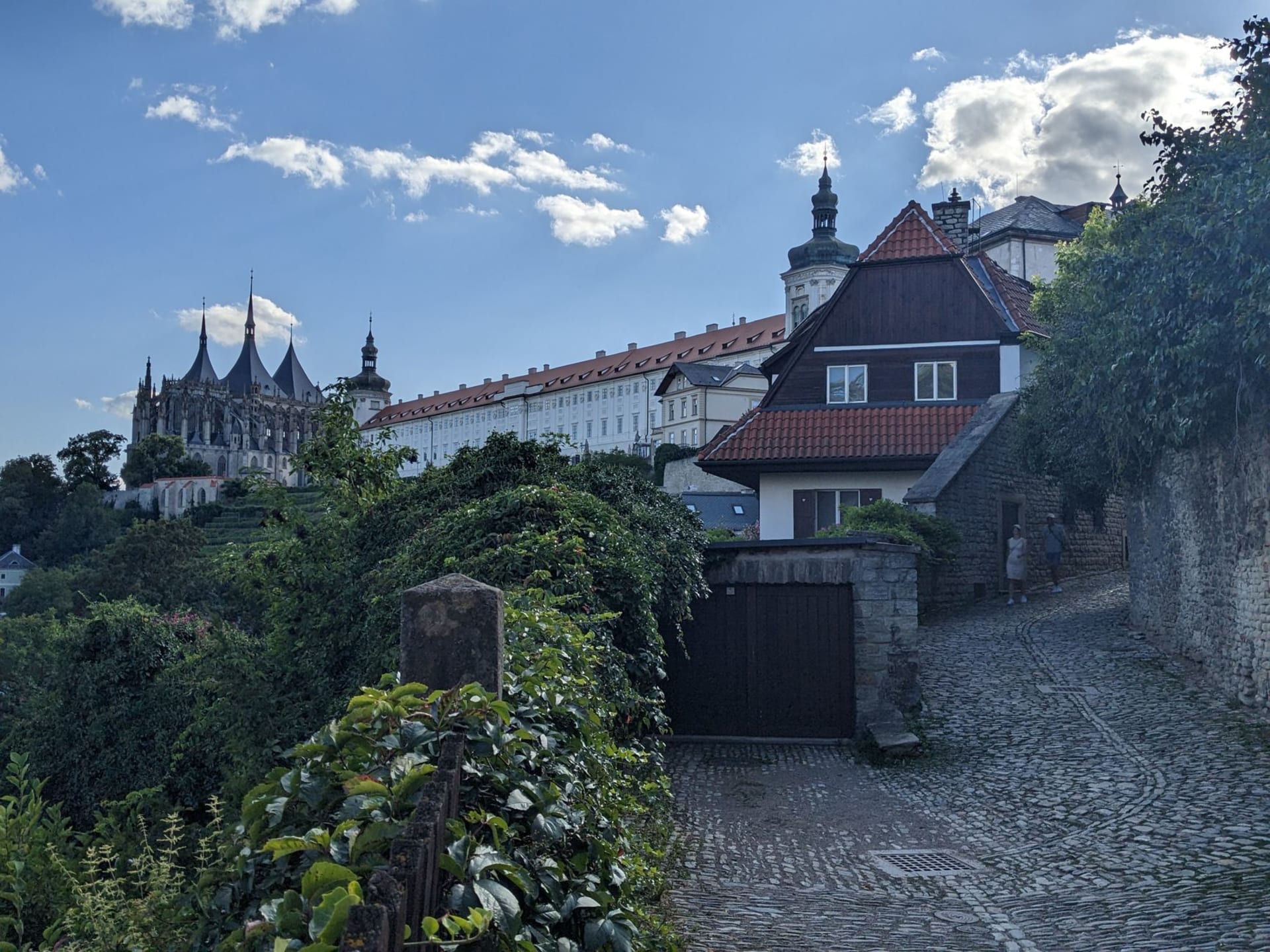
The name means “elbow” in Czech, and the geography is entirely literal. The Ohře River makes a sharp loop around a granite promontory, and on top of that promontory sits Loket Castle, its Romanesque keep visible from the hills across the gorge. The village clusters beneath the castle, pressed into the small flat area between the rock and the river, its coloured facades and church spire cramped and charming in the manner of places that never had room to sprawl. I had come from Karlovy Vary on the local train — twelve minutes — and the transition from Habsburg resort architecture to this medieval river gorge village felt like a gear shift between centuries rather than between towns.
The castle itself dates from the twelfth century, though what stands now is mostly later rebuilding. Goethe visited it — he visited most things in western Bohemia in the 1820s, with the dedicated curiosity of a very old man trying to see as much as possible — and described it in a letter that is reproduced on a plaque at the castle entrance. I read the plaque while a school group filed past me into the castle and a pigeon sat on the wall above making a sound that might charitably be described as continuous commentary. The castle tower gives a view over the entire gorge: the river below, the forested hills opposite, the rooftops of the village immediately under your feet. I stood up there for twenty minutes and counted three kayaks passing on the river.

The village main square — Loketské náměstí — is small enough that you can see from one end to the other while standing in the middle. It’s enclosed by Renaissance and Baroque facades in the colours that characterise this region: ochre, cream, pale terracotta. There is a town hall, a plague column, a fountain, and a good restaurant where I ate sausage with mustard and ate horseradish and bread dumplings and drank an unfiltered local beer that came in a cloudy pale gold and tasted of wheat and something slightly herbal. The meal cost almost nothing. Outside, a wedding party from the castle descended the steps to the square and the photographer made everyone pose in front of the plague column, which has a pleasing lack of sentimentality to it.
Loket porcelain is made here and has been since 1815. The factory is still operating, and the shop on the main square sells it at prices considerably better than the Karlovy Vary gift shops. The porcelain has a reputation for fine, translucent quality — the sort that kaolin deposits in the Ohře valley apparently produce — and I bought a coffee cup that I have used every morning since. It’s cream-coloured with a small blue vine pattern, and it came from a place where the Ohře River loops around a granite rock and time seems to have agreed, provisionally, to slow down.

The hiking in the Ohře gorge around Loket is spectacular and receives a fraction of the attention that the same landscapes in nearby Karlovy Vary attract. The trail along the river downstream from Loket passes through forest and over outcrops of granite, with the river always visible below, and reaches the village of Svatošské skály — the Wedding Rocks — where granite towers rise from the forest in shapes that generations of people have assigned stories to. I spent a morning there and then walked back to Loket in time for lunch, which felt like an entirely reasonable use of a Thursday.
When to go: May through October, with June and September ideal. The gorge is beautiful in winter but some trails become icy. Loket is easily combined with Karlovy Vary — a morning at the springs, an afternoon and evening at Loket — which is the arrangement I’d recommend to anyone.